
Beyond Tracking: Exploring the Security Benefits of Google Tag Gateway and Cloudflare
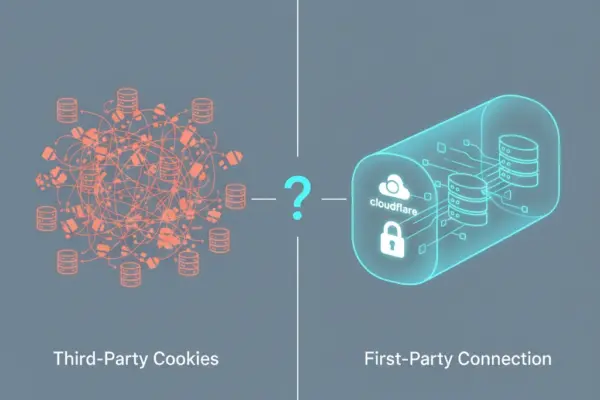




When discussing the Google Tag Gateway, the focus is often on marketing accuracy. However, the real value for many website owners is the underlying security. By partnering with Cloudflare,, Google has simplified how data moves from a visitor’s browser to your analytics tools. It isn’t a drastic overhaul, but rather a more professional way to manage your site’s digital footprint.
This collaboration allows you to use your existing Cloudflare infrastructure to create a secure path for your data. It’s a logical step for those who want better privacy and a leaner website without the stress of managing complex server environments.
The Benefits of a First-Party Connection
The most significant shift here is moving toward “first-party” data collection. Usually, websites rely on “third-party” scripts that talk directly to external servers. This creates a cluttered network of connections that can sometimes be exploited.
- Reducing Security Touchpoints
Think of third-party scripts as various couriers coming in and out of your building. With Google Tag Gateway, you essentially set up a single, secure mailroom on your own domain. The visitor’s browser only talks to you. Cloudflare then forwards that information to Google. This keeps your site’s “conversation” private and reduces the number of external holes that could potentially be targeted. - Processing in a “Safe Room”
A standout feature is the move toward Confidential Computing. Imagine a locked vault where data is processed. Even the people who own the vault (Google or Cloudflare) can’t see what’s happening inside while the numbers are being crunched. This uses a Trusted Execution Environment (TEE) to ensure that sensitive interactions are processed in an isolated space, making it nearly impossible for data to be intercepted or leaked during the handoff. - Enhancing Data Privacy with Anonymisation
One of the best features of this setup is how it handles sensitive information. When data passes through the gateway, it hits the Cloudflare “edge” first. This acts as a protective shield. You can configure the system to mask details like a user’s IP address before it ever leaves your sphere of influence. It’s a fair way to respect privacy while still getting the high-level data you need to make decisions.
Is This Move Right for Your Site?
It’s important to be fair: not every website needs to rush into this. If you’re running a small site with a basic setup, the standard Google Tag is likely doing its job just fine. There is no need to add new technical layers if you aren’t feeling the limitations of your current tracking.
Assessing the Necessity
This setup is specifically designed for businesses that handle significant customer data or operate in high-traffic environments where data integrity is paramount. If you are already using Cloudflare for its security features, adding the Tag Gateway is a logical, low-effort extension of your strategy. It provides a “hardened” measurement stack that aligns with modern privacy standards without forcing you into a complex technical project.
Choosing Your Path
Choosing how to handle your data is a balance between insight and responsibility. The Google Tag Gateway and Cloudflare partnership provides a more resilient way to maintain that balance. It moves away from the fragmented, multi-connection methods of the past and toward a cleaner, first-party future. It isn’t about creating alarm or pushing unnecessary tools; it’s about choosing an organised, professional framework. By simplifying your infrastructure, you aren’t just improving your reports—you’re building a more secure, transparent experience for every person who visits your site.