Website security is no longer just an IT issue. It is a business risk.
Every day, automated bots scan millions of websites looking for vulnerabilities. Many attacks are not targeted. Instead, they are opportunistic. If a weakness exists, attackers exploit it.
For businesses that rely on their website to generate leads, take payments, or build trust with customers, weak website security can cause serious problems.
A compromised website can result in:
stolen customer data
payment skimming attacks
search engine blacklisting
malware warnings in browsers
loss of customer trust
In many cases, businesses do not realise their website has been hacked until weeks later.
That is why website security should be considered part of the core infrastructure of your business.
The Growing Risk of Automated Website Attacks
Cyber attacks have changed significantly in recent years.
Previously, attacks were often targeted. Today, most attacks are automated.
Bots constantly scan the internet looking for:
outdated plugins
vulnerable software
weak passwords
unsecured forms
exposed databases
When they find a weakness, malicious scripts are often injected into the site.
These scripts may:
redirect visitors to scam websites
collect payment details during checkout
create hidden spam pages
inject malware into downloads
Because the attacks are automated, even small business websites are being regularly targeted.
What Happens When Website Security Fails
Many businesses assume hackers only target large companies. In reality, smaller websites are often easier to exploit.
When website security fails, the consequences can include:
Loss of search visibility
Search engines like Google may flag infected sites as unsafe. When this happens, visitors see a warning before entering the site.
Traffic often drops overnight.
Customer trust damage
Visitors expect websites to be secure. If security warnings appear, trust disappears quickly.
Financial loss
E-commerce websites can be targeted by payment skimming attacks. These attacks inject code into checkout pages to capture card details.
Online stores must also consider the PCI DSS, which sets security expectations for businesses processing card payments.
The Essential Elements of Website Security
Strong website security is built through multiple layers of protection.
Instead of relying on a single tool, it is best to combine several measures.
1. Secure hosting and HTTPS encryption
The first step is ensuring your website runs on secure infrastructure.
Every modern website should use HTTPS encryption. This protects information submitted through forms and login areas.
It also signals trust to visitors and search engines.
2. A web application firewall (WAF)
A firewall protects your website by blocking suspicious traffic before it reaches your server.
Many businesses use security platforms such as Cloudflare to filter malicious traffic and stop automated attacks.
A WAF can block common threats including:
brute force login attempts
bot traffic
vulnerability scanning
malicious requests
3. Regular updates and patching
Outdated software is one of the most common security risks.
Many website breaches occur because:
plugins are outdated
content management systems are not updated
security patches have not been applied
Regular updates significantly reduce risk.
4. Malware monitoring and backups
Even with strong security, problems can still occur.
For this reason, websites should include:
malware scanning
daily backups
recovery processes
These safeguards allow websites to be restored quickly if something goes wrong.
Website Security and Data Protection
Website security also connects closely with privacy and data protection.
In New Zealand, businesses that collect personal information must follow the Privacy Act 2020.
This means businesses must:
collect personal data responsibly
protect the information they store
notify authorities if serious data breaches occur
Strong website security helps businesses meet these responsibilities.
Practical Website Security Tips for Businesses
Improving website security does not always require complex systems.
In many cases, the most important steps are straightforward.
Businesses should ensure they have:
strong passwords and secure logins
up-to-date software
secure hosting
a firewall and bot protection
reliable backups
privacy and data handling policies
Together, these measures significantly reduce the risk of cyber attacks.
Why Website Security Should Be Ongoing
Website security is not a one-time setup.
Threats evolve constantly. Attackers discover new vulnerabilities, and software continues to change.
For this reason, website security should be treated as an ongoing process rather than a single project.
Businesses that monitor and maintain their website security regularly are far less likely to experience serious incidents.
Final Thoughts
Your website is often the first place customers interact with your business.
Protecting it is essential.
Strong website security protects your data, your reputation, and your customers. It also ensures your website continues to perform reliably as an important part of your marketing and sales system.
For businesses that rely on their digital presence, investing in website security is no longer optional. It is a core part of running a modern business online.
If you’re wondering why your website is not generating enough leads, you’re not alone. We see this all the time. Businesses invest heavily in the build, but forget that a website is meant to work, not just exist.
The good news is most lead generation problems are completely fixable. Once you know where the gaps are, the path forward becomes pretty clear.
Below are the most common reasons websites fail to generate leads, and what you can do about it.
Table of Contents
1. Your Website Doesn’t Clearly Explain What You Do
When someone lands on your website they ask one simple question:
“Am I in the right place?”
If your homepage doesn’t answer that within a few seconds, they leave.
Too many websites try to be clever with vague taglines or generic marketing speak. Visitors don’t want to decode your messaging. They scan quickly, make a judgement, and move on.
A weak value proposition is one of the biggest reasons websites fail to generate leads.
How to Fix It: Explaining what you do
Your homepage should clearly state:
• What you do • Who you help • What result they get
Right at the top.
For example:
Bad:
Helping businesses grow online.
Better:
We help New Zealand businesses generate more leads through Growth-Driven websites and digital marketing.
Be clear. Be specific. Speak to the problem you solve, not just the service you provide.
your website becomes far more than a digital brochure.
It becomes a lead generation engine.
But it’s important to remember this:
A high-performing website isn’t built once and left alone.
It improves over time through testing, learning, and optimisation.
That’s exactly what Growth-Driven Design is about.
Your website should be your hardest-working salesperson.
If it isn’t, it’s time to fix it.
Key Takeaways
• Visitors must understand what you do within seconds • Strong calls-to-action drive lead behaviour • Traffic quality matters as much as traffic volume • Website speed and mobile experience directly affect conversions • Trust signals increase the likelihood people will contact you • Short forms dramatically improve completion rates • Lead magnets capture visitors who are still researching • Fast follow-up greatly improves sales outcomes
Why is my website getting traffic but no leads?
Usually it comes down to one of two things. Either the traffic is the wrong fit, or the website is not doing enough to build trust and move people to action. If visitors land on your site and cannot quickly see what you do, who it is for, and what to do next, they will leave without enquiring.
Why is my website not generating enough leads?
The most common reasons are weak messaging, poor calls to action, low trust, slow load times, poor mobile experience, and low-quality traffic. In a lot of cases, it is not one big problem. It is a bunch of smaller issues stacking up and killing conversions.
How can I improve website lead generation?
Start with the basics. Make sure your homepage clearly explains what you do, add stronger calls to action, simplify your forms, improve site speed, and build more trust with proof like testimonials and case studies. After that, focus on attracting better traffic through SEO, ads, and useful content.
What makes a website convert visitors into leads?
A high-converting website is clear, fast, trustworthy, and easy to use. It speaks to the right audience, answers real questions, removes friction, and gives visitors a compelling next step. Good design helps, but clarity and trust do more of the heavy lifting.
How many leads should a website generate?
That depends on your traffic levels, industry, service, and sales process. A website with 100 highly relevant visitors can outperform one with 5,000 poor-fit visitors. The better question is whether your current traffic is converting at a healthy rate and whether you are improving that rate over time.
Why do people leave my website without contacting me?
Usually because they are confused, unconvinced, or not ready. Your website might be unclear, too slow, hard to use on mobile, or lacking proof. Sometimes the site asks for too much too soon. If people do not trust what they are seeing, they will bounce.
Does website speed affect lead generation?
Yes, massively. A slow website loses people before they even see your offer. Speed affects user experience, trust, and SEO. If your website drags, your conversions usually suffer as well.
Does mobile design affect how many leads I get?
Absolutely. If your site is clunky on a phone, hard to read, or annoying to navigate, you will lose a chunk of potential leads straight away. Mobile performance is no longer a nice-to-have. It is standard.
When a new piece of technology like the Google Tag Gateway enters the conversation, the initial reaction is often a mix of curiosity and a bit of “tech-fatigue.”. But the real question isn’t just “what is the Gateway”, or “Is Google Tag Gateway Worth It for You?” but rather, “is this the right investment for my specific business model?” Let’s peel back the layers and see who actually stands to benefit from this shift and who can safely stay the course.
Is Your Current Data Strategy Hitting a Ceiling?
For many growing brands, there comes a point where traditional tracking methods start to feel a bit fragile. If you’ve noticed a widening gap between what your internal sales CRM shows and what your marketing dashboard reports, you’re likely hitting a technical ceiling. This isn’t usually a “mistake” in your setup; it’s simply the reality of how modern browsers interact with tracking scripts. If your business relies heavily on precision—where every single conversion needs to be accounted for to justify a significant ad spend—then you are exactly who Google had in mind when designing the Tag Gateway.
The Transition from Client-Side to Server-Side Control
To understand if this is for you, think about how data currently moves. Most sites use “client-side” tagging, which essentially means the heavy lifting happens in the user’s browser. It’s a bit like asking a customer to fill out their own paperwork and mail it to you; sometimes things get lost, and you have very little control over the process once they leave your sight. The Tag Gateway moves this process to a “server-side” environment. Suddenly, you are the one handling the paperwork. This shift offers a level of data integrity that traditional methods simply cannot match, as it bypasses many of the common roadblocks that cause data to “drop off” mid-journey.
When Traditional Tagging Still Makes Perfect Sense
Despite the benefits, it is important to be fair: not every website requires this level of infrastructure. If your digital presence is primarily a lead-generation tool for a local service or a niche boutique, the standard Google Tag setup is remarkably robust. There is no need to introduce the complexity of a gateway if your current data is clear, actionable, and helping you meet your monthly targets. We often see businesses get caught in the trap of “solving” problems they don’t actually have, leading to unnecessary overhead and management time.
Avoiding Over-Engineering for Smaller Digital Footprints
If your traffic volumes are modest, the “performance hit” of traditional tags is usually negligible. Similarly, if you aren’t running complex, multi-channel attribution models, the hyper-precision of a Gateway might not actually change the decisions you make on a Monday morning. It is perfectly okay—and often smarter—to take a “wait and see” approach. You can always scale into more advanced tracking as your traffic and ad spend grow.
Making an Informed Decision for Your Brand
Deciding to move toward Google Tag Gateway should be a strategic choice, not a reactionary one. It is a powerful tool for those managing high-traffic platforms, those with strict privacy requirements, or those who find their current data simply isn’t reliable enough to steer the ship. For everyone else, it’s a technology to keep on the radar, but perhaps not on the payroll just yet. Clarity in your data is the goal, and sometimes the simplest path is the best one.
Digital advertising never stands still. Just when you think you’ve mastered tracking, reporting, and campaign optimisation, Google rolls out something new. This time? The Google Tag Gateway. And if you run Google Ads, manage GA4, or rely on conversion data to guide your marketing decisions, this update isn’t just another technical tweak. It’s a serious shift in how data flows between your website and Google.
So what exactly is it, and why should Kiwi businesses care?
What Is the Google Tag Gateway and Why Should You Care?
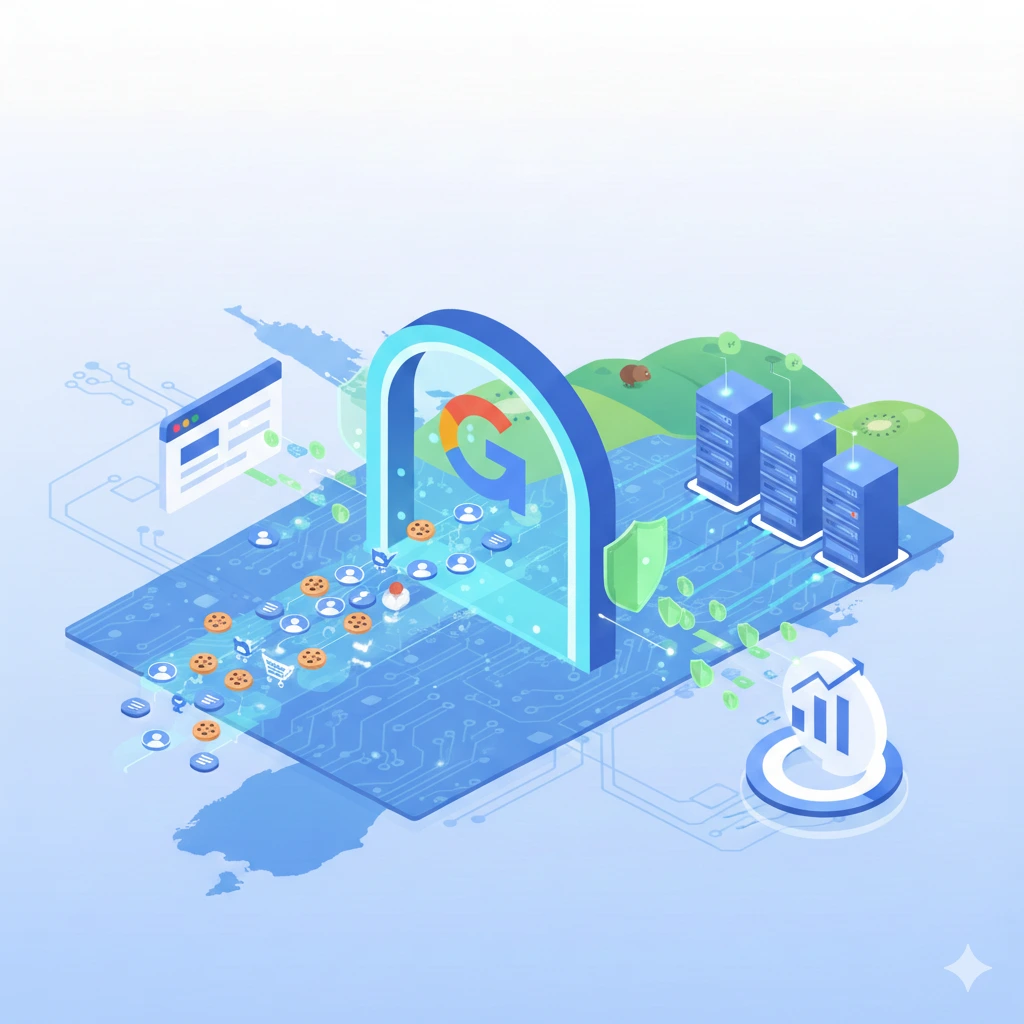
At its core, the Google Tag Gateway is designed to improve how website tracking communicates with Google’s systems. Instead of sending data directly from the browser to Google’s servers, the gateway allows businesses to route tracking data through their own server environment first.
Built for Privacy, Performance, and Better Data
Privacy isn’t optional anymore. It’s expected. The gateway helps advertisers align with modern privacy standards while still collecting the data needed to optimise campaigns. It reduces dependency on third-party cookies and supports a more resilient tracking framework in a privacy-first world.
In simple terms? You protect user data while protecting your marketing performance.
How the Google Tag Gateway Improves Your Campaign Performance
Accurate data drives profitable campaigns. If your tracking leaks, your strategy weakens. It’s that simple.
Cleaner Data, Better Decisions
When conversion tracking breaks, automated bidding strategies suffer. Smart Bidding relies on strong signals. If those signals disappear, performance drops. By strengthening how events and conversions are passed to Google, the Tag Gateway helps maintain data integrity.
And better data means sharper targeting, smarter budgets, and stronger ROI.
Faster Load Times, Stronger Conversions
Client-side scripts can slow down websites. And slow websites cost conversions. By shifting more responsibility server-side, businesses can potentially improve site performance. Even small speed gains can make a noticeable difference in conversion rates.
It’s like tuning an engine. Everything runs smoother, faster, and more efficiently.
The bottom line? The Google Tag Gateway isn’t just a technical upgrade. It’s a strategic advantage.
In digital advertising, data is everything, and without accurate tracking, campaigns become guesswork. This gateway provides a smarter, privacy-conscious, and performance-driven way to manage your tracking infrastructure, ensuring your campaigns run efficiently and deliver measurable results. The takeaway is simple: implement early, secure your data, and create campaigns that perform consistently, now and into the future.
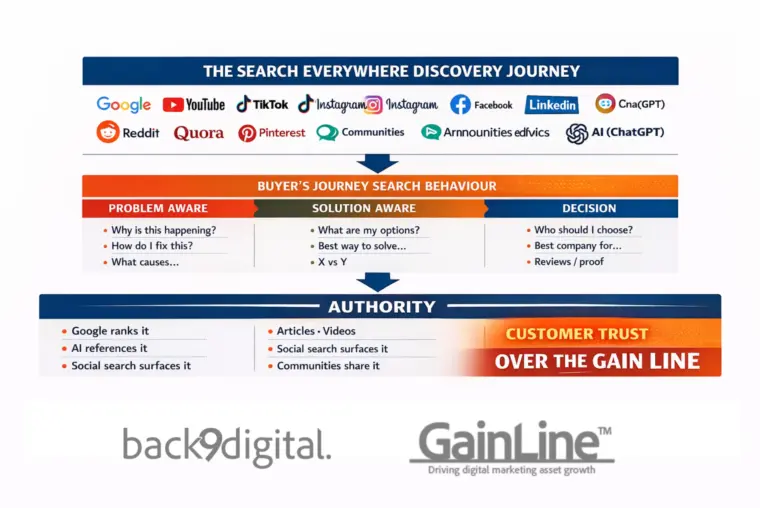
Once the problem is understood, the buyer searches for solutions.
Example searches:
“Best ecommerce platform NZ”
“SEO vs Google Ads”
“How to secure a WordPress website”
This is where comparison and educational content becomes critical.
3. Finally They Look For Proof
Before buying, people want reassurance.
They search for:
reviews
comparisons
pricing
case studies
results
These are exactly the topics most businesses avoid.
Which is why the brands that answer them win.
This Is Where GainLine Comes In
The GainLine philosophy exists to capture trust at every stage of the buyer journey. Below are the 4 key foundations of trust we have identified
1. Tackle the Tough Stuff
Answer the difficult questions buyers are already searching.
Price. Problems. Comparisons.
2. Open the Engine Room
Explain how things actually work.
Show process. Reveal expertise. Build credibility.
3. Gain the Tactical Advantage
Create content that helps buyers make better decisions.
Guides Best-of lists Explainers
4. Play for the Jersey
Prove your credibility.
Reviews Results Case studies
Why This Works in a Zero-Click World
Modern discovery often happens inside platforms.
Research reported by Search Engine Journal and analysis from SparkToro show that a large percentage of searches now end without a click to another website.
That means your content may influence buyers even when they never visit your site.
Which makes being visible across the ecosystem even more important.
The Back9 Way to Explain It
Old thinking: Rank in Google.
Modern reality: Be discoverable wherever your buyers search.
GainLine version:
Create trusted content that answers buyer questions and your brand becomes visible across the entire search ecosystem.
They compare. They read reviews. They watch videos. They ask ChatGPT. They stalk your Google reviews. They check Reddit threads. They look for social proof. They try to self-educate before talking to anyone.
And during that process, trust is either built… or lost.
That’s why pricing content matters so much now.
Not because every visitor wants an exact quote.
But because transparency builds confidence.
The Biggest Fear Businesses Have About Showing Prices
Usually it’s one of these:
“Our competitors will see it.”
“Every project is different.”
“People will judge us on price.”
“We’ll scare people away.”
“We need to explain the value first.”
Some of those concerns are valid.
But here’s the reality:
Your competitors probably already know roughly what you charge.
And buyers are already judging your pricing anyway.
The difference is whether they’re doing it with context… or assumptions.
Because when no pricing exists, people tend to assume one of two things:
“This is probably expensive.”
“These guys are hiding something.”
Neither is ideal.
Showing Pricing Is Bigger Than Just Pricing
This is where it ties directly into the GainLine philosophy and the Trust Drivers.
One of the core Trust Drivers is:
Tackle the Tough Stuff
Most businesses avoid hard conversations online.
Pricing. Problems; Drawbacks. Timeframes, Limitations, Fit.
But buyers actively look for those answers.
The companies willing to front-foot difficult topics immediately stand out because they feel honest.
Not polished.
Not corporate.
Human.
And that matters.
Because trust is rarely built through hype.
It’s built through clarity.
Pricing Content Fits Directly Into the Tight 5
Inside the Tight 5 framework, pricing is one of the highest-impact content categories you can create.
Why?
Because it sits incredibly close to buying intent.
People searching:
“How much does it cost to build a new home?”
“What should I budget for a family holiday to Fiji?”
“How much does a heat pump installation cost?”
“What does a new roof typically cost?”
“How much should I expect to pay for braces?”
“What does it cost to move house across New Zealand?”
“How much does artificial turf installation cost?”
“What should I budget for a wedding?”
“How much does farm fencing usually cost per metre?”
That makes pricing content some of the most commercially valuable content on your website when done properly.
The Goal Isn’t Exact Pricing
This is where people get stuck.
Showing pricing doesn’t mean every business needs a giant “Buy Now” button with fixed numbers.
Sometimes that works.
Sometimes it doesn’t.
What buyers actually want is guidance.
Things like:
Starting-from pricing
Typical project ranges
What affects cost
Different service tiers
What’s included
What changes pricing
What makes something more expensive
What makes something cheaper
That alone reduces uncertainty massively.
Transparency Filters Better Leads
Here’s the part many businesses miss.
Pricing transparency doesn’t just attract leads.
It repels the wrong ones.
That’s a good thing.
Because not every enquiry is a good fit.
If someone has a $500 budget for a $20,000 project, finding that out after three meetings helps nobody.
Transparent pricing creates alignment earlier.
Which means:
Better conversations
Less ghosting
Less wasted time
Faster decisions
More qualified enquiries
Higher trust from day one
“But What If Competitors Undercut Us?”
They probably already are.
Businesses that compete purely on price will always exist.
Trying to hide your pricing rarely changes that.
What does change things is explaining:
Why you charge what you charge
What outcomes buyers get
What’s included
What process you follow
What risks you reduce
What experience people can expect
That’s value positioning.
And value positioning builds trust far better than silence ever will.
The Best Pricing Pages Don’t Feel Like Sales Pages
They feel educational.
Helpful.
Clear.
Balanced.
They answer questions buyers are already thinking. They acknowledge complexity without hiding behind it.
And importantly…
They don’t pretend every buyer is identical. Good pricing content helps people self-select.
That’s one of the most powerful things a website can do.
Should Every Business Show Prices?
Not necessarily exact pricing.
But most businesses should show something.
Even if it’s:
Typical investment ranges
“Starting from” pricing
Budget guidance
Package comparisons
Cost factors
Pricing FAQs
Self-selection tools or calculators
Because clarity creates momentum.
And momentum creates better buying experiences.
Final Thought
In a Search Everywhere world, buyers reward businesses that answer questions openly.
Pricing is one of the biggest questions buyers have.
Avoiding it doesn’t remove friction.
It creates it.
The businesses building trust fastest today are usually the ones willing to talk about the things others avoid.
That’s not just good marketing.
That’s good business.
Frequently Asked Questions
Should I put exact pricing on my website?
Not always. Many businesses benefit more from showing pricing ranges, starting prices, or explaining the factors that influence cost.
Does showing pricing scare people away?
Sometimes. But usually the wrong people. Pricing transparency helps qualify leads earlier and improves alignment.
Why is pricing content important for SEO?
Pricing-related searches often have high buying intent. People searching for pricing are usually much closer to making a decision.
What is pricing transparency?
Pricing transparency means openly helping buyers understand likely costs, pricing structures, and what influences investment levels.
How does pricing content build trust?
It shows buyers you’re willing to answer difficult questions honestly, which reduces uncertainty and improves confidence before sales conversations even begin.