
The Tight 5: The Content Topics Buyers Actually Care About




Filters
Results
Most business content fails for one simple reason.
It talks about what the business wants to say…
Instead of what buyers actually want to know.
That’s why so much content online feels the same.
Generic advice.
Fluffy social posts.
Buzzwords.
Corporate waffle.
“5 tips for success.”
“Why quality matters.”
“We’re passionate about customer service.”
Groundbreaking stuff.
Meanwhile, buyers are sitting there thinking:
“Cool… but can you just answer my actual questions?”
That’s where The Tight5 comes in:
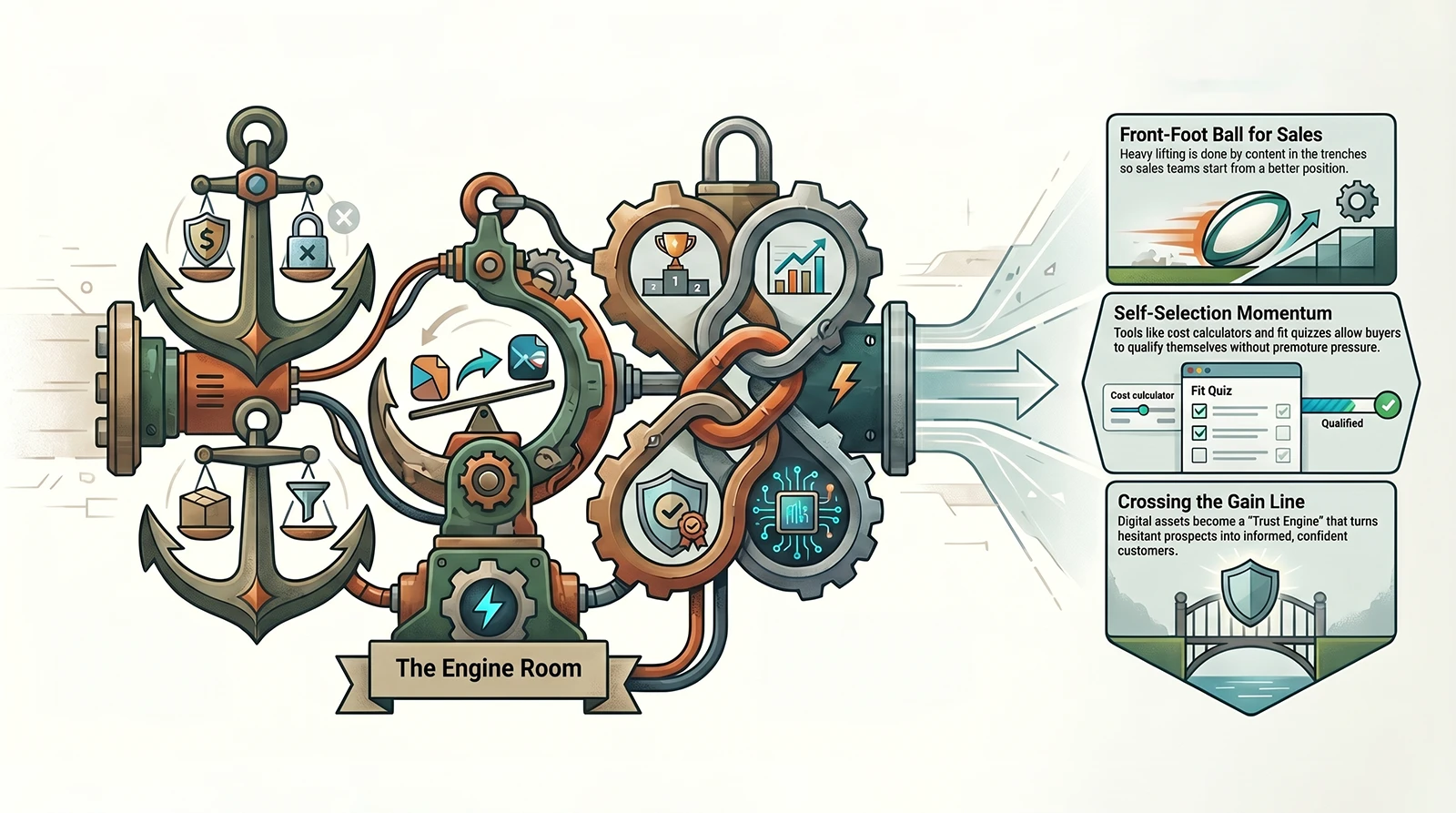
Inside the GainLine framework, the Tight 5 is the core content engine designed to build trust by answering the questions buyers genuinely care about before they make a decision.
Not vanity content.
By focusing on The Tight 5, businesses can better align their content strategy with buyer needs.
Not filler.
Not content for content’s sake.
Real buying questions.
What Is the Tight 5?
The Tight5, also known as the Tight 5, is a structured content framework built around five high-trust, high-intent topics buyers actively search for during the buying journey.
They are:
- Pricing
- Problems
- Comparisons
- Best in industry
- Reviews & Social Proof
Simple.
But incredibly powerful when done properly.
Because these are the topics buyers research whether businesses like it or not.
The difference is whether they find the answers from you… or someone else.
Why the Tight 5 Works
The Tight 5 works because it aligns with how people actually buy.
Modern buyers don’t move in a straight line anymore.
They bounce between:
- YouTube
- Social media
- Review platforms
- AI tools like ChatGPT
- Reddit threads
- Forums
- Videos
- Recommendations
- Competitor websites
They self-educate before they contact sales.
And during that process, trust is constantly being built or lost.
The businesses that openly educate buyers gain an advantage because they reduce uncertainty earlier.
That’s the real purpose of the Tight 5.
Not “creating content.”
Creating confidence.
1. Pricing Content
Let’s start with the one businesses avoid most.
Price.
People want to know:
- How much something costs
- What affects pricing
- What different options exist
- What’s included
- What’s realistic for their budget
Yet many businesses avoid pricing conversations entirely.
Which creates friction immediately.
Pricing content doesn’t mean publishing exact quotes for every situation.
It means helping buyers understand the landscape.
For example:
- “What does a house extension typically cost?”
- “What impacts the price of braces?”
- “How much does farm fencing usually cost?”
- “What changes the price of solar installation?”
This type of content builds trust because it tackles difficult questions directly.
That aligns perfectly with one of the GainLine Trust Drivers:
Tackle the Tough Stuff
The businesses willing to answer uncomfortable questions honestly usually build trust the fastest.
2. Problems Content
Every product or service has challenges, risks, limitations, or common frustrations.
Buyers know this.
Pretending otherwise damages trust.
Problem-focused content helps buyers understand:
- Common mistakes
- Risks to avoid
- Hidden costs
- Poor-fit scenarios
- Maintenance realities
- What can go wrong
- Who something is NOT suited for
Ironically, this type of honesty often increases conversions.
Because it feels real.
For example:
- “Common problems with artificial turf”
- “What can go wrong during a kitchen renovation?”
- “Pros and cons of electric vehicles”
- “When solar panels may not be worth it”
That’s trust-building content.
Not sales fluff.
3. Comparisons Content
Buyers compare everything.
Always.
Even if they never tell you.
They compare:
- Options
- Providers
- Methods
- Products
- Materials
- Approaches
- Technologies
- Price points
And if you don’t help them compare?
Someone else will.
Comparison content works because buyers are actively trying to reduce uncertainty.
Examples:
- “Timber fencing vs aluminium fencing”
- “Heat pump vs ducted system”
- “Hybrid vehicle vs fully electric”
- “Concrete driveway vs asphalt driveway”
This type of content positions your business as helpful rather than defensive.
Which matters more than ever in a Search Everywhere world.
4. Best in Class Content
People constantly search for:
- The best
- Top-rated
- Highest quality
- Most reliable
- Best value
- Best options for specific situations
And no, creating “best of” content does not mean pretending you’re always the answer.
In fact, the best Best-in-Class content is balanced.
It helps buyers understand:
- What makes something premium
- What matters most
- What features actually matter
- Which option suits different situations
Examples:
- “Best family SUVs for rural New Zealand”
- “Best roofing materials for coastal homes”
- “Best flooring for homes with dogs”
- “Best heating options for older houses”
This content performs well because it naturally aligns with how buyers research decisions.
5. Reviews & Social Proof
People trust people.
That has never changed.
Before making decisions, buyers look for:
- Reviews
- Testimonials
- Case studies
- Before-and-after examples
- Real experiences
- Community feedback
- Recommendations
Why?
Because buyers want reassurance that someone else has already gone first.
That’s human nature.
Strong review and social proof content reduces perceived risk.
Examples:
- Customer stories
- Product reviews
- Video testimonials
- Project showcases
- Real-life outcomes
- “What customers wish they knew before buying”
This is where the Trust Driver:
Play for the Jersey
…becomes incredibly important.
People connect with people.
Not polished corporate nonsense.
Authenticity wins.
The Tight 5 Is About Buyer Confidence
This is the key thing many businesses miss.
The Tight 5 is not just an SEO framework.
It’s a trust framework.
Because all five categories help buyers answer the same question:
“Can I trust this business enough to move forward?”
Every article, video, comparison, calculator, FAQ, and review should reduce uncertainty.
That’s how momentum is created.
That’s how better leads are generated.
And that’s how businesses turn content into a genuine competitive advantage.
Why Most Businesses Avoid This Content
Simple.
Because it feels uncomfortable.
Talking openly about:
- Pricing
- Problems
- Drawbacks
- Comparisons
- Alternatives
…feels risky.
But buyers are already researching these topics anyway.
Avoiding them doesn’t make the questions disappear.
It just means someone else answers them first.
Final Thought
The businesses winning attention today are not necessarily the loudest.
They’re the most helpful.
The most transparent.
The most willing to educate buyers honestly.
That’s what the Tight 5 is really about.
Not gaming algorithms.
Not pumping out endless content.
Helping buyers make better decisions with confidence.
Because trust still wins.
Frequently Asked Questions
What is the Tight 5?
The Tight 5 is a content framework within the GainLine methodology focused on five key buyer topics: Pricing, Problems, Comparisons, Best in Class, and Reviews & Social Proof.
Why does the Tight 5 work?
It works because it aligns with the real questions buyers ask during the buying journey, helping reduce uncertainty and build trust earlier.
Is the Tight 5 only for SEO?
No. While it supports SEO strongly, its primary purpose is building buyer trust and improving sales conversations.
What type of businesses can use the Tight 5?
Almost any industry can apply the Tight 5 framework, including trades, healthcare, retail, manufacturing, professional services, automotive, tourism, and technology.
How does the Tight 5 connect to GainLine?
The Tight 5 acts as the core content engine inside GainLine, helping businesses create trust-driven content aligned to the buyer journey and the Trust Drivers.