
12 Tips to Improve Search Engine Optimisation in NZ


Search engine optimisation in NZ is about helping the right people find your business when they are actively searching for what you offer.
It is not just about ranking higher in Google. It is about improving your website, attracting better quality traffic, building trust and turning your digital presence into a stronger business asset.
For New Zealand businesses, SEO can be a powerful long term strategy. Whether you are targeting customers locally, regionally or across the country, the right approach can help your website become easier to find and more effective once people land on it.
Here are 12 practical tips to improve search engine optimisation in NZ.
Table of Contents
1. Start With the Right SEO Keywords
Keyword research is the foundation of any good SEO strategy.
Before you optimise your website, you need to understand what your customers are actually searching for. This means looking beyond broad keywords and finding the search terms that match your services, locations and customer intent.
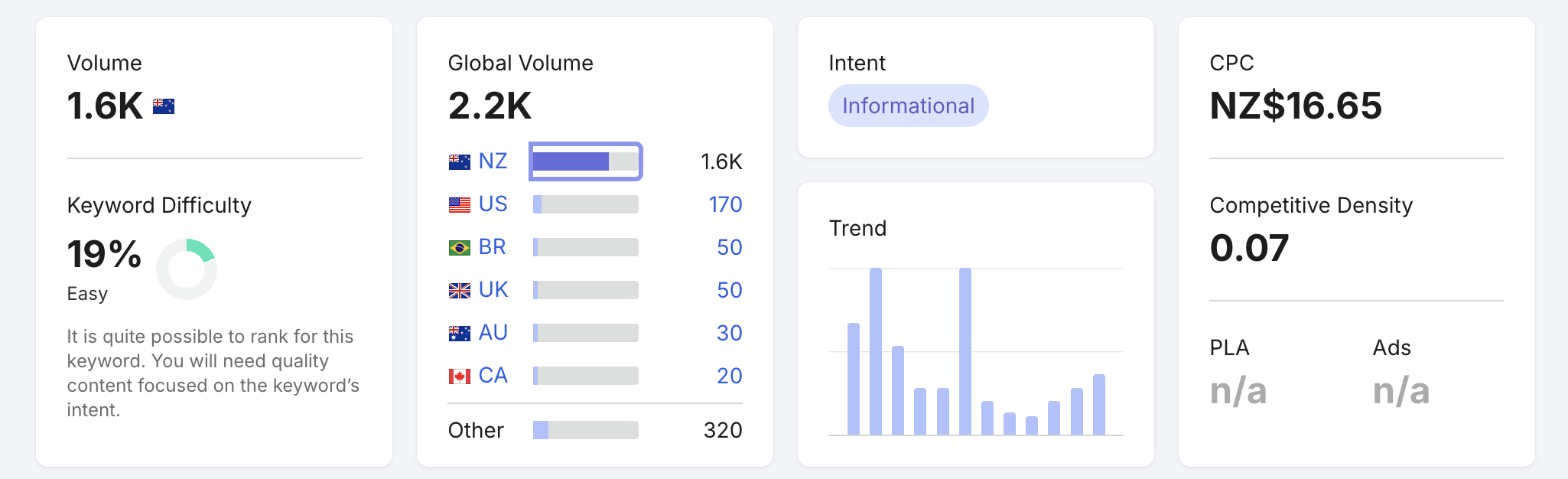
For example, a business like us at Back9 Digital, may want to rank for “search engine optimisation nz”, but there may also be value in targeting related terms such as:
- SEO services NZ
- Local SEO NZ
- SEO company NZ
- SEO Christchurch
- SEO Auckland
- Website optimisation NZ
- Digital marketing NZ
The goal is not to chase every keyword. The goal is to find the terms that are relevant to your business and likely to attract the right visitors.
A strong keyword strategy should include a mix of broad keywords, local keywords and long tail keywords. Long tail keywords are usually more specific, but they often attract people who are closer to making a decision.
2. Understand Search Intent
Search intent is the reason behind a search.
Someone searching “what is SEO” is probably looking for information. Someone searching “SEO services NZ” may be closer to choosing a provider. Someone searching “SEO agency Christchurch” is likely looking for a local option.
Understanding intent helps you create the right type of content for each search.
There are usually four main types of search intent:
- Informational: the person wants to learn something
- Commercial: the person is comparing options
- Transactional: the person is ready to take action
- Local: the person wants a provider in a specific area
If your page does not match the intent behind the search, it will struggle to perform.
For example, if someone wants practical SEO tips, a hard sales page may not be the best answer. An informative article is more useful. If someone is searching for an SEO provider, a clear service page may be more appropriate.
Good search engine optimisation in NZ starts with understanding what your audience needs at each stage of their journey.
3. Optimise Your Page Titles and Meta Descriptions
Your page title and meta description are often the first things people see in Google.
They help search engines understand your page, but they also influence whether someone clicks through to your website.
A good SEO title should be clear, relevant and include your focus keyword naturally. For example:
“12 Tips to Improve Search Engine Optimisation NZ”
A good meta description should explain what the page is about and give people a reason to click. For example:
“Improve your search engine optimisation in NZ with these practical SEO tips for New Zealand businesses. Learn how to improve visibility, traffic and website performance.”
For best results, every important page on your website should have a unique title and meta description.
Avoid writing titles that are vague, duplicated or stuffed with keywords. Google is looking for relevance, but users are looking for clarity.
4. Use a Clear Heading Structure
Headings help both users and search engines understand the structure of your content.
Your page should usually have one main H1 heading, followed by H2 headings for main sections and H3 headings for supporting points.
For example:
H1: 12 Tips to Improve Search Engine Optimisation in NZ
H2: Start With the Right SEO Keywords
H2: Understand Search Intent
H2: Improve Your Website Speed
This structure makes your content easier to scan and easier for Google to interpret.
It also improves the user experience. Most people do not read every word on a page. They scan first, then decide whether the content is worth their time.
Clear headings help them find what they need quickly.
5. Create Content That Actually Helps
Good SEO content should not feel like filler.
It should answer real questions, explain things clearly and help your audience make better decisions.
For New Zealand businesses, this could include:
- Service pages
- Location pages
- Blog articles
- Case studies
- FAQs
- Guides
- Comparison articles
- How to content
- Industry specific advice
The best SEO content is written for people first, then optimised for search.
That means your content needs to be useful, specific and easy to understand. It should also sound like your business, not like generic AI generated copy or recycled marketing text.
At Back9 Digital, we see content as part of your wider digital asset. It should help build trust, support your sales process and keep working for you over time.
6. Improve Your Local SEO
Local SEO is especially important if your business serves a specific city, region or community.
If someone searches for a product or service near them, Google wants to show relevant local results. To appear in those results, your website and online profiles need to make your location clear.
Ways to improve local SEO in NZ include:
- Optimising your Google Business Profile
- Creating location specific landing pages
- Keeping your name, address and phone number consistent online
- Building local citations
- Getting genuine customer reviews
- Adding local context to your website content
- Linking to relevant local organisations, projects or case studies
For example, if you want to rank in Christchurch, Auckland, Wellington or Invercargill, you need content that supports that local relevance.
A generic service page may not be enough. Google needs clear signals about where you operate and who you serve.
7. Optimise Your Google Business Profile
Your Google Business Profile can have a major impact on local visibility.
It helps your business appear in Google Maps and local search results. It also gives potential customers quick access to your contact details, reviews, photos, services and opening hours.
To improve your Google Business Profile:
- Make sure your business name is correct
- Add the right categories
- Keep your contact details up to date
- Add your services
- Upload quality photos
- Ask happy customers for reviews
- Respond to reviews professionally
- Add updates when relevant
- Link to the most relevant page on your website
For many local businesses, your Google Business Profile may be seen before your website. It needs to be treated as an important part of your SEO strategy, not an afterthought.
8. Make Sure Your Website Loads Quickly
Website speed matters.
If your website is slow, users are more likely to leave before they even see what you offer. Google also considers page experience as part of how it evaluates websites.
Common things that slow websites down include:
- Oversized images
- Poor hosting
- Too many plugins
- Bloated themes
- Unused scripts
- Poorly built pages
- Lack of caching
Improving website speed can support both SEO and conversions. A faster website gives people a better experience and helps search engines crawl your site more efficiently.
This is one of the reasons we believe SEO and website quality should not be separated. A technically weak website will usually limit your SEO performance.
9. Make Your Website Mobile Friendly
A large amount of search traffic now happens on mobile devices.
That means your website needs to work well on smaller screens. It should be easy to read, easy to navigate and easy to take action from a mobile phone.
A mobile friendly website should have:
- Responsive design
- Readable text
- Clear buttons
- Simple navigation
- Fast loading pages
- Forms that are easy to complete
- No awkward horizontal scrolling
- Content that adapts properly to screen size
If your website is frustrating on mobile, people will leave. That can reduce enquiries, lower engagement and weaken your overall SEO performance.
Search engine optimisation in NZ is not just about what Google sees. It is also about what real people experience when they visit your site.
10. Build Internal Links Between Relevant Pages
Internal links are links between pages on your own website.
They help users move through your content and help search engines understand how your pages are connected.
For example, an article about search engine optimisation in NZ could link to related pages such as:
- SEO services
- Website design
- Growth Driven Design
- Google Ads
- Analytics and reporting
- Conversion rate optimisation
Internal linking helps spread authority through your website and can support important service pages.
It also keeps users engaged by guiding them to the next useful page.
A simple rule is this: if another page on your website would genuinely help the reader, link to it.
11. Build Trust With Quality Backlinks
Backlinks are links from other websites to your website.
Google can use backlinks as a signal of trust and authority. But not all backlinks are equal. Quality matters more than quantity.
For New Zealand businesses, useful backlink opportunities may include:
- Local business directories
- Industry associations
- Supplier websites
- Partner websites
- Sponsorship pages
- Community organisations
- Guest articles
- PR mentions
- Case studies
- Local media
Avoid cheap link building schemes or low quality backlinks. These can look unnatural and may do more harm than good.
The best backlinks usually come from genuine relationships, useful content and credible business activity.
12. Track Results and Keep Improving
SEO is not a one time job.
Search engines change. Competitors change. Your business changes. Your website needs to keep improving as well.
Important SEO metrics to track include:
- Organic traffic
- Keyword rankings
- Enquiries
- Conversion rate
- Click through rate
- Bounce rate
- Engagement rate
- Indexed pages
- Google Business Profile actions
- Landing page performance
Tracking results helps you understand what is working and where the opportunities are.
The goal is not just to get more traffic. The goal is to attract the right traffic and turn more of that traffic into enquiries, sales or meaningful business outcomes.
At Back9 Digital, we see SEO as part of a wider growth strategy. Your website should not just exist. It should keep evolving into a stronger digital asset.
Final Thoughts on Search Engine Optimisation NZ
Search engine optimisation in NZ is about visibility, trust and long term growth.
The businesses that do well with SEO are usually the ones that commit to improving over time. They understand their audience, create useful content, build strong websites and measure what matters.
You do not need to do everything at once. Start with the foundations. Make sure your website is technically sound, your content is useful, your local presence is clear and your key pages are properly optimised.
From there, keep improving.
That is how SEO becomes more than a marketing task. It becomes part of building a stronger, more valuable digital asset for your business.
Want to know more. Get in touch