
A Fair Look at Google Tag Gateway and the Cookieless Shift

If you’ve heard people talking about the “cookieless future,” it probably sounds like a technical headache you’d rather avoid. But in plain English, it just means that the way websites remember visitors is changing. Old-school tracking methods (called third-party cookies) are being retired to give people more privacy. While that’s great for users, it can make it hard for you to see if your marketing is actually working. That is where Google Tag Gateway comes in. It’s a simple tool that helps your website talk to Google in a way that is modern, private, and much more reliable.

What Does “Cookieless” Actually Mean for You?

In the past, when someone clicked an ad and visited your site, a small bit of code from Google would follow them to see if they bought anything. Browsers like Safari and Chrome are now blocking that “following” behavior. For you, this means your data might start looking a bit messy. You might see sales coming in, but you won’t know which ad brought them there. It’s like trying to run a shop where you can see people buying things, but you can’t tell which door they walked through.

How the Gateway Solves the Problem

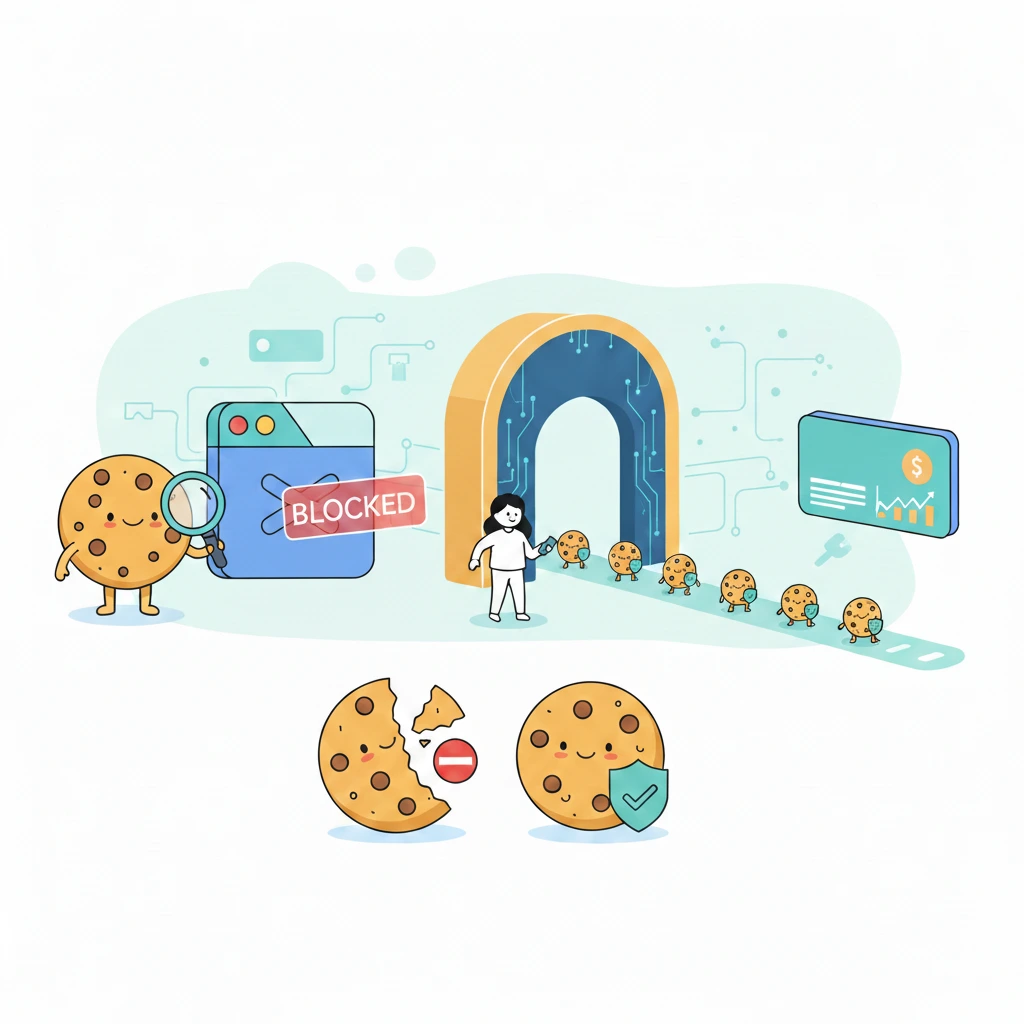
The Gateway acts like a friendly middleman. Instead of Google’s code reaching directly onto your site from the outside, the Gateway lets your own website handle the conversation.

Turning “Third-Party” into “First-Party”

Think of it this way: a “third-party” cookie is like a stranger trying to walk into a private club; the bouncer (the browser) usually says no. But a “first-party” cookie is like a member of the club. Because the Gateway runs through your own web address, the browser sees it as a trusted part of your site. It’s a much more stable way to keep track of your results without overstepping privacy boundaries.

The Real-World Benefits for Your Business

Better Ad Performance

When your data is accurate, Google’s AI knows exactly who is interested in your business. This means your ads are shown to the right people, and you aren’t wasting money on clicks that don’t lead to anything.

Stronger Privacy Control

Because you own the Gateway, you have more say over what data is shared. It allows you to be a responsible business owner by protecting your customers’ info while still getting the insights you need to grow.

Is This Something You Actually Need?

(Let’s be fair) If you’re a very small business with only a few visitors a month, you probably don’t need to worry about this just yet. But if you’re spending a significant amount of money on ads and want to ensure every dollar is tracked correctly, the Gateway is a smart move. It’s a “set and forget” solution that prepares you for the changes coming to the internet over the next year. It’s not about panicking; it’s just about making sure your tools are up to date.

Staying Ahead of the Curve

While the move away from third-party cookies is a permanent shift in how the internet works, there is no requirement for every business to change their setup immediately. The Google Tag Gateway is simply one technical path available for those who wish to adjust. Some businesses may find their current data is still accurate enough for the time being, while others may choose to look into this change sooner. Ultimately, it isn’t a mandatory fix, but it does provide a way to stay informed about your marketing results while following modern privacy standards.

Search Everywhere Means Search Has Changed. It’s Not Just Google Anymore.

For years, a huge focus around digital marketing – revolved around SEO (Search Engine Optimisation) and SEM (Search Engine Marketing): And primarily that meant, ranking in Google.

Don’t get me wrong, that still matters.

But the way people discover businesses, products, and answers has shifted (and is still shifting) dramatically.

Search is no longer confined to a single platform.

Today, people search everywhere, embracing the concept of Search Everywhere.

They expect to find the answers they want, fast!

And increasingly, they search without ever opening Google. And often can get an answer without clicking through to your website.

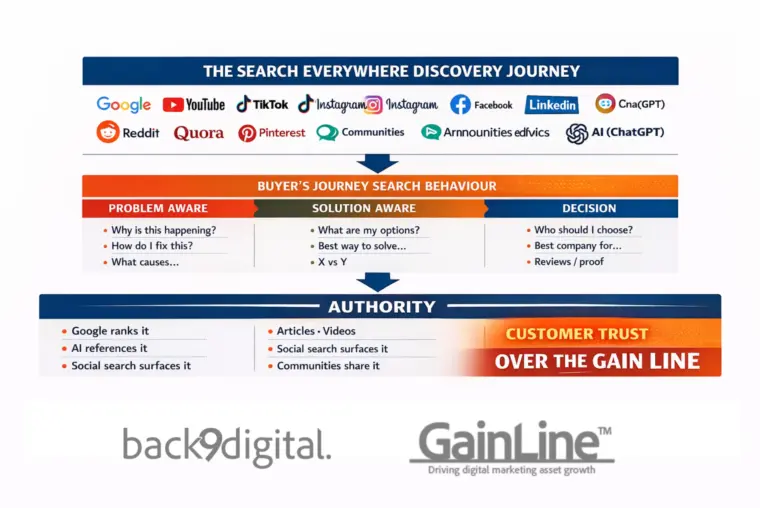
Infographic-Defining-A-Search-Everywhere-Philosphy-Connected-To-The-Buyers-Journey

Your (Potential) Customers Are Searching Across Multiple Platforms

Modern search behaviour is fragmented.

Depending on what stage of their buying journey, they are in, someone researching a product or service might:

  • Google a question
  • Watch a YouTube explainer
  • Look for recommendations on Reddit
  • Search TikTok or Instagram for real examples
  • Ask ChatGPT for a summary
  • Compare options on marketplaces like Amazon

All of those actions are search behaviour.

Research from Google shows that younger audiences in particular are changing how they find information. Nearly 40% of Gen Z prefer using TikTok or Instagram for search in some situations rather than traditional search engines.

Meanwhile:

  • YouTube has over 2.5 billion logged-in monthly users and is widely considered the second-largest search engine in the world.
  • Generative AI tools like ChatGPT now process billions of prompts each month, many of which are informational or research-based queries.
  • Social platforms increasingly drive discovery. Research reported by Search Engine Journal shows more than half of product discovery now happens on social platforms.

The key takeaway?

Search is no longer a channel.
It’s a behaviour.

People search everywhere they spend time online.

Why Traditional SEO Alone Isn’t Enough

Traditional SEO focuses on one objective: Rank higher in Google search results.

That still plays an important role. But it only covers one part of the discovery journey.

If your brand only appears in Google results, you’re invisible in many of the places customers now research and make decisions.

Modern visibility requires showing up across multiple environments, including:

  • Search engines
  • Video platforms
  • Social search
  • Community platforms
  • AI answer engines

This is why the idea of “Search Everywhere Optimisation” is emerging.

Not optimising for one algorithm.

Optimising for visibility wherever people search.

What “Search Everywhere” Actually Looks Like

Businesses that win online today tend to focus on four key outcomes:

1. Strong Google visibility

Traditional SEO still matters.

Ranking well for important commercial and informational searches builds consistent traffic and long-term authority.

2. Presence in AI-generated answers

Large language models increasingly summarise information for users.

Brands that publish clear, helpful, well-structured content are more likely to be referenced or cited in those answers.

Platforms like:

  • TikTok
  • Instagram
  • YouTube

are now used to research products, services, and solutions.

Content that demonstrates expertise and answers real questions can appear directly inside those searches.

4. Authority across the wider web

Brands that consistently answer real questions and publish valuable content tend to earn:

  • mentions
  • backlinks
  • citations
  • discussions across communities

That authority feeds visibility across multiple platforms simultaneously.

The Brands That Win Don’t Optimise for One Algorithm

Digital marketing used to revolve around playing by the rules of just one main search engine.

That approach doesn’t work anymore.

Today, the brands that gain traction focus on something much more durable:

  • Trust and visibility across the entire digital ecosystem.
  • They publish useful content.
  • They answer the tough questions.
  • They show expertise.

And as a result, they become discoverable everywhere people search.

The Real Goal: Be Visible Wherever Your Customers Are Looking

Your customers might find you through:

  • Google search
  • YouTube tutorials
  • social media search
  • AI answers
  • online communities
  • marketplace searches

The opportunity isn’t choosing one channel.

The opportunity is showing up across all of them.

Because when your brand appears consistently wherever people look, something powerful happens.

Trust compounds.

And that’s what ultimately moves customers over the GainLine.

Why Google Ads Prices Vary (And What You’re Actually Paying For)

If you’ve been shopping around for Google Ads help, you’ve probably seen pricing all over the place.

One agency charges a couple hundred a month. Another wants four figures.
Both claim they’ll “manage your campaigns” and “send reports”.

So what gives?

Google Ads pricing varies for one simple reason:

Understanding Google Ads Prices is essential for budgeting and strategy.

Not everyone is selling the same thing.

Some are selling “ads running”.
Others are selling “leads and outcomes”.

To be clear, in no way, shape or form, are those the same service.

The two parts of Google Ads Prices cost

First, separate the two costs. This clears up a lot of confusion.

1) Your ad spend (paid to Google)

That’s your daily or monthly budget. You pay that direct to Google.

2) Management (paid to the agency)

That’s what you pay for strategy, setup, optimisation, reporting, and accountability.

Most of the pricing difference sits in this second part.

Why some agencies are cheap

Low management fees usually mean one (or more) of these things:

They set it up once, then leave it

This is the classic “set and forget”.

The campaign runs. The invoice runs.
But performance doesn’t improve, because nobody is actively improving it.

Google Ads is not a crockpot. You can’t just set it and walk away.

They lean heavily on automation

Google’s automation can be helpful. However, it can also burn budget fast if it’s not controlled properly.

Cheap management often means:

  • broad match keywords with little oversight
  • automated bidding with no real testing
  • Performance Max turned on without a strategy
  • “smart” campaigns that Google can’t explain in plain English

Automation isn’t the enemy. Lazy use of automation is.

They give you “reports”, not insights

A lot of agencies send auto-generated reports. They look fancy, but they don’t answer the only questions that matter:

  • What changed this month?
  • Why did it change?
  • What are we doing next?
  • What’s the plan to improve?

If the report is just screenshots and graphs, you’re not getting strategy. You’re getting admin.

They don’t touch your landing page(s)

This is a big one.

Targeted Landing Pages are Key! Not only do they imporve your ad quality because they are more relevant, they actually provide your website visitor with a better user experience. Many Google Ads agencies treat the website as “not our job”.
They’ll drive traffic to a generic page that doesn’t convert, then blame the market.

But here’s the truth:

You can’t out-advertise a weak landing page.

If nobody owns conversion improvements, your results will cap out.

Why some agencies charge more

Higher pricing is usually justified when the agency is actually doing the hard stuff.

Strategy and structure

Good Google Ads management starts before anything goes live.

That includes:

  • keyword research that focuses on buyer intent
  • campaign structure that prevents wasted spend
  • location targeting that matches your service area
  • negative keyword strategy from day one
  • ad copy written to win the click for the right reasons

This is where most wasted money happens. Up front.

Proper tracking and attribution

If you can’t measure it, you can’t improve it.

Good management includes:

  • conversion tracking set up properly (forms, calls, bookings)
  • GA4 and Google Ads aligned
  • tag checks and ongoing tracking integrity
  • clarity on lead quality, not just lead volume

A cheap agency might track “clicks”.
A good agency tracks “enquiries”.

Ongoing optimisation

This is the part most people think they’re buying, but often aren’t.

Real optimisation looks like:

  • search term reviews and exclusions
  • bid strategy refinement
  • testing ads (not just writing one set and hoping)
  • splitting campaigns by intent
  • adjusting budget allocation to what’s working
  • improving Quality Score so you pay less per click over time

In other words: active management.

Conversion ownership

The best agencies don’t just run ads. They care what happens after the click.

That includes:

  • landing page recommendations
  • messaging improvements
  • call-to-action clarity
  • page speed and mobile usability
  • form friction reduction

If your agency never mentions conversion rate, that’s a red flag.

The uncomfortable truth: some agencies profit when you waste spend

Not all agencies do this, but it happens.

If an agency charges a percentage of ad spend, there can be a built-in incentive to push budgets up, even when the funnel can’t handle it yet.

The fix isn’t “never pay a percentage”.
The fix is transparency and accountability.

You should always know:

  • what changed
  • why it changed
  • what the next improvement is
  • and what success looks like

A simple way to tell what you’re getting

Ask this:

“If results drop next month, what do you actually do?”

If the answer is vague, you’re probably buying:

  • ads running
  • reports
  • and hope

If the answer is clear and practical, you’re buying:

  • management
  • improvement
  • and accountability

What to ask before hiring a Google Ads agency

Here are the questions that separate the good from the average:

  1. Will the campaign live in my Google Ads account?
    You should own it. Always.
  2. How do you prevent wasted spend?
    Listen for negatives, structure, and search term reviews.
  3. What conversion tracking will you set up?
    If they can’t explain it simply, that’s a worry.
  4. How often do you optimise?
    Monthly is often too light. Fortnightly or weekly is common for serious performance.
  5. Will you help improve the landing page?
    Even if they don’t build it, they should advise.
  6. What does reporting look like?
    It should include decisions and next steps, not just graphs.

Final thought: cheap Google Ads management is rarely cheaper

If your campaigns are set and forgotten, you pay for it one way or another.

Either:

  • you waste spend on irrelevant clicks, or
  • you miss out on leads you should have been getting, or
  • you give up and decide “Google Ads doesn’t work”.

Google Ads can work. It just needs to be managed properly.

If you want a clear view of where you’re at, a good next step is a simple review:

  • what’s working
  • what’s wasting money
  • and what to do next

No BS. Just clarity.

Request a Google Ads Account Audit Below

Why Is My Google Ad Not Showing?

If you have launched a Google Ad and it is nowhere to be seen, you are not alone. It is one of the most common frustrations for business owners. You hit “publish”, expect traffic, and then nothing. No impressions. No clicks. No results.

The good news, there is always a reason, and usually it is fixable.

At Back9 Digital, we troubleshoot Google Ads every week as part of our Growth Driven Design and digital marketing work. This guide explains the most common reasons why your Google Ad is not showing and how to fix them fast.

Understanding why your Google Ad is Not Showing can help you troubleshoot effectively and improve your advertising strategy.

1. Your Ad Is Still Under Review

Google reviews every new ad to make sure it follows advertising policies.
This process usually takes a few hours, but it can take up to 24 to 48 hours.

How to fix it:

  • Check your ad status inside Google Ads
  • If it says Under Review, give it time
  • If it is stuck longer than 48 hours, contact Google Support

2. Your Keywords Are Not Triggering Your Ad

If your keywords are too broad, too niche, or not aligned with your ad, Google might not show it.

Common issues:

  • Low search volume
  • Irrelevant keywords
  • Conflicting keyword match types
  • Negative keywords accidentally blocking traffic

How to fix it:

  • Review your keyword match types
  • Look for “Low search volume” alerts
  • Check negative keyword lists carefully
  • Use Search Terms insights to refine targeting

3. Your Budget Is Too Low

Low budgets cause ads to appear only part time, if at all.
If competitors are bidding aggressively, your ad may not even enter the auction.

How to fix it:

  • Increase your daily budget
  • Use automated bidding strategies
  • Consolidate campaigns if your budget is spread too thin

4. Your Bids Are Too Low

Even with a good budget, low bids make your ad uncompetitive. Google simply chooses another advertiser with a stronger bid.

How to fix it:

  • Increase your CPC bid
  • Use Smart Bidding
  • Improve ad relevance and landing page experience to boost Quality Score

5. Your Google Ad is not showing because it Has Been Disapproved

If your ad breaks Google’s rules, even unintentionally, it will not show.

Common disapprovals include:

  • Misleading claims
  • Trademark issues
  • Restricted industries
  • Excessive punctuation or capitalisation

How to fix it:

  • Look for the Disapproved status
  • Read the policy note
  • Edit and resubmit

6. Your Location Targeting Is Too Narrow

This catches a lot of NZ campaigns. If you only target a tiny radius or exclude key areas, Google may have nobody to show the ad to.

How to fix it:

  • Broaden your radius
  • Include “People in or regularly in your target location” and “People searching for your target location”
  • Remove unnecessary exclusions

7. Your Audience Targeting Is Too Tight

If you stack too many filters like age, interests, behaviour, or custom audiences, the overlap may be too small.

How to fix it:

  • Start broad, then refine
  • Use Audience Insights to check your targeting size
  • Remove any unnecessary audience layers

8. Your Ad Scheduling Is Limited

If your ads only run at certain hours, they simply will not show outside that window.

How to fix it:

  • Check your ad schedule
  • Expand to all days and hours
  • Test, then refine based on performance

9. Your Landing Page Has Issues

Google will not send traffic to a poor, broken, or slow page.

Common issues include:

  • Slow load times
  • Not mobile friendly
  • 404 errors
  • Thin content
  • No SSL security

How to fix it:

  • Test your page in PageSpeed Insights
  • Fix technical errors
  • Improve content and mobile experience

This is where Back9’s Growth Driven Design approach makes a difference, your landing pages become conversion machines.

10. Your Campaign Is Still Learning

Smart Bidding strategies need time. During the learning phase, your ad may not show consistently.

How to fix it:

  • Give the system time
  • Avoid too many edits during learning
  • Make sure your conversion tracking is accurate

Quick Checklist: Why Your Google Ad Is Not Showing

Tick these off one by one.

  • Ad approved
  • Budget high enough
  • Bids competitive
  • Keywords showing impressions
  • Location targeting reasonable
  • Ad schedule wide enough
  • Audience not too narrow
  • Landing page working
  • No negative keywords blocking traffic
  • Conversion tracking set up correctly

If any of these are not right, that is most likely the reason your Google Ad is not showing.

When to Get Help

If you have checked everything and your ad still will not show, it is time to get help from someone who can dive deeper.

At Back9 Digital, we troubleshoot Google Ads daily. We fix issues, rebuild underperforming campaigns, and integrate everything into your wider marketing and Growth Driven Design strategy.

If you want us to audit your Google Ads account, just say the word. In fact get a FREE Google Ads AUDIT here

Google Ads Audit Image

FAQs

Why does Google say my ad is eligible but not showing?

Usually it means your bids, budget, or competition level are stopping it from entering the auction.

Why is my Google Ad showing to some people but not others?

Your audience filters, location targeting, device settings, or ad schedule may be limiting reach.

Do Google Ads show immediately?

No, they go through a review process first.

How long should I wait before troubleshooting?

If it has been more than 24 hours with zero impressions, start checking.

Maximising Efficiency with Marketing Automation Tools

Marketing automation has been transforming how businesses engage with customers. It streamlines repetitive tasks, freeing up time for strategic planning.

Imagine reaching the right audience with personalised content, effortlessly. That’s the power of marketing automation.

Understanding how marketing automation works is crucial. It optimises the customer journey, enhancing user experience and boosting conversion rates.

Integrating CRM with marketing automation provides a holistic view of customer interactions. This integration is key to smarter campaigns.

Automation tools help businesses scale by automating email campaigns and social media posts. They ensure consistent communication across channels.

Data-driven insights from these tools allow for continuous improvement. They refine marketing strategies, leading to higher ROI and business growth.

What Is Marketing Automation and Why Does It Matter?

Marketing automation uses technology to automate marketing tasks. These tasks include email marketing, social media posting, and lead management.

This automation is more than just technology. It’s a strategic approach to optimise marketing efforts and improve efficiency.

With automation, businesses can engage with leads with personalised messages. This ensures every potential customer receives relevant content at the right time.

Key reasons marketing automation matters include:

  • Enhanced targeting of customer segments
  • Improved lead conversion rates
  • Increased efficiency in marketing processes

In today’s competitive market, staying ahead requires leveraging the power of marketing automation. Businesses that embrace these tools can save time and resources.

Moreover, marketing automation helps businesses maintain consistent communication across various channels. It provides a smooth experience for customers.

For small and mid-sized businesses, automation can be a game-changer. It allows them to compete with larger companies by streamlining operations and focusing on strategic growth.

Understanding marketing automation’s role and importance can transform your digital strategy. Embrace it to maximize your business’s potential.

How Automation Works: The Basics Explained

Marketing automation streamlines your marketing tasks by using software to automate repetitive actions. It’s like having a virtual assistant for your marketing team.

At the core, these tools collect and analyse data. This data helps you understand customer behaviours and preferences. With this insight, you can craft tailored messages for each segment of your audience.

Here’s a simple breakdown of how it works:

  • Collect data through various channels like social media and website visits.
  • Automate the sending of personalised emails based on user actions.
  • Track and analyse customer responses and interactions.

Automation tools can also score leads based on their activities. This helps prioritise which leads are ready for sales engagement.

By understanding how marketing automation works, you can optimise your customer interactions. This leads to more efficient workflows and a personalised user experience.

The key is to automate without losing the human touch. Keep your customers in mind as you design your automation strategies.

Mapping the Marketing Automation Customer Journey

The customer journey is vital for maximising engagement. Marketing automation tools enhance this journey, ensuring each interaction is meaningful and relevant.

Mapping out the customer journey with automation involves identifying key touch points. These touch points are moments where your business interacts with the customer, from awareness to purchase.

To effectively map the journey, follow these steps:

  • Identify and define each stage of the journey.
  • Determine the goals for each stage, aligning them with customer needs.
  • Automate personalized messages at each touchpoint to ensure consistency.

Tailoring messages at each stage creates a seamless experience, guiding customers through the sales funnel efficiently.

Utilize data from automation tools to refine your messaging strategy. Analyze how customers move from one stage to the next and make adjustments as needed. This approach not only enhances the customer experience but also improves your conversion rates, turning potential leads into loyal customers.

CRM Marketing Automation: Integrating Customer Data for Smarter Campaigns

CRM marketing automation is pivotal for crafting strategic marketing campaigns. It merges customer relationship management with automated marketing processes.

By integrating CRM data, businesses gain comprehensive insights into customer interactions. This holistic view enables the creation of highly personalized campaigns tailored to individual preferences.

Key steps in CRM marketing automation include:

  • Syncing CRM data with automation tools to enhance accuracy.
  • Segmenting customers based on specific behaviours and needs.
  • Crafting targeted messages that resonate with different segments.

Automation tools streamline the delivery of relevant content to the right audience. This strategic alignment boosts engagement and conversion rates effectively.

Using CRM data allows for precise targeting, reducing wasted resources on uninterested audiences. This integration not only optimizes marketing efforts but also strengthens customer relationships, fostering loyalty and repeat business. By leveraging CRM marketing automation, businesses can predict customer needs and respond proactively, staying ahead in competitive markets.

Key Benefits: Why Businesses Rely on Marketing Automation

Marketing automation provides significant advantages that businesses find indispensable. These tools free up valuable time by managing repetitive marketing tasks efficiently.

One major benefit is the increased lead generation and conversion rates. Personalized content targets the right audience, enhancing engagement and fostering customer loyalty. This tailored approach can make a noticeable difference in marketing outcomes.

Additionally, marketing automation ensures consistent communication throughout the customer journey. It uses data-driven insights to refine strategies and respond to shifting market conditions swiftly.

Key benefits of marketing automation include:

  • Streamlined marketing processes
  • Improved targeting and personalization
  • Enhanced lead tracking and nurturing
  • Comprehensive analytics for performance assessment

These benefits contribute to achieving a higher return on investment. Businesses that leverage marketing automation can scale more effectively, focusing resources on innovation rather than routine tasks. This strategic use of automation helps organizations remain competitive and growth-oriented in a digital-first marketplace.

Core Features to Look for in Marketing Automation Tools

Selecting the right marketing automation tools is crucial. They should align with your business goals and operational needs. Start by identifying features that enhance efficiency and user experience.

A key feature to consider is seamless integration with existing CRM systems. This ensures all customer data is synchronised and accessible for smarter decision-making and targeted campaigns.

Moreover, robust analytics capabilities are essential. These tools should offer insights into campaign performance, highlighting areas for optimisation.

When evaluating options, focus on these core features:

  • CRM integration for consolidated data
  • Detailed analytics and reporting tools
  • Multi-channel campaign management
  • Automation of repetitive tasks
  • Advanced segmentation and targeting

Lastly, ease of use and scalability are vital. The tool should grow with your business, adapting as your digital marketing strategy evolves. This flexibility allows for continuous improvement and sustained competitive advantage.

Building an Effective Marketing Automation Strategy

Creating a robust marketing automation strategy requires clear objectives. Start by defining what success looks like for your business. It’s essential to align automation with your broader marketing goals.

Begin with understanding your audience. Know their needs, preferences, and behaviours to tailor your campaigns effectively. A customer-focused approach ensures relevance and boosts engagement rates.

Map out your marketing processes. Identify which tasks can be automated to save time and resources. This step highlights areas for potential efficiency gains.

Key steps to consider include:

  • Defining clear objectives and success metrics
  • Understanding and segmenting your audience
  • Mapping processes and identifying tasks for automation
  • Integrating automation into existing marketing efforts

Finally, regularly review and refine your strategy. Continuous improvement helps adapt to changing market conditions and emerging trends. By doing so, you ensure your automation strategy remains effective and aligned with your business goals.

Common Pitfalls and How to Avoid Them

Implementing marketing automation can sometimes lead to missteps. These errors often stem from a lack of preparation or understanding. Avoid these pitfalls by staying informed and strategic.

One common mistake is over-automation. Automating everything can lead to impersonal interactions. Keep a balance by maintaining human touchpoints where needed. It’s crucial to remember that customers value genuine connections.

Another frequent issue is neglecting data hygiene. Poor data quality can lead to inaccurate targeting. Regularly clean and update your databases to ensure accurate segmentation.

Watch out for these pitfalls:

  • Over-automating and losing personalization
  • Neglecting data hygiene and segment accuracy
  • Ignoring analytics and failing to optimize campaigns

Lastly, forget not to analyze your results. Use analytics to refine your strategies and enhance performance. Doing so ensures your marketing automation efforts remain relevant and effective.

Real-World Examples: Marketing Automation in Action

Marketing automation is being used effectively by various companies. Small businesses and large corporations benefit from these tools. They streamline processes and elevate customer engagement.

For instance, a mid-sized e-commerce brand uses automation to personalise email marketing. By leveraging customer data, they send tailored offers based on purchase history. This strategy boosts their conversion rates significantly.

Another example is a local service provider. They utilize automation to manage their social media presence. Scheduled posts and engagement analytics help them connect with their audience more efficiently.

Real-world examples include:

  • Personalized email campaigns by e-commerce brands
  • Social media management for local service businesses
  • Streamlined customer support with automated responses

These examples highlight the tangible benefits of marketing automation. They showcase how various industries leverage tools to enhance operations and drive growth.

Measuring Success: Analytics and Continuous Improvement

Analytics play a crucial role in evaluating marketing automation. They offer insights into campaign performance and ROI. Businesses can refine their strategies based on these findings.

Continuously monitoring data ensures campaigns remain effective. It allows for adjustments to market changes. This agility can greatly enhance results over time.

Key metrics to track include:

  • Conversion rates
  • Customer engagement
  • Marketing campaign ROI

Analysing these metrics helps businesses identify what works. This focus on continuous improvement can increase the efficiency of marketing efforts. Ultimately, it drives sustained growth and customer satisfaction.

Getting Started: Steps to Implement Marketing Automation in Your Business

Marketing automation requires thoughtful preparation. First, clearly outline your business goals. Understand what you aim to achieve with automation.

Next, choose a tool that aligns with your needs. Evaluate features, usability, and integrations. Ensure it fits within your existing tech stack.

Initial steps for implementation:

  • Define key objectives
  • Research and select the right tools
  • Train your team on usage

After setup, monitor results closely. Gather data to measure initial outcomes. This approach ensures you’re moving in the right direction. Aim to refine strategies based on ongoing insights for optimal performance.

Conclusion: Transforming Your Business with Marketing Automation

Marketing automation empowers businesses to work smarter, not harder. By automating repetitive tasks, companies can focus on strategy and growth.

As you integrate marketing automation, watch as efficiency increases and customer engagement improves. This transformation is key to unlocking potential and driving sustainable business success.

Search Generative Experience (SGE) is Here, but What the Heck Is It?

Google’s new Search Generative Experience (SGE) is officially live—and it’s already shaking up search results. If your rankings have shifted recently, or your traffic’s taken a sudden dive (or spike), SGE could be the reason why.

So, what the heck is it? Let’s break it down through the lens of this search generative era.

What is Search Generative Experience (SGE)?

SGE is Google’s AI-powered upgrade to search. Instead of just showing you a list of links, Google now uses artificial intelligence to generate quick, conversational answers directly in the results, crafting a new generative search experience for users. These AI Overviews appear right at the top of the page—often above the traditional ‘blue links.’

Think of it like this: You ask Google a question, and instead of sending you off to a bunch of websites, it gives you a tidy summary right then and there.

Sounds helpful, right? It is—but for businesses and content creators, it’s also a game-changer with this new search generative technology.

Why Does SGE Matter for Your Website?

Because people might never click through to your website again in this search generative era.

SGE pulls answers directly from existing web content—your content. But it doesn’t always credit the source clearly, and often, users don’t scroll past the AI Overview. This means fewer clicks, even if your information is being used.

That’s a big shift. Your website might still be providing value, but getting none of the traffic due to the search generative experience.

So yes—SGE matters. A lot.

How Search Generative Experience Affects SEO

With SGE in play, traditional SEO isn’t dead, but it’s definitely evolving. Here’s how this generative experience is changing SEO:

  • Position Zero is now AI: Featured snippets used to be the top prize. Now, AI Overviews are taking that spot.
  • Long-form queries rule: The AI tends to surface in response to detailed, complex questions. This favours in-depth, conversational content.
  • Semantic search is key: SGE relies on meaning, not just keywords. So content has to be clear, structured, and genuinely helpful.
  • Click-throughs are dropping: Even if you rank well, fewer people might be clicking—because they’re getting what they need from AI.

What You Can Do About It

You don’t have to panic—but you do have to adapt. Here are three ways to stay ahead during this search generative shift:

  1. Optimise for AI Overviews
    Create content that answers questions directly, using simple language and clear structure. Use headings (like this), bullet points, and natural-sounding FAQs.
  2. Go deeper
    AI Overviews often summarise the basics. To compete, your content needs to offer depth, insight, or unique perspectives that readers do want to click for.
  3. Double down on E-E-A-T
    Google still values Experience, Expertise, Authoritativeness, and Trustworthiness. Make sure your content reflects that—especially in competitive niches that are adapting to the search generative experience.

Don’t Get Left Behind

The Search Generative Experience (SGE) is no longer “the future”—it’s the new normal. If you’re not adjusting your content strategy for AI-first search, you’re going to fall behind.

That might sound harsh. But with the right approach, it’s also a huge opportunity. Less clutter, more relevance—and if you get it right, a stronger connection with your audience.

So: SGE is here. Now you know what the heck it is.

The next step? Ensure Google knows what you know—and why your content deserves to be seen in this search generative framework.