
UX Revolution: User-Centric Design

In today’s competitive software landscape, a great user experience (UX) isn’t just a nice-to-have—it’s a critical differentiator that can make or break your product’s success. As we navigate an increasingly digital world, user-centric design has emerged as a key driver of innovation, customer satisfaction, and ultimately, business growth. Let’s explore how this approach is transforming the software industry and why it should be at the heart of your development strategy.

The Business Case for User-Centric Design

The numbers speak for themselves:

  • Forrester has shown that UX investments do lead to significant returns – commonly cited as around 100x the investment, or a 9,900% ROI – across specific cases or studies (Forrester, 2021).
  • 88% of online consumers are less likely to return to a website after a bad user experience (Amazon Web Services, 2024).
  • Improving customer experience can raise KPIs by over 80% while decreasing error rates and development time (IBM, 2023).

These statistics underscore the profound impact that user-centric design can have on your software’s success. But what does it really mean to put the user at the centre of your design process?

Key Principles of User-Centric Software Design

  1. Empathy-Driven Development: Start by truly understanding your users’ needs, pain points, and desires through in-depth research and personal development.
  2. Iterative Prototyping: Embrace rapid prototyping and continuous user testing to refine your designs based on real user feedback.
  3. Accessibility by Design: Ensure your software is usable by people with diverse abilities, improving overall usability for all users.
  4. Contextual Design: Consider the various environments and scenarios in which your software will be used, optimising for different contexts.
  5. Emotional Design: Go beyond functionality to create experiences that resonate emotionally with your users, fostering loyalty and enjoyment.

Case Study: Airbnb’s UX Overhaul

Airbnb revamped their platform by focusing on user-centric design principles, tailoring their search and booking experiences to user needs. By integrating features like wishlists, personalised recommendations, and enhanced mobile functionality, Airbnb saw:

  • 30% increase in bookings through mobile
  • 40% higher user engagement on their site
  • Enhanced customer satisfaction, with an overall improvement in their Net Promoter Score (NPS) by 25 points

This transformation solidified Airbnb’s position as a leader in the hospitality industry and significantly boosted user trust and loyalty. You can read more about this case study here.

As technology evolves, so do the possibilities for enhancing user experiences:

  • AI-Powered Personalisation: Leveraging machine learning to create interfaces that adapt to individual user preferences and behaviours in real-time.
  • Voice User Interfaces (VUI): Designing intuitive voice-controlled experiences as voice technology becomes more prevalent.
  • Augmented Reality (AR) Interfaces: Incorporating AR to create immersive, context-aware user experiences that blend digital and physical worlds.

Overcoming Challenges in User-Centric Design

While the benefits are clear, implementing a truly user-centric approach comes with its challenges:

  1. Balancing User Needs with Business Goals: Finding the sweet spot between what users want and what’s feasible and profitable for the business.
  2. Designing for Diverse User Groups: Creating experiences that cater to a wide range of users without compromising on simplicity and intuitiveness.
  3. Measuring UX Success: Developing meaningful metrics to quantify the impact of UX improvements on business outcomes.

Implementing User-Centric Design: A Strategic Approach

  1. Embed UX in Your Culture: Make user-centric thinking a core value across your organisation, not just in the design team.
  2. Invest in User Research: Allocate resources for ongoing user research to keep your finger on the pulse of user needs and preferences.
  3. Adopt Design Thinking: Implement design thinking methodologies to foster innovation and problem-solving centered around user needs.
  4. Continuous Iteration: Embrace a culture of continuous improvement, regularly updating your software based on user feedback and changing needs.
  5. Cross-Functional Collaboration: Break down silos between design, development, and business teams to ensure a holistic approach to user-centric design.

The Future is User-Centric

In the evolving software landscape, user-centric design isn’t just a trend – it’s the future of successful product development. By putting users at the heart of your design process, you’re not just creating better software; you’re building lasting relationships with your customers and setting your business up for long-term success.

Are you ready to revolutionise your software development with a user-centric approach? Let’s explore how we can transform your ideas into intuitive, engaging, and successful products that truly resonate with your target users. Contact Back9 Creative today to join the revolution and start your UX UI design and user-centric design journey.

11 Years on the Back9 (Creative)

From Back9 Design to Printing.com, to Back9 Creative…

Well, it’s 4:40 am as I write this on Thursday, 4th July 2024. And crikey it brings back a memory and a tear.

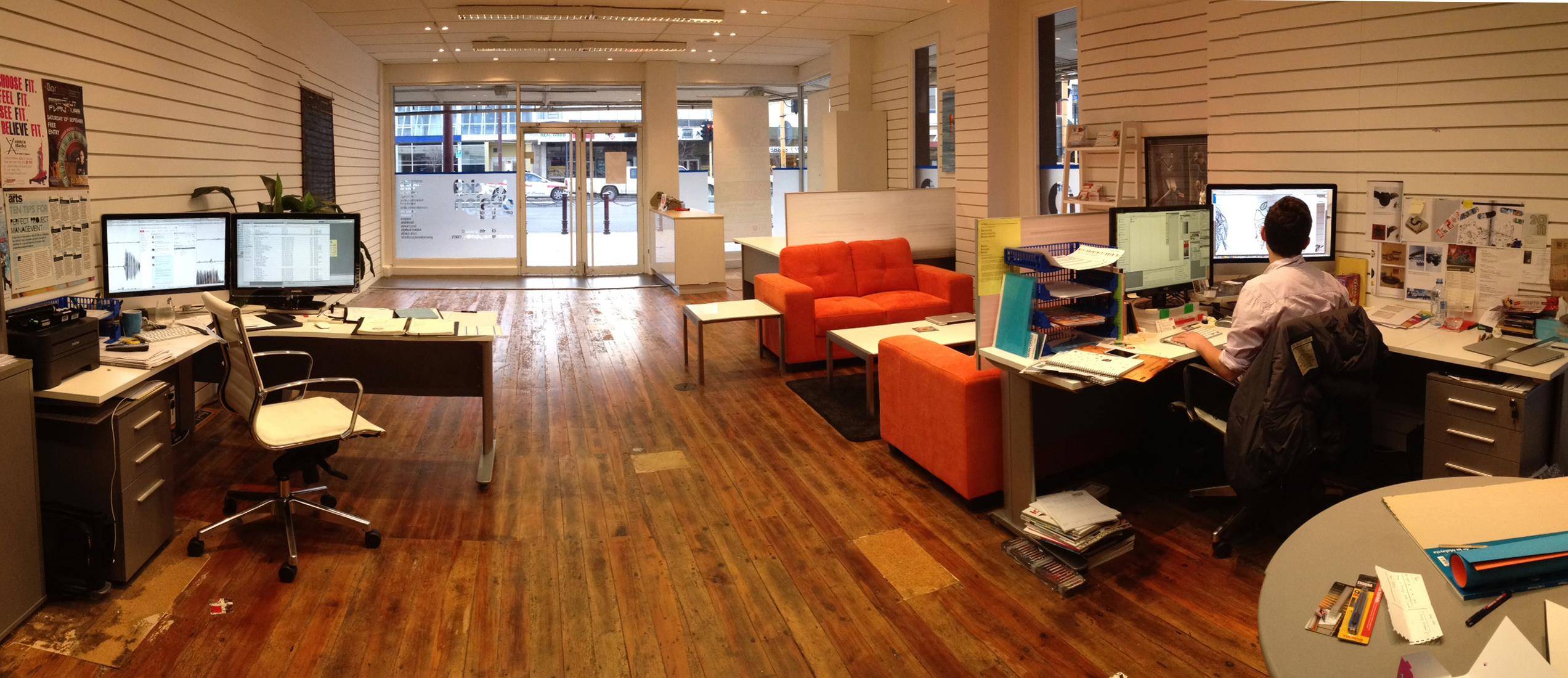
This time 11 years ago, I was fizzing with excitement. We were hours away from opening up in our first studio to the public, on the main street of Invercargill. 

Back9 Creative Studio With Printing.com On Dee Street Invercargill In 2011
Our first location, on the corner of Don & Dee street.

Having secured the local Printing.Com franchise, meant we could offer a lot of services in one place. From graphic design and branding identity with a full-service print offering. as well as dabbling in websites. Not only that we seemed to offer anything and everything in between. But, I was sure that this was our ticket to success… We were everything to virtually everyone. 

However, that spreads you thin. Add to that, the print game was (and still is) a tough gig in itself. 

Fast forward to today and oh, how things have changed!

Things are always changing and as we know, change is the only constant. So two studios on, multiple personnel changes and various pivots around what we offer (and to whom) have seen us grow, learn and develop into the business we are today.

From design for print and signage to a ‘digital services’ only business still ever-evolving in the people and culture space, it’s fair to say in some ways it feels like we’re just getting started (again).

In 2016 we shed the co-branding of Printing.com, and that felt like a fresh start too, and to a degree it was. Then as of July last year, we ceased offering print all together and I’ve realised in the last month or two, that even design for print is not our thing either! 

Back9 Creative Spey Street, Invercargill Studio
Our studio located on Spey street.

11 years on – what do we offer at Back9 Creative now? 

We offer results-driven digital marketing and digital advertising. Whilst Impressions (how many times your ad has been viewed on a page) and Reach (a guess of how many may have seen it) are great metrics that still need to be valued and understood, they’re not the ultimate result. The ultimate result is a lead, or a customer – it’s money in the bank.

Yep, it’s conversions that count. Conversions are the gold at the end of the rainbow, and we are always wanting to get businesses more conversions! ROAS and ROI are the metrics that truly matter.

To succeed in results-driven measurement marketing, it takes investment. Investment in time, effort, and money. There’s no silver bullet. And the clients who we achieve success with, also treat it as a partnership. They see it as a two-way street, and we win together! We don’t work for these clients, we work with them! 

That’s our aim going forward. To work with good people and help them and their businesses grow, and start cranking, ranking and winning online! 

Back9-Creative-Studio-Space As The Business Hits 11 Years Old
The current Back9 Studio located at 22 Kelvin street.

Thank you!

Over the 11 years we have had many (many) interactions with clients, customers, collaborators and team members, and for the most part – it’s been great! The biggest lesson I’ve learned is not all relationships are supposed to work out. Those lessons teach us what we need to know and help guide us towards change for the better. Also- nothing is permanent! Striving to be and remaining relentlessly optimistic is the only real way forward.

So from the bottom of my heart, I want to thank everyone who has been a part of our journey and in whichever way, shape or form, for the many valuable lessons you have taught me along the way. It has all shaped Back9 Creative in to what it is and will continue to become in the future. Heres to the next 11 years.

Thank you!

Phil Robinson
Founder

SEO for Multiple Locations: One Website to Rule Them All

When expanding your business to multiple locations, the SEO strategy you choose can make or break your online success. Some businesses think the best approach is to create separate websites for each location. While that sounds logical, it’s like managing multiple social media accounts for one brand—exhausting and often counterproductive. There’s a better way: focus on building one robust website with multiple location pages. This approach packs more punch for traffic, domain authority, and local SEO, without the headache of juggling multiple domains.

Why Multiple Websites Create More Problems Than Solutions

Imagine running a chain of coffee shops. Would you prefer to manage one central menu or individual menus for each location? If you said “one menu,” congratulations—you’ve already grasped why having multiple domains is a nightmare.

Managing multiple websites means dividing your resources, splitting your content efforts, and confusing search engines. Google thrives on clarity and authority. Splitting your business into separate domains dilutes both. Your SEO power gets scattered, and maintaining high-quality content across several sites becomes a Herculean task.

Instead, a single website allows you to consolidate all your SEO efforts in one place. This boosts your domain authority, enhances user experience, and simplifies content updates. Think of it as putting all your best players on one soccer team instead of spreading them across different squads.

The SEO Power of One Website

A unified website with multiple location pages creates a clear and authoritative structure for search engines to crawl. You’re essentially telling Google, “Hey, we’re one big, happy business family.”

Here’s how it works:

  1. Domain Authority Boost:
    When all your traffic flows to one website, your domain authority naturally increases. Google sees this as a sign of relevance and trustworthiness.
  2. Content Power:
    A single site means one blog, one FAQ section, and one resource hub. This keeps your content strategy focused and impactful.
  3. Backlink Benefits:
    Backlinks pointing to one website are far more powerful than links spread across multiple domains. It’s about quality over quantity.
  4. Simplified Analytics:
    Monitoring traffic, user behavior, and conversions becomes infinitely easier with one site. No more hopping between dashboards.

Structuring Your Website SEO for Multiple Locations

To maximize SEO for multiple locations, structure your website with dedicated pages for each place you operate. Each page should include:

  • Location-specific keywords
  • Accurate NAP (name, address, phone number) information
  • Unique content about services offered at that location
  • Customer reviews and testimonials
  • Embedded Google Maps

This approach satisfies both users and search engines. Visitors can easily find information about their nearest location, and Google knows exactly where to direct local traffic.

Local SEO: The Key to Multiple Location and SEO Success

Local SEO is the bread and butter of businesses with multiple locations. It ensures you rank high in search results for “near me” queries, like “best pizza near me” or “top-rated mechanic in [city].”

Here are some tips to optimize local SEO for each location:

  1. Claim Google Business Profiles:
    Create and manage a profile for each location. Keep Google Business Listing details accurate and consistent.
  2. Localised Content:
    Write blogs or updates relevant to each area. Think “5 Things to Do in Invercargill This Weekend.”
  3. Citations Matter:
    Ensure your business information is consistent across directories like Yelp, Yellow Pages, and TripAdvisor.
  4. Encourage Reviews:
    Ask happy customers to leave reviews on Google. Positive feedback boosts your rankings.

But What About Subdomains or Subdirectories?

Some business owners ask if subdomains (e.g., invercargill.back9.co.nz) are a good idea. While subdomains are better than separate websites, they still split your SEO power. Subdirectories (e.g., back9.co.nz/locations/invercargill) are the best option. They keep all your content under one domain, maximising authority and traffic.

Keeping Things Simple Pays Off

Building one website for multiple locations isn’t just good for SEO—it’s good for your sanity. You’ll save time, money, and effort while creating a better experience for your customers.

Google rewards clarity, authority, and relevance. By focusing your efforts on one well-structured website, you’re setting your business up for success in a competitive digital landscape.

So, leave the “one domain per location” strategy in the dustbin. Consolidate, optimise, and watch your traffic grow. Remember, less is more—except when it comes to coffee or website visitors. There, more is definitely better.

By sticking to a unified website approach, your SEO efforts will deliver better results. It’s time to simplify and let your online presence shine. If you need help navigating this process, the team at Back9 is here to make it happen. Let’s kick your multi-location SEO into high gear!

How much does it cost to start a business?

So, you’ve got killer ideas, a fire in your belly, and dreams as big as the sky. You’re ready to take on the world with your own business. But hold your horses, my ambitious friend! Before you start ordering those “CEO” business cards, let’s talk about the cost to start a business and make those dreams a reality.

The beginning

First up, let’s talk about setting up shop (or buying an existing business). Whether you’re opening a cozy coffee shop or launching the next big tech startup, there are some basic costs you can’t escape. Think business licenses, permits (they can take their sweet time), and all that fun legal stuff. Due diligence can’t be skimped on so be prepared to shell out some dough for a good lawyer. Writing an business plan is also a good idea. It’ll help you gain clarity of your vision and goals as well as help you identify potential opportunities and challenges.

Housing it all

You’ll need a location for your business whether you need a store front or a backroom warehouse. One of the key decisions you’ll need to make is whether to lease or purchase a commercial space for your operations. Leasing can be a cost-effective option, especially for new businesses, as it typically requires a lower upfront investment compared to buying property. It also offers flexibility, allowing you to relocate or renegotiate terms as your business grows or circumstances change. However, it’s essential to carefully review the lease agreement, paying close attention to factors such as the lease term, rent escalations, renewal options, and any restrictions on the use of the space. Engaging a real estate professional or an lawyer can help you navigate the leasing process and ensure you secure favourable terms that align with your business needs and long-term goals.

The next step

Now, let’s talk about the fun stuff – plant and stock. Depending on your business, this could mean anything from a warehouse full of gadgets to a garden full of organic kale. Either way, it’s gonna cost ya. And don’t forget about marketing! You’ll need a killer logo that screams “I’m awesome!”, a website that doesn’t look like it was built in the ’90s, signage that makes people stop and stare, and print materials that make you look like a million bucks (even if your bank account says otherwise).

Add A Heading 6

It doesn’t stop there. Don’t forget about the little things that add up fast like office supplies, insurance, and let’s not forget about everyone’s favourite – taxes! Yep, Uncle Chris wants his cut, even if your business is just a twinkle in your eye.

Whats the damage?

So, how much is all this gonna cost you? The truth is, it varies. But here’s a tip: take whatever number you have in your head, and then double it. And just for good measure, add a little extra on top. Trust me, you’ll thank me later.

But hey, don’t let all this talk of money scare you off. Starting a business is like riding a roller coaster – it’s scary, it’s exhilarating, and sometimes you’ll want to throw up. But in the end, it’s one heck of a ride. So, strap in, hold on tight, and get ready to chase those dreams – cash in hand!

The main advice – don’t skimp on the marketing when you start a business

Starting a business is no walk in the park, especially when it comes to money. But with a little humour, a lot of hard work, and maybe a few extra dollars in your pocket, you can turn those dreams into reality.

So, go ahead, take the plunge – just don’t forget to leave enough in the piggy bank to market your great venture. There is no point in putting in all the time and effort to start a business but not being able to effectively tell anyone about it.

Want to start off on the right foot? Back9’s Digital Marketing Roadmap is exactly what you need.

Back9-Creative-Digital-Marketing-Roadmap-Advert

The truth about CPM Advertising

In the world of digital advertising, CPM (Cost Per Mille or Cost Per Thousand Impressions) is a popular pricing model used by publishers and advertisers alike. CPM advertising involves paying a fixed rate for every 1,000 impressions (an impression is when someone views or interacts with your ad) of an advertisement. While this model has its advantages, it also comes with its fair share of drawbacks. Let’s explore the pros and cons of CPM advertising.

Pros of CPM Advertising:

Guaranteed Exposure:

With CPM advertising, advertisers are assured that their ads will be displayed a specific number of times, regardless of whether the ads are clicked on or not. This guaranteed exposure can be beneficial for brand awareness campaigns and reaching a broad audience.

Cost Control:

CPM pricing allows advertisers to set a fixed budget for their campaigns. Since the cost is based on impressions, advertisers can predict their expenses more accurately, making it easier to manage their advertising budgets.

Audience Targeting:

Publishers often offer various targeting options, such as demographic, geographic, and contextual targeting, which can help advertisers reach their desired audience more effectively.

Add A Heading 1

Cons of CPM Advertising:

Lack of Direct Response:

This type of advertising is not ideal for direct response campaigns where the primary goal is to generate immediate clicks, conversions, or sales. Since advertisers pay for impressions rather than actions, there is no guarantee that the ads will generate the desired level of engagement or conversions.

Ad Blindness:

As users become more accustomed to online advertising, they may develop “ad blindness”. This is where the viewer ignores or subconsciously filters out advertisements, reducing the effectiveness of CPM campaigns.

Viewability Issues:

Not all impressions are equal. Some impressions may occur when the ad is not visible to the user. Usually because it was loaded off-screen or because the user scrolled past it quickly. This can lead to wasted ad spend and ineffective campaigns.

Potential for Fraud:

CPM advertising is susceptible to impression fraud, where malicious actors generate fake impressions to inflate their revenue. This can result in advertisers paying for impressions that were never seen by real users.

CPM advertising can be an effective option for brand awareness campaigns and reaching a broad audience within a fixed budget. However, it may not be the best choice for campaigns focused on direct response or conversions. Advertisers should carefully evaluate their campaign goals, target audience, and budget when deciding whether to use CPM advertising or explore alternative pricing models such as CPC (Cost Per Click) or CPA (Cost Per Acquisition).

Back9-Creative-Digital-Marketing-Roadmap-Advert

Expert Google Ads Management: Your Key to Efficient Ad Spend and Better Results

Proper ad account management is key when it comes to navigating the complex world of Google Ads. Therefore at Back9 we believe enlisting the expertise of a certified Google Partner can be the game-changer your business needs. A reliable partner not only has the capability to optimise your ad spend efficiently. But also they can bring a wealth of experience to the table. In turn this allows for tailored and flexible campaign setups that can significantly enhance your results. In this article, we will delve into the undeniable advantages of partnering with a certified Google Ads expert. We will explore how a strategic alliance can elevate your advertising efforts and drive success for your business.

Understanding Google Ads

Brief Introduction to Google Ads

Google Ads is a powerful digital advertising platform where businesses pay to display brief advertisements. From service offerings, product listings, to video content within the Google ad network. The Google Ads platform operates on a pay-per-click (PPC) model. This means advertisers only pay when a user actually clicks on their ad. Google Ads offers unparalleled reach as it allows you to show your ads to users who are actively searching for the keywords you’ve selected. This can drive targeted traffic to your website, increase phone calls, or even direct foot traffic to your physical location. It’s a flexible tool that can be customised for all types of businesses and budgets. As a result, this gives you control over your campaigns, ad spend, and audience targeting.

Google Ads as an Investment

Investing in Google Ads is akin to investing in the visibility and growth of your business. When you allocate funds to Google Ads, you’re not just spending money; you’re investing in your business. You’re also investing in the potential to reach a vast audience that’s already interested in what you have to offer. However, the key to making the most of this investment lies in strategic planning and ongoing management. It’s important to ensure that your ads reach the right people at the right time. A well-managed Google Ads campaign can yield a substantial return on investment (ROI). That return will come by driving increased traffic, generating leads, and converting prospects into customers. Remember, the success of your Google Ads investment is directly tied to how effectively you do the follwoing.

  • Target your audience,
  • Manage your bids, and;
  • Track the performance of your ads.

Check out this information on How much Google Advertising Costs. Or How much money you should spend on Google Ads!

Importance of Targeted Advertising

Targeted advertising is at the heart of Google Ads’ effectiveness. By focusing your ads on the specific demographics, interests, and behaviours of your ideal customer, you can significantly increase the chances of your ad resonating with the audience. This level of specificity prevents wasteful spending on broad, unfocused ad campaigns that don’t convert well. Google Ads provides a variety of targeting options. These include:

  • Location targeting
  • Keyword targeting
  • Device targeting
  • And more

All of which allows for precise placement of your ads in front of those most likely to convert. As a result, your ad budget is used more efficiently, potentially leading to a higher ROI. Moreover, with targeted advertising, the data collected through interactions can provide invaluable insights into customer behavior. And this can help with further refining your marketing strategies over time.

Benefits of a Certified Google Ads Partner

Efficiency in Ad Spend Management

There a many benefits of working with a certified Google Ads partner brings for efficient Google ad management. Firstly, these partners are trained to understand the nuances of Google Ads and to optimise campaigns for the best possible performance. And secondly, they employ advanced strategies like bid adjustment, keyword refinement, and A/B testing. These strategies ensure that every dollar of your ad budget is being used effectively.

Certified partners have access to powerful tools and insights that allow them to analyze data quickly. Therefore this means they can make informed decisions on where to allocate resources for maximum impact. They can identify underperforming ads and adjust or pause them to cut losses. And that ensures that your budget goes toward campaigns that are delivering results. This level of efficiency in managing your ad spend not only saves money but also improves campaign outcomes. Therefore making your investment work harder for you.

Flexibility in Campaign Setup

Certified Google Ads partners bring a level of flexibility to campaign setups that can be critical for businesses looking to adapt in a dynamic market environment. Their expertise allows for the creation of campaigns that can quickly pivot based on performance data, market trends, and changes in business objectives. This adaptive approach ensures that your advertising efforts are not static but are evolving to meet the needs of your target audience. Whether it’s expanding into new markets, testing different ad formats, or exploring new keyword opportunities, a Google Ads partner can adjust your strategy on-the-fly. This agility in campaign management is essential for staying competitive and can mean the difference between an underperforming campaign and one that captures and retains the attention of potential customers, leading to better engagement and increased sales.

Achieve Optimal Results with Expertise

The value of a certified Google Ads partner lies in their specialised knowledge and experience, which translates into achieving optimal results for your campaigns. These experts have a deep understanding of how Google Ads works and are up to date with the latest features and best practices. Their expertise enables them to craft strategies that align closely with your business goals, whether it’s increasing brand awareness, driving traffic, or boosting conversions. They can fine-tune targeting, craft compelling ad copy, and design landing pages that convert. Moreover, their ability to analyze and interpret complex data means that they can continuously improve your campaigns for better performance. By using their expert knowledge, you can expect not just incremental improvements, but significant gains in the effectiveness of your ad spend, leading to tangible business growth.

Our Google Ads Management Approach

Free Google Ads Account Audit

To kickstart your journey towards optimized Google Ads campaigns, we offer a free Google Ads account audit. This initial assessment is a comprehensive examination of your current campaign structure, ad spend, keyword performance, and overall strategy. Our expert team analyzes your account to identify areas of waste, pinpoint opportunities for improvement, and provide actionable insights. This audit serves as a roadmap for enhancing your campaigns and aligning them more closely with your business goals. It’s a no-obligation way for you to see the potential gaps in your current strategy and the benefits that professional management can bring to your Google Ads efforts. By understanding the current state of your account, we can set a clear path to more efficient spending and improved results.

Monitoring & Adjusting Campaigns

Once your Google Ads campaigns are up and running, our focus shifts to the continuous cycle of monitoring and adjusting. We keep a close eye on how your ads perform, tracking metrics like click-through rates, conversion rates, and overall return on ad spend. Our team responds promptly to shifts in campaign performance, analyzing and addressing any dips without delay. We make adjustments in real-time to seize trends, address competitive pressures, and take advantage of emerging opportunities. This meticulous attention to detail is essential for preserving the health of your campaigns and ensuring that your budget is allocated to high-performing ads. We don’t just set it and forget it; we actively manage your campaigns to drive consistent, quality traffic to your business.

Maximizing Return on Investment

At the core of our Google Ads management approach is a steadfast commitment to maximising your return on investment. We achieve this by constantly optimising your campaigns for high-quality leads and sales at the lowest possible cost per acquisition. At Back9, our expert team actively utilises sophisticated bidding strategies. We also optimise keywords, and implement conversion rate optimization techniques too. This is to ensure that your ads not only receive visibility but also prompt action. We focus on targeting users who are most likely to be interested in your products or services, making every click count. Additionally, we focus on reducing wasted ad spend by pausing underperforming keywords and ad groups, refining targeting, and improving quality scores. By meticulously managing and refining your campaigns, our goal is to deliver the best possible ROI, helping your business grow efficiently and effectively.

Win Online: Our Promise to You

Our promise to you is simple: we are committed to helping you win online. We believe that a successful Google Ads Management campaign is the backbone of a robust digital marketing strategy, and our mission is to ensure your business thrives in the competitive online landscape. By choosing us as your partner, you secure a dedicated team committed to your success, providing personalized attention and employing a results-driven approach. We hold ourselves accountable for your campaigns’ performance and take pride in our ability to drive measurable success for your business. Our expertise, combined with a genuine passion for digital marketing, means that we’re not just a service provider; we’re your trusted advisor and partner in growth. Let us help you navigate the complexities of Google Ads and turn your ad spend into tangible, profitable outcomes.