
SEO vs. SEM: The Ultimate Showdown

Quick, in a fight between SEO and SEM – who would win? Are you going to put all your money on the reigning champ? Or do you think the rising star will steal the title match? Choosing the wrong option can make it so that you don’t get the best possible results for your business. So before placing that wager, it might be helpful to know a little bit about the contenders.

SEO – The Veteran

SEO has been around for a long time, enough that it usually doesn’t bother using its full name. Search Engine Optimisation is a series of best practices that search engines such as Bing and Google use to decide who goes on the first page and who goes on page 1,546,242. And as the name suggests, the closer you rank to Number 1, the better. But how does your site get that coveted spot through SEO? If you remember how complicated the periodic table was in Chemistry, the folks over at Search Engine Land created one about SEO with a whopping 35 factors.

Search Engine Land Seo Factors Periodic Table (50%)

Each of these factors is taken into account when a user types in a simple search, such as “Best pizza in the world”. If you type that in and see a whole bunch of local places pop up. Then you might be shocked to find several results that are right down the street. The best pizza in the world, right down the road, and you never even knew!

Well, that’s because along with the factors from the periodic table of SEO, some search engines such as Google track various user metrics as well. These include factors such as:

  • The type of the device the person searched from.
  • The location they want to search for.
  • And their current location while doing that search.

This is why the Maps results tend to show what’s nearby instead of places on the other side of the world. That’s because few people are probably willing to hop on a plane for lunch, no matter how good the pizza.

An endurance fighter

SEO prefers to wear down and outlast its opponent, which is why many new sites won’t start ranking immediately. Proper SEO is more of a marathon than a sprint. Hurrying to the goal will only tire you out. And if your business is like most companies, you plan on being around for the long haul. Of course, that means that you’ll want to plan for SEO to work accordingly. Important factors such as creating useful content take time to analyse. Moreover, search engines like Google need data to know if your blog “The Best Blog Ever in This and All Other Realities” lives up to its name or if that’s only true for you.

Because SEO doesn’t go for the one-hit knockout, companies that promise the top spot on Google for your keywords can’t be taken at their word. If they aren’t outright lying, they may use Black Hat SEO—the performance-enhancing drug of the digital world—that may potentially have short-term results but come with hefty penalties when Google the referee finds out. This is why established marketing companies let clients know upfront to treat SEO as an investment. Often, this means rebuilding your website, making new content, and getting positive reviews, things that can’t be done overnight. All of this makes for a better-performing long-term site. Both for search engines and for the customer, which is why SEO is so important and shouldn’t be ignored.


SEO may not attack quickly, but it doesn’t go down easy either.


SEM – The Newbie

SEM, short for Search Engine Marketing, works a little bit differently than SEO. Instead of focusing on building organic results through long-term investment, SEM works on a faster scale through paid advertising to feature as a top result. Like SEO, there are several factors that go into proper SEM that ultimately decide if your campaign will be successful. It’s more than simply paying more than everyone else. Otherwise, we would probably have a lot more scammers using SEM to spread viruses!


A precision fighter

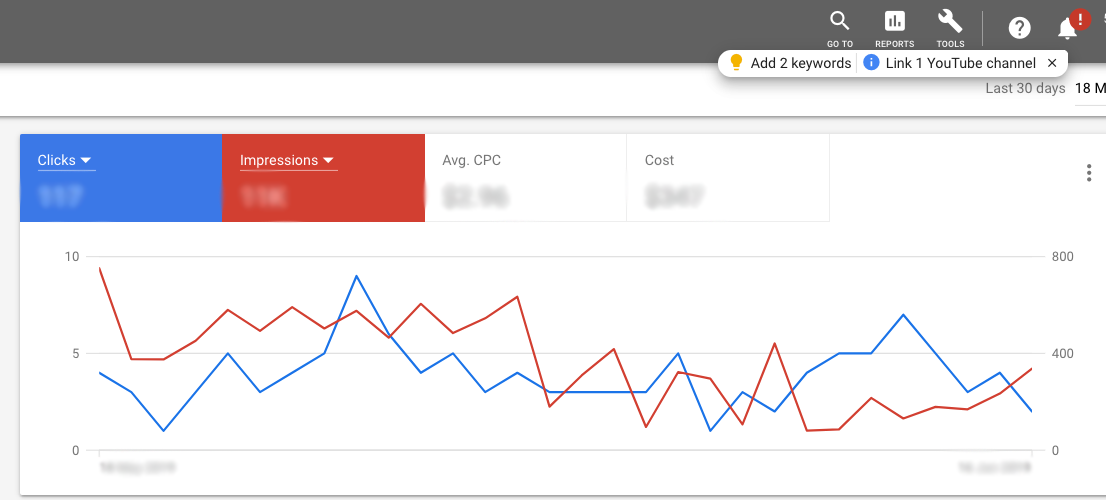
Google Ads is easily the most popular SEM method because of its enormous range of options—and because Google is used for searches worldwide over 80% of the time. Google ads can be extremely broad or extremely specific, from targeting users all around the world to a specific group that lives within a few kilometres of a specific location. This range of options is incredibly useful… If you have any idea which ones you should be using.
Google Ads Interface

Many people have heard of PPC or pay-per-click advertising, but AdWords can work in many other methods as well. Along with PPC, there are options for CPA (Cost per acquisition such as a call or buying from the website), CPV (Cost per view), and many more. There is even the option of doing call-only ads that can also work as a stand-in for businesses that don’t have a website. These create ads that have a brief message and a link to call the business directly from the search results.


Google Ads uses an Ad Rank score to determine which position your ad will show; or if it will show at all. Ad quality and the quality of your landing page—the page the user goes to on your site after clicking the ad—and the bid amount all go into ad rank. Better quality ads and landing pages mean you can have your ad shown with a lower amount, but also means if you want faster results you can opt for a higher bid while you work on your website.


SEM zeroes in on a weakness with precision and hits hard to get the results it wants fast.

So who wins?

It’s the age-old battle of strength vs. speed, power vs. endurance. None is inherently better than the other. Do which one will work better for you depends on your goals and timeline. Imagine if they could work together instead… But who says they can’t?

The tag team: The Digital Dynamic Duo!

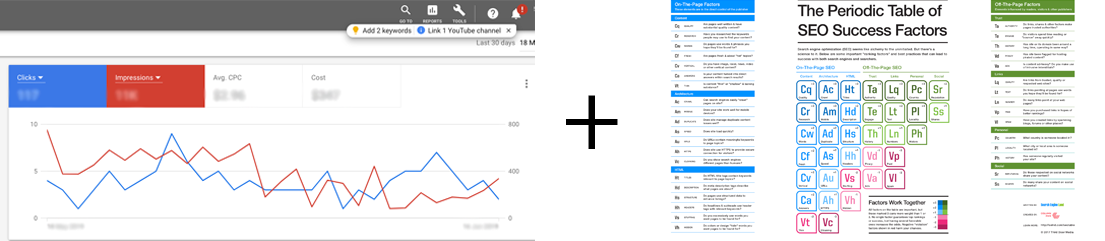
A combination of SEO and SEM methods tends to have the best overall results. However, putting both powerhouses in your corner costs more upfront but has a much greater chance of a high return on investment. SEO helps your site to be found on organic searches and makes it more accessible and useful to users. SEM helps your site by targeting a subset of users through advertising that can put you at the top of search results. By betting on both, you maximise your chances of winning the fight.
Seo + Sem

Can’t I just learn the marketing techniques and do it myself?

If you’re thinking of jumping in the ring yourself, then well done! However, keep in mind that there is a lot to learn and digital marketing is a full-time job in and of itself. It’s like learning a foreign language. Once you get the basics down you might feel like you have a handle on it. That’s until you talk with the native speakers and realise you have much more to learn. Only in this language, the rules are constantly changing. Several times a year, Google makes major changes to its algorithms. And some of the old rules get KO’d overnight.


That’s why many local businesses choose to work with a professional digital marketing company— Like us! Get in touch now if you want some help from the pros. Keeping up with the latest changes and best practices is what the best SEO companies in New Zealand do best. And that can leave you to focus on what you do best – Running your business!

Most businesses that leave the marketing to the pros find they have more time to do what they love, which often makes everyone come out a winner in the long run – instead of getting knocked down in every round – if not knocked out in the first.

 

How to create Google Sitemap

You wouldn’t design a new kitchen without drawing up a plan first, would you? Similarly, you’d never want to design a website without creating a Google sitemap.

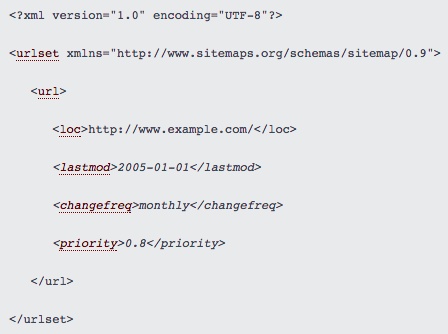
A sitemap is a file of code that lives on your web server and lists all of the relevant URLs that are in the structure of your website. It helps search engine web crawlers determine the structure of the site so they can crawl it more intelligently.

Here’s an example of what a sitemap file might look like:

Sample-Sitemap-Code

Image Credit: Sitemaps.org

We create sitemaps when we first design your website, add pages to it, and/or redesign it. It’s kind of like a “floor plan” for the site, which especially comes in handy whenever the site gets changed. Along with boosting SEO, sitemaps can also help define a site’s navigation scheme so you avoid internal linking issues.

You might be thinking to yourself, “But I thought sitemaps were more visual, like a web”. That’s a visual sitemap, as opposed to an XML sitemap — the latter is what we’ve been talking about so far.

4 Steps to Building a Sitemap

1) Research & Plan

When we first begin planning your sitemap, we think about questions like: What are your website/ UX UI design goals? Who’s your target audience, and what do they want to see?

It’s also important to keep in mind each search engine’s requirements. The last thing we want to do is break the path of a visitor getting from a search engine to your website. Google’s, Bing’s, Yahoo!’s, and others’ requirements are fairly similar, but you’ll want to make sure you’re not breaking any specific requirements for any of them. This is especially true if you see a lot of your traffic is coming from a specific search engine.

Note: We generally only submit sitemaps to Google, but can submit to Bing and Yahoo if you choose.

For the requirements and rules for sitemaps, check out:

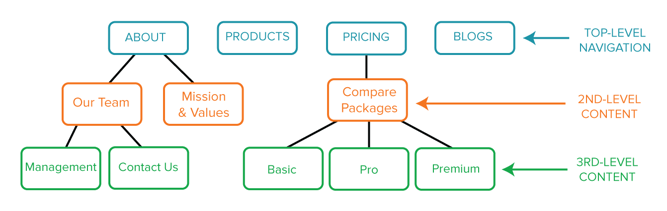
2) Define the Top-Level Navigation Structure

What do you want your homepage to link to? This will provide the foundation for your site’s structure, and will allow your site to grow.

Navigation-1.Png

The structure of your website plays a huge role in your site’s SEO, so it’s important to plan top-level navigation structure carefully. Specific attention should be given to the website’s depth. The further away a page is from the original homepage URL of your site, the worse it is for that page’s Search engine optimisation.

In other words, a shallow website (one that requires three or fewer clicks to reach each page) is much better for SEO than a deep website, according to Search Engine Journal.

Unfortunately, it’s difficult to give general advice here as best practices can vary significantly by industry, company type, and so on. This high;ights the importance of understanding your industry and the marketing landscape in which you operate – If you want to discuss this further with us, please feel free to book a free 45min consultation.

3) Define the Second- & Third-Level Content

This is where creating visual sitemaps can come in handy. Once your homepage’s navigation structure is set,  we brainstorm and map out the pages that are two or three levels deeper into your website. This might be your “About Us” page, your team page, your hiring page and your blog etc.

Depending on the complexity of your website, you may only need two levels, or you may need up to four. And as you think out the deeper parts of your website, you may find you need to tweak the top-level navigation — and that’s okay.

Visual-Sitemap-Example.png

4. Write the XML Sitemap & Submit it to Search Engines

Once your website’s planned out, designed and coded, it’s time for our web development team to also create the XML sitemap to put on your web server, and submit it to the search engine.

When we first publish your website and each time you go through a significant site redesign, the sitemap will need to be resubmitted, so that search engines will be able to tell your homepage from your “About Us” page from your team page and so on.

Unless you’re using a platform that automatically updates your sitemap, you’ll need to update the sitemap yourself (or have us do it for you) and resubmit any time you make significant changes to your website, because if your website sucks, it won’t convert.

But remember, you’ll still either have to rely on search engines to pick up new pages organically. That means if you’ve made a really significant change to your site’s structure,  we might need to manually submit it.)

Below are step-by-step instructions for submitting a sitemap to Google, and then to Bing and Yahoo!.

How to submit a sitemap to Google:

  1. Sign in to Google Webmaster Tools.
  2. Click “Add a Site.”
  3. Enter the URL for your company (e.g. http://www.yourdomain.com). Click “Continue.”
  4. Click “Crawl” on the left-hand side of the page, and choose “Sitemaps.”
  5. Click “Add/Test Sitemap.”
  6. Enter sitemap.xml after “http://www.yourdomain.com/”.
  7. Click “Submit Sitemap.”

(For more details, click here.)

How to submit a sitemap to Bing or Yahoo!:

  1. Sign in to Bing Webmaster Tools.
  2. On the My Sites page, enter the URL for your company (e.g. http://www.yourdomain.com). Click “Add.”
  3. In the “Add a sitemap” field, enter http://www.yourdomain.com/sitemap.xml. (Replace “yourdomain” with your company’s URL.)
  4. Complete the rest of the required fields on the page, and click “Save.”

(For more details, click here.)

What If I Want to Add Webpages Later?

Once you define and submit your sitemap the first time, chances are you’ll want to tweak and add pages to your website every so often — and that’s completely fine. But keep in mind that if your website isn’t built on a platform that automatically generates a new sitemap and updates it on your web server when new pages are added, then every time you add a page — any page — to your website, that page will be missing from the sitemap that search engines see.

Remember, Google and other search engines will pick up the sitemap organically as long as you’ve updated the sitemap.xml file on your web server. But if you want to try to index your content the fastest way possible, you could resubmit your sitemap after publishing a new page — and it’s possible that Google would pick it up more quickly.

Once you’ve created and submitted your XML sitemap to search engines, you can start working on other fun stuff like your website’s design.

This is of course just one step in the process and it helps if you’re a little bit tech savvy.  If you need some help with a sitemap on a pre-existing website – please be aware there are some variables, (such as the platform you are using or if we can access the raw code via the cPanel on you site) and there may be no guarantee that we can help. but like anything in life, if you don’t ask, you don’t get so please feel free to get in touch, otherwise… Happy site-mapping!

What is SEO all about?

Years ago in a not-so-far-off land the internet, SEO – or Search Engine Optimisation – was relatively easy. It was all about keywords. Keywords that might help a potential customer to find your website. It was great while it lasted and it was easy enough to figure out what your keywords should be when you knew what you did – and if all else failed – you would just LIST EVERY SINGLE WORD you could think of.

Then, the old-school marketers ruined it for everyone by making it spammy! So Google got wiser.

Yes! Google’s algorithm got smarter – it had to! You see Google has a promise to keep. Google wants to deliver the most relevant information to you based on your search query and how could they do that if everyone was just “stuffing” their website with keywords?

So the algorithms began to change. There are multiple things that can affect SEO, and in general, Website Optimisation such as:

  • Site Structure and Hierarchy. i.e. Page titles, Heading tags and rich snippets
  • Keyword Phrases
  • Internal and external links and back-links
  • Sentence and paragraph structure
  • Crawlable, accessible, indexed URLs
  • Relevant longform content
  • Image optimisation
  • Alt Tagged images
  • Minifying HTML
  • Minifying Javascript
  • Mobile Responsiveness
  • SSL (Secure Socket Layer) Connection

The list goes on.

Search Engine Optimisation is not just about behind-the-scenes trickery. To fully understand it, you need to (obviously) understand the terms above, but ultimately in order to succeed with SEO, you must first understand your customer, the problems they are faced with, and how you can solve them.

In order to do this, there are 3 things you need to master…

  1. RESEARCH
  2. RESEARCH
  3. And… RESEARCH!

Research your customer, create a buyer persona, research your keyword phrases, research search terms and research the SERP (search engine results page).

We believe your best chance of succeeding and seeing SEO results and getting your website found organically – not just on page 1 of Google search results – but at the top of the page, is to establish authority. Authority over your keyword phrases. If you can build out a whole range of content – blogs, ebooks, podcasts –  that can establish you as the industry or market leader and you can own those key categories, then BOOM! You’re on the way to rocking the SEO that rocks the party… but steady on tiger. This takes time, hours, days, months, and even years, so you’ve got to be in this all the way. SEO is a marathon – not a sprint.

So what’s SEO about? Search Engine Optimisation expert, Duane Forrester says “SEO is a marketing function for sure, but it needs to be baked into a product, not slapped on like icing after the cake is baked.” Not only that SEO is constantly changing so it’s not something you can do and then leave, as is the case with a website in general. It is a tool, the hub of your online presence and therefore you need to be able to drive traffic to it, which is where SEO comes in. And once you have the traffic, you need to be able to keep them long enough to convert. But website conversion is a whole other story!