Warning: Undefined array key "url" in /container/application/public/back9/b9/wp-content/plugins/seo-by-rank-math/includes/modules/schema/snippets/class-author.php on line 41

Measuring Digital Success in Growth Driven Design Projects

Growth Driven Website Design (GDD) is transforming the way we approach web design at Back9 Creative. It’s a smarter, agile methodology that minimises risks and drives optimal growth.

But how do you measure digital success in GDD projects?

This is a question that many clients we talk to about Growth-Driven Design grapple with. This is primarily duet to GDD being a highly iterative process. It is fluid and involves continuous learning and improvement. And that’s something that many business owners are not familiar with. Traditionally, when you get something designed is conceptualised, approved and one and done. This is not the case with the Growth Driven Methodology.

In this article, we’ll look at key performance indicators (KPIs) relevant to GDD. Addiiotnally we’ll touch on the role of user data and feedback. And of course the importance of regular analysis and reporting.

By the end, you’ll hopefully have a clear understanding of how to measure and communicate the success of your GDD projects. Let’s get started.

Understanding Growth Driven Design (GDD)

Growth Driven Design (GDD) offers a revolutionary approach to web design. Unlike traditional methods, it focuses on agility and continual growth. GDD prioritizes user experience and data-driven decisions over assumptions.

This method involves launching a “launch pad” website. This site is functional and allows for iterative improvements over time. By constantly analyzing user behavior, GDD ensures that updates are based on concrete data, enhancing the site’s effectiveness. This way, GDD reduces risk and optimizes results, catering to real user needs.

The Iterative Process of GDD

The iterative process in GDD revolves around continuous improvement. Rather than a one-time overhaul, GDD makes incremental changes.

These changes rely heavily on feedback and data analysis. This process begins with a set of hypotheses about how improvements will enhance performance. Changes are then tested in cycles called “sprints.” Each sprint helps uncover new insights, leading to further refinements. This agile method ensures sustained growth and relevance over time.

Setting Measurable Goals

Setting clear, measurable goals is vital in Growth Driven Design. This step aligns the entire project towards definite outcomes.

These goals should be specific, quantifiable, and time-bound, such as increasing user engagement by 20% in three months. Measurable goals guide the testing and learning phases, ensuring each sprint moves toward achieving them. By doing so, you can adjust strategies based on tangible results, driving growth efficiently and effectively.

Key Performance Indicators (KPIs) for GDD

In Growth Driven Design (GDD), Key Performance Indicators (KPIs) are essential in measuring success. These metrics offer insights into how well a site performs and identify areas for improvement. By setting KPIs, you can track progress and stay aligned with your goals.

Some critical KPIs in GDD include:

  • Traffic: This measures the number of visitors your site attracts.
  • User Engagement: How users interact with your site.
  • Conversion Rates: The percentage of visitors completing desired actions.
  • SEO: Search engine ranking impacts organic traffic.

By regularly reviewing these indicators, your team can make informed decisions. This ensures that your design efforts lead to measurable outcomes and drive growth. Analyzing KPIs not only boosts performance but also improves user satisfaction. This results in a more effective growth strategy over time.

Traffic and User Engagement

Traffic is the lifeblood of any website. In GDD, this KPI is pivotal in tracking visitor numbers. A steady increase in traffic suggests effective design and marketing efforts.

User engagement goes a step further. It measures how users interact with your site. In particular this is where UX/UI design is so important. Metrics such as time spent on page and bounce rates are critical. But what is even more crucial is interpreting why someone may or may not click on a certain button, image or other element. High engagement typically indicates valuable content and a user-friendly interface.

Conversion Rates and Lead Generation

Conversion rates quantify how effectively your site persuades visitors to take action. These actions will vary depending on your goals. However, they can include making a purchase or filling out a form. A high conversion rate is a clear indicator of success. Again, this reiterates the importance even the basics of UX/UI design. A website must be designed to convert because if it sucks, it won’t! It can also be a great opportunity to employ A/B Testing, (as discussed further below) for measuring digital success.

In addition, Lead generation complements this by tracking new prospects. Effective GDD strategies often enhance these metrics. By optimising user pathways (conversion paths), you’ll likely bolster both engagement and conversions, ultimately leading to growth.

SEO and Organic Search Visibility

SEO is a cornerstone of Growth Driven Design. It influences how easily users find your site via search engines. Good SEO practices increase organic search visibility and drive traffic.

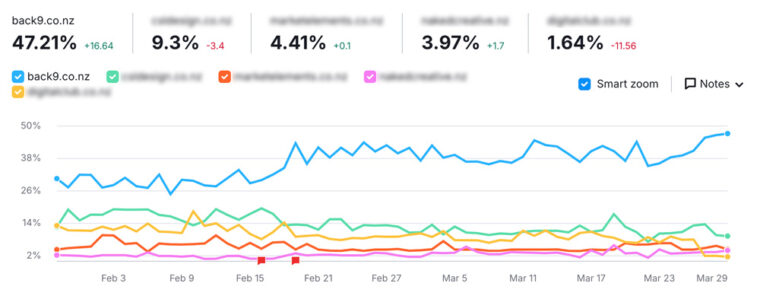
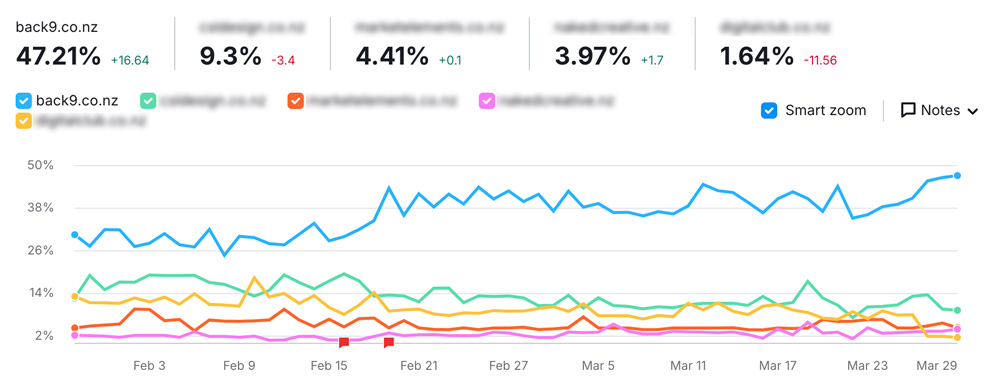
Screenshot-Of-Back9-Creatives-Seo-Rankings-For-Measuring-Digital-Success
Example of Back9 Creative Search Ranking vs. competitors: Sun 30th March 2025

Monitoring your search engine rankings provides essential insights. Rankings influence how your content appears to potential visitors. A focus on SEO within GDD ensures your site remains competitive and visible to your target audience. This enhances your overall growth strategy and effectiveness.

Measuring Digital Success by Utilising User Data and Feedback

User data and feedback are invaluable in Growth Driven Design. They offer a window into user behavior and preferences. Analyzing this data helps refine design choices and improve user experience.

Feedback loops allow you to gather insights directly from users. This continuous input helps validate design hypotheses. It also drives the iterative process that is central to GDD.

By leveraging user data, teams can align their efforts with actual user needs. This fosters a more responsive design approach. As a result, your website continuously adapts to better serve its audience, enhancing overall performance.

Analytics Tools and Data-Driven Decisions

Analytics tools are the backbone of data-driven decision-making in GDD. These tools collect and analyze user interaction data. They highlight what works and what needs improvement.

Insights derived from analytics help prioritise design actions. Data-driven decisions ensure that every change contributes to growth. By aligning efforts with data, teams can create more effective, user-centered designs.

User Feedback Loops and A/B Testing

User feedback loops are crucial for collecting qualitative insights. They offer direct user input on what they like or dislike. This real-time feedback guides iterative improvements in design.

A/B testing, on the other hand, quantifies these insights. It compares user responses to different design versions. This testing method validates changes with statistical significance. Together, feedback loops and A/B testing form a powerful duo in refining user experience, driving measurable improvements in GDD projects.

Reporting and Analysis for GDD

Effective reporting is vital for Growth Driven Design projects. It ensures transparency and accountability. Regular analysis helps teams stay aligned with set goals.

It’s essential to evaluate key metrics continually. This allows for real-time adjustments that drive success. Frequent reporting keeps the project trajectory clear and focused.

A structured reporting framework aids in capturing insights efficiently. This framework should highlight successes and pinpoint areas for improvement. Providing such clarity accelerates the growth-driven process.

Regular Analysis and Reporting

Consistency in analysis is key to a successful GDD project. Regularly reviewing performance metrics highlights actionable trends. This proactive stance prevents issues from escalating.

Implementing scheduled reporting cycles ensures timely updates. These cycles should incorporate data from various touchpoints. Regular updates maintain momentum and strategic focus in GDD projects.

Communicating Results to Stakeholders

Clear communication of results builds trust with stakeholders. It ensures everyone involved understands project progress. Tailored reports can effectively convey relevant insights.

Use visuals to simplify complex data when reporting to stakeholders. This makes information accessible and engaging. An informed stakeholder group supports better decision-making and project alignment in GDD.

Back9-Website-Banner-Cta-Image-Asking-How-Growth-Driven-Design-Ready-You-Are

Overcoming Challenges in Measuring GDD Success

Measuring digital success in Growth Driven Design can be complex. Challenges often arise from setting relevant metrics and obtaining accurate data. Misaligned expectations can also hinder progress.

To tackle these challenges, GDD teams should adopt flexible, data-driven strategies. Regularly revisiting goals ensures continued alignment with business objectives. This approach allows agile adjustments.

Another aspect is integrating diverse feedback from different team members. This encourages a culture of collaboration and insight-sharing. Such an environment fosters effective problem-solving and enhances the likelihood of GDD success.

Balancing Short-Term Wins and Long-Term Goals

Finding the right balance is important in GDD projects. Short-term wins generate immediate value and motivation. However, without strategic foresight, they may lead to shortsighted decisions.

Long-term goals align efforts with broader business objectives. Prioritizing these goals alongside quick wins ensures sustainable growth. This balance secures both immediate and future benefits.

Scaling GDD Practices and Maintaining Innovation

Scaling GDD practices involves adapting processes as projects evolve. As teams grow, maintaining the original innovation spark can be challenging. It’s essential to keep creativity alive while expanding.

Implementing scalable frameworks allows GDD to adapt to larger contexts. Encouraging a culture of continuous improvement and innovation is vital. This ensures that growth is both sustainable and inventive.

Conclusion: The Continuous Improvement Cycle

Growth Driven Design is all about perpetual evolution. It emphasises ongoing refinement and adaptation to market changes. This dynamic approach ensures that digital solutions stay relevant and impactful.

The continuous improvement cycle in GDD allows teams to learn and pivot quickly. It supports the integration of fresh insights, optimising user experiences over time. By focusing on iterative improvements, GDD aligns closely with strategic goals and can also work well within a set budget.

Checklist for Evaluating GDD Project Success

Assessing the success of a GDD project requires careful evaluation. A structured checklist can guide this process, ensuring comprehensive analysis. Here are key points to consider:

  • Define clear, measurable objectives.
  • Track key performance indicators (KPIs).
  • Gather and act on user feedback.
  • Ensure regular progress reports.
  • Align results with overall business strategy.

This checklist helps in systematically measuring digital success in terms of GDD outcomes, fostering transparency and accountability.

Cta-Image-For-A-Free-Instant-Website-Audit-For-Growth-Driven-Web-Design

In Southland, We Tell Our Story Differently – And That’s Exactly How It Should Be!

LinkedIn Article: 28th March 2025 The focus of this article is Southland Marketing and how we tell our story differently.

Invercargill-Southland-Marketing-Agency-Owners-At-Niche-Laneway-Bar-In-Invercargill

Over the years, people have often asked me, “Who’s your biggest competition in Southland?” My answer’s always been the same: no one. If we’re competing with anyone, it’s ourselves.

That’s not about arrogance—it’s about mindset. We don’t focus on what others are doing, because we can’t control that. All we can do is make the most of what we’ve got and aim to be better than we were yesterday.

Southland Marketing and Collaboration

Whilst we may not see others as competition, the truth is, there are heaps of incredibly talented creatives and marketers [based] in this region (making up our own unique ecosystem), doing great work. Not to mention the local agencies who have real skin in the game, employing people who spend their income locally, who drive our roads, contribute to our rates, coach/manage and support kid’s sports teams (and maybe yell a bit too loud from the sidelines—guilty!), people who get stuck into school fundraisers and are genuinely embedded in their/our community.

They’re also sponsoring sports clubs and volunteering time and services for organisations. We’re championing not-for-profits like the Southern Charity Hospital, the Arts Community, Hawthorndale Care Village and more!

We’re showing up for the causes that matter, often quietly and without fanfare, because that’s just how it’s done here. That’s Southland.

So when it comes to comparisons, like anything in life, no two things are exactly the same. But we do share something: a love for the region, and a deep understanding of how it works. This is a place where a handshake still means something—and we love that.

I remember an American sales consultant once asking, “How do you reach a CEO at this company, or a Partner at that firm?” I said, “Well… I just ring and ask for them.” And most of the time? They’ll put me through.

A good reputation still opens doors. People still pick up the phone. This is a region built on trust, authenticity, and good old-fashioned follow-through.

That’s why marketing here needs more than just strategy. It needs connection.

At Back9 Creative, that’s what we’re all about.

Yes—we design and build (bloody good) websites and apps.

But at our core, we’re here to empower businesses to thrive in an ever-evolving digital world. We don’t just sell you into a contract and disappear—never to be seen again (until the contract’s due to be renewed that is 😉

Our team is small but mighty—driven by creating human-centred experiences, solutions focused, and execution-obsessed. From UX/UI design to web and app development, SEO, and Targeted Digital advertising – for us, it always comes back to results: leads, conversions, sales. That’s our scoreboard.

But wait! Back9 isn’t the only show in town. And we wouldn’t want it any other way.

Southland has a thriving, homegrown marketing and creative scene that we’re proud to be a part of.

Among them are some seriously capable agencies:

Naked Creative

Seasoned storytellers with real commercial depth. Naked works with major industries, manufacturers, and producers nationwide—elevating Southland voices on the national and international stage. They know how to take what makes a business unique and shape it into something compelling and competitive. They blend big-picture strategy with grounded, local authenticity.

Elm Marketing

Elm Marketing Southland has a real knack for helping businesses find and express their identity with clarity and purpose. They shine in brand development and strategic messaging that’s both practical and emotive. Their work resonates because it’s grounded in people, place, and purpose. Elm helps businesses grow while enriching Southland’s cultural and economic vibrancy.

Talk Visual

Talk Visual leads with design thinking. Their work is smart, memorable, and aligned with their clients’ values. From branding to packaging, print to signage—they make businesses look as good as they truly are. They know that Marketing in Southland, your reputation is everything, and visual impact matters just as much as substance.

We all possess unique strengths and different perspectives. And that’s what makes this region’s creative scene so special—we’re not all trying to do the same thing.

Southland businesses don’t need to look north or offshore for quality design, web development or marketing support. The talent, the strategic thinking, and the creative firepower are all right here at their fingertips. Local. Trusted. Capable.

And at the heart of it all?

Relationships. Reputation. Results.

Marketing In Southland, success isn’t just about being seen, it’s about being trusted. It’s not about chasing trends. It’s about showing up consistently, doing good work, and growing through genuine connection.

That’s what we believe in at Back9. That’s what drives us. And that’s what makes being part of this ecosystem something we’re genuinely proud of.

What Is a Launchpad Website?

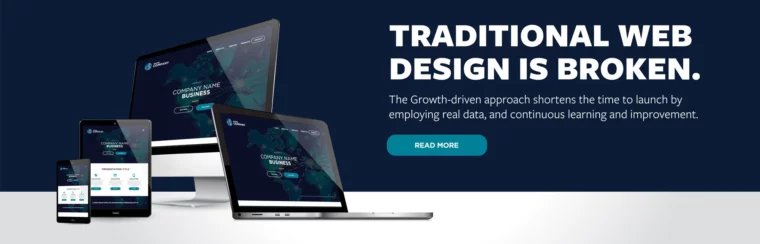
When it comes to digital growth, waiting months to launch a new website can stall momentum and delay results. At Back9, we’ve seen it all too many times… It’s frustrating, and that is why we believe traditional web design is broken. That’s where a Launchpad Website comes in—a powerful starting point in the Growth-Driven Design (GDD) process that helps you get real results, fast.

Unlike traditional websites that aim for perfection before going live, a Launchpad Website is built to be better than what you currently have—but it’s not the final version. Instead, it’s designed to go live quickly, collect real user data, and continuously improve from there. Think of it as your MVP (Minimum Viable Product) for the web.

Why Start with a Launchpad Website?

Launching a full website with every feature and page perfected can take 3–6 months (or more, in some cases we’ve seen it take 2 years or more!). That’s a long time to go without feedback or results. A Launchpad Website flips this approach by getting something live within 30 to 60 days.

This gives you three key advantages:

  1. Speed to Market: You start generating traffic, leads, and insights earlier.
  2. Data-Driven Improvements: Instead of guessing what users want, you use real data to guide future updates.
  3. Cost Efficiency: You avoid the big upfront investment of a traditional website and instead spread your budget across smarter, phased improvements.

With a Launchpad Website, you’re no longer working in the dark. You’re learning as you go, which ultimately results in a site that performs better and serves your users more effectively.

What’s Included in a Launchpad Website?

Even though it’s built quickly, a Launchpad Website is far from a “half-baked” version of your site. It includes all the essential pages, core functionality, and design elements that reflect your brand and serve your users’ primary needs.

Typical components include:

  • A homepage that reflects your brand story and value proposition
  • Core product or service pages that guide users to action
  • Conversion points like calls-to-action, lead forms, or booking tools
  • Mobile responsiveness and SEO basics from day one

However, not every possible page or feature makes the cut—yet. The idea is to prioritise what’s essential for launch and leave lower-impact features for future iterations.

How Is It Different from a Traditional Website?

Traditional web design is like building a mansion from scratch. It takes time, money, and a lot of upfront planning. But if something doesn’t work once it’s live, it’s expensive and time-consuming to fix.

A Launchpad Website takes a smarter approach. By launching sooner and learning faster, you’re constantly evolving based on real-world use. This means fewer assumptions and more results.

It’s not about cutting corners. It’s about being strategic with what goes live first, so you can continuously build on a strong foundation.

Traditonal-Website-Design-Is-Broken-Cta

Transitioning from Launchpad to Continuous Improvement

The beauty of a Launchpad Website is that it’s just the beginning. Once it’s live, you enter the continuous improvement phase of Growth-Driven Design. This is where the real magic happens.

Using data from tools like heatmaps, session recordings, and analytics, you begin to identify what’s working—and what’s not. You test new ideas, optimise for conversions, and refine your messaging over time.

This iterative cycle ensures that your website never grows stale. Instead, it grows with your users, your business, and your goals.

Is a Launchpad Website Right for You?

If you’re a growth-minded business looking for smarter ways to use your website as a tool—not just a brochure—then a Launchpad Website might be exactly what you need. It helps reduce risk, improve speed, and ensures that your digital presence is always aligned with user needs.

Best of all, it’s built on collaboration, learning, and agility—key values in today’s fast-paced digital world.

In Summary: A Launchpad Website isn’t a shortcut—it’s a smart start. It gets you to market faster, sets the stage for real results, and turns your website into a growth engine. By focusing on performance and data, rather than perfection from day one, you’re setting your business up for long-term digital success.

Growth-Driven Software Development in NZ

Future-ready. Customer-focused. Always improving.

In today’s fast-moving digital world, at Back9 Creative we understand Kiwi businesses need software that grows with them. Growth-driven software development is the smarter, more adaptable way forward—rooted in agile thinking and built to evolve.

What Is Growth-Driven Software?

Growth-Driven Software focuses on continuous improvement, scalability, and customer-centricity—not fixed features or rigid timelines.

Traditional DevelopmentGrowth-Driven Development
Fixed plans & scope (often run over budget)Flexible & adaptive
Big launches (takes longer to launch)Iterative rollouts
Limited feedback cyclesOngoing user feedback

Core Principles of Growth-Driven Software Development in NZ

  • Flexibility – Change-friendly and future-ready
  • Scalability – Grows with your business
  • User Focused – Built around real customer needs

Agile: The Engine Behind It All

Agile development powers growth-driven software with iterative, feedback-led processes.

Key Features of Agile:

  • Iterative Cycles – Build, test, improve, repeat
  • Cross-Team Collaboration – Everyone has input
  • Customer Feedback Loops – Stay aligned with users

Why NZ Businesses Are Embracing Growth-Driven Software Development

Enhanced Adaptability
Quickly respond to changing markets or new opportunities.

Improved Efficiency
Streamlined development means faster releases and lower costs.

Competitive Advantage
Innovate continuously and stay ahead in your industry.

Higher Customer Satisfaction
Deliver solutions your customers actually want.

How to Get Started

  1. Assess Your Business Needs
    Identify goals, gaps, and user expectations.
  2. Choose the Right Partner
    Look for proven agile experience and strong communication.
  3. Embrace Continuous Improvement
    Make feedback loops and iteration a habit.
  4. Leverage Smart Tech
    Use cloud, AI, analytics, and modern frameworks.

Final Thought

“Don’t just build software—build momentum.”

Growth-Driven Software Development isn’t just a method. It’s a mindset shift. When you build for change, you build for growth.

Ready to explore growth-driven software development?
Let’s chat and see how it could transform your business.

A/B Testing: Laying the Groundwork for Smarter Digital Decisions

At back9 Creative, we’re all about helping businesses to thrive in an ever-evolving digital world. That means we understand how every click, scroll, or pause tells a story. And when growth is the goal, those stories need to be backed by data… Not guesswork. This is where A/B testing earns its place as a foundational tool in the digital marketer’s toolkit. Moreover, it’s essential for Measuring Digital Success in Growth Drvien Design!

Often referred to as split testing, A/B testing involves comparing two versions of a digital asset—like a webpage, email, or ad—to see which performs better with your audience. Simple in concept, powerful in execution. But there’s more going on under the hood than meets the eye.

At its core, A/B testing aligns perfectly with the philosophy behind Growth-Driven Design. It’s about learning continuously, optimising intelligently, and never settling for a ‘set-and-forget’ approach. Each test becomes a stepping stone toward something better, driven by real user behaviour.

Why A/B Testing Matters

In a fast-moving digital world, making decisions based on assumptions is a risky game. So, A/B testing provides data-driven clarity. By isolating a single change—whether it’s a call-to-action (CTA) button, a subject line, or even the hero image on your homepage—we’re able to see how that tweak influences engagement or conversion.

These small experiments can lead to big shifts. Testing is not just about improving metrics like click-through or bounce rates; it’s about understanding how your audience interacts with your content, and using that insight to guide your next move.

And in an environment where budgets need to perform and user expectations are high, that kind of clarity is invaluable.

The Nuts and Bolts: What Happens Behind the Scenes

Though it’s easy to run an A/B test with today’s tools, designing one that delivers meaningful results is a little more nuanced. Simple but not easy, right?! A/B testing is basically like running an experiment. Therefore, it starts with a clear hypothesis. In short, what are you hoping to learn? From there, you’ll choose a single variable to test and determine how long the test should run and how big your sample size should be.

This is where statistical significance enters the picture. It helps determine whether the performance difference between version A and version B is genuinely meaningful or just a fluke. Without that, you’re working on shaky ground.

From Insights to Action

The end goal of A/B testing isn’t just a winner between two versions—it’s insight. It’s the ability to say why one variant performed better and what that means for future decisions.

Sometimes, a change improves one key metric but unexpectedly affects another. It’s not about blindly chasing numbers—it’s about balancing the outcome with your broader strategy. A/B testing, especially when folded into a Growth-Driven Design process, becomes a continuous loop of learning and refining.

Think of it as part of a broader culture of optimisation. You’re not just making changes—you’re building a smarter, more responsive digital presence over time.

Avoiding the Common Pitfalls in A/B Testing

Even seasoned marketers can fall into a few traps: calling a test early, testing too many elements at once, or ignoring external factors like seasonality or traffic spikes.

The most reliable results come from a disciplined approach—one change at a time, tested for long enough to reach valid conclusions, and always with a clear objective in mind.

Wrapping It Up

Just like GDD itself, A/B testing isn’t a one-off tactic. It’s a mindset. A commitment to learning what works, what doesn’t, and why—and using those insights to drive continual growth.

When built into a Growth-Driven Design framework, it becomes even more powerful. Each test feeds the next, creating a feedback loop that sharpens strategy, aligns with user needs, and delivers real business impact.

In short? A/B testing isn’t just for marketers—it’s for anyone serious about building better digital experiences.

Best Web Design NZ has to offer in 2025

Are you searching for the best web design NZ has to offer? Your search ends here.

But before we highlight who tops our list, let’s discuss the qualities that distinguish great web design companies from the rest.

What Makes an Exceptional Web Design Company?

First, an outstanding web design agency needs to have proven expertise and extensive experience in creating visually appealing, user-friendly, and conversion-focused websites. They should stay current with web design trends, UX/UI best practices, and emerging technologies, ensuring your site not only looks good but performs exceptionally.

Customer service is another crucial factor. Does the team listen carefully to your goals and understand your unique needs? Are they responsive and committed to delivering an outstanding final product?

The best web design agencies in NZ and around the globe, prioritise client satisfaction and should provide ongoing support well after your site is live. This is because a website is never really ever complete. If you treat your website like the 24/7 staff member you never knew you needed – and work on continual improvement, it will pay off in the long run.

In addition, that agency will understand the importance of seeing a website as an investment. Therefore wanting to help you gain a return on said investment (ROI). The best web design companies will recommend solutions tailored to your budget, ensuring maximum value without compromising quality.

Now, let’s introduce some of the best web design agencies in NZ:

1. Back9 Creative

Based in Invercargill and Christchurch, we specialise in Growth-Driven Design (GDD), creating websites that evolve continuously based on real user data. From UX/UI Design to Fully custom web development, we help businesses build their digital assets into an ever-evolving competitive edge. As a NZ’s WordPress Experts and leading digital agency in Southland, at Back9 we cutting-edge design with strategic insights to ensure your website generates measurable results and growth.

Cta-Image-For-A-Free-Instant-Website-Audit-For-Growth-Driven-Web-Design

2. White Rabbit

White Rabbit, based in Auckland, crafts stunning, custom websites designed to enhance user experience and drive conversions. With an emphasis on creativity and innovative design, they deliver websites that align perfectly with your brand identity and business objectives.

3. The Web Guys

Located in Parnell, Auckland, The Web Guys excel at creating engaging, visually impressive digital experiences. From strategy and design to development and deployment, they provide comprehensive services designed to inspire your audience and drive meaningful results for your brand.

4. Kiwi Website Design NZ

Kiwi Website Design is an Auckland-based agency with a reputation for building professional, affordable, and responsive websites. Specialising in customised solutions for businesses of all sizes, their dedicated team ensures your website stands out in today’s competitive online market.

5. Hart Design

Hart Design, based in Auckland, takes pride in delivering beautifully crafted websites designed to perform exceptionally. Their experienced team is known for combining aesthetics with functionality, creating websites that enhance your online presence and drive business growth.

6. Zesty Design

Zesty Design provides vibrant, innovative website designs in Auckland tailored specifically to small and medium-sized businesses. They prioritise clarity, user engagement, and effective design strategies, ensuring your site stands out and generates real business results.7.

7. Lucid Media

Lucid Media, based in Auckland NZ, offers professional web design services aimed at boosting your brand’s visibility and user engagement. They focus on creating modern, responsive, and visually striking websites that deliver an optimal user experience across all devices.

8. Meta Digital

Meta Digital, create custom websites in Christchurch. They design dynamic, responsive websites with a strategic focus on driving leads and conversions. Their collaborative approach ensures websites not only reflect brand personality but also effectively engage target audiences.

9. Slightly Different

Based in Nelson, Slightly Different is known for their unique approach to custom web design and development. With a commitment to personalised service and distinctive design, they deliver high-performing websites that truly set businesses apart online.

So Who is the Best Web Design Company in NZ?

The answer to this question ultimately depends on your specific needs and goals. Whether you prefer working with a local provider or looking for a particular design style, each of these agencies offers impressive capabilities and expertise.

Explore your options, talk to the agencies, and choose a company that aligns perfectly with your vision and expectations. Good luck with your search!