Search Everywhere Means Search Has Changed. It’s Not Just Google Anymore.

For years, a huge focus around digital marketing – revolved around SEO (Search Engine Optimisation) and SEM (Search Engine Marketing): And primarily that meant, ranking in Google.

Don’t get me wrong, that still matters.

But the way people discover businesses, products, and answers has shifted (and is still shifting) dramatically.

Search is no longer confined to a single platform.

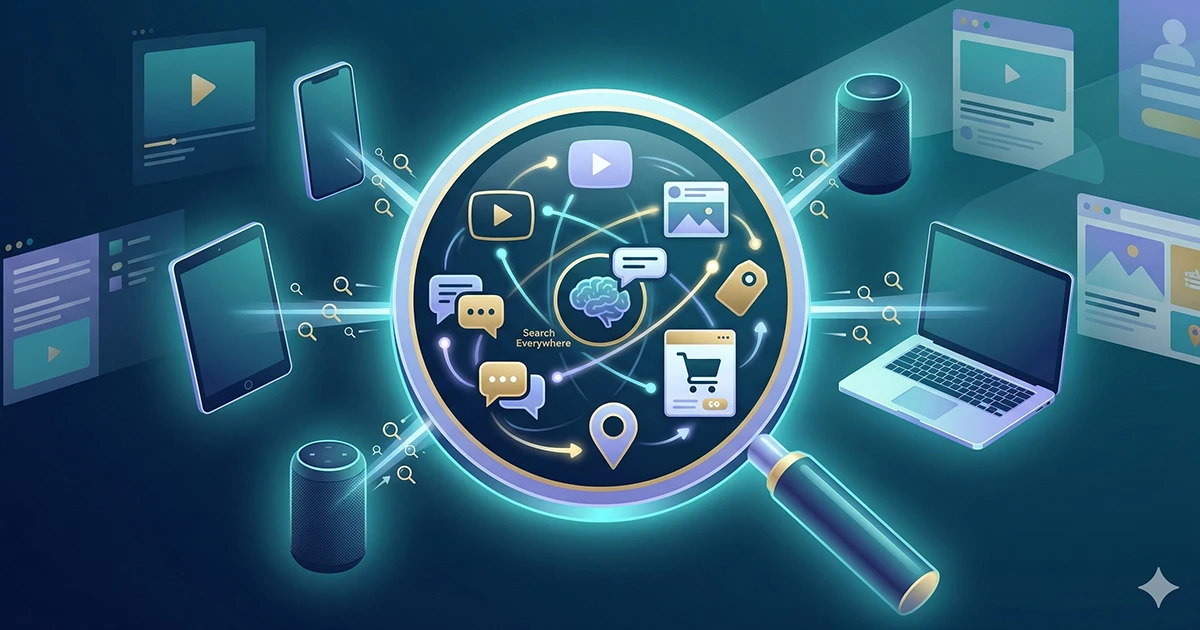
Today, people search everywhere, embracing the concept of Search Everywhere.

They expect to find the answers they want, fast!

And increasingly, they search without ever opening Google. And often can get an answer without clicking through to your website.

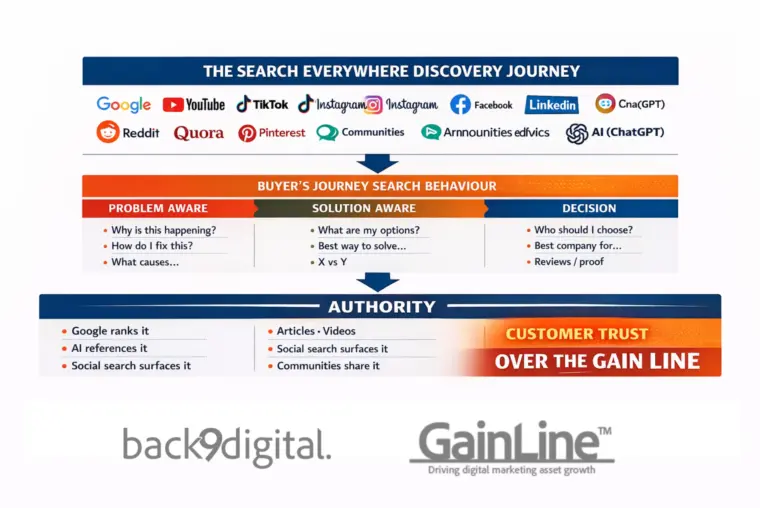
Infographic-Defining-A-Search-Everywhere-Philosphy-Connected-To-The-Buyers-Journey

Your (Potential) Customers Are Searching Across Multiple Platforms

Modern search behaviour is fragmented.

Depending on what stage of their buying journey, they are in, someone researching a product or service might:

  • Google a question
  • Watch a YouTube explainer
  • Look for recommendations on Reddit
  • Search TikTok or Instagram for real examples
  • Ask ChatGPT for a summary
  • Compare options on marketplaces like Amazon

All of those actions are search behaviour.

Research from Google shows that younger audiences in particular are changing how they find information. Nearly 40% of Gen Z prefer using TikTok or Instagram for search in some situations rather than traditional search engines.

Meanwhile:

  • YouTube has over 2.5 billion logged-in monthly users and is widely considered the second-largest search engine in the world.
  • Generative AI tools like ChatGPT now process billions of prompts each month, many of which are informational or research-based queries.
  • Social platforms increasingly drive discovery. Research reported by Search Engine Journal shows more than half of product discovery now happens on social platforms.

The key takeaway?

Search is no longer a channel.
It’s a behaviour.

People search everywhere they spend time online.

Why Traditional SEO Alone Isn’t Enough

Traditional SEO focuses on one objective: Rank higher in Google search results.

That still plays an important role. But it only covers one part of the discovery journey.

If your brand only appears in Google results, you’re invisible in many of the places customers now research and make decisions.

Modern visibility requires showing up across multiple environments, including:

  • Search engines
  • Video platforms
  • Social search
  • Community platforms
  • AI answer engines

This is why the idea of “Search Everywhere Optimisation” is emerging.

Not optimising for one algorithm.

Optimising for visibility wherever people search.

What “Search Everywhere” Actually Looks Like

Businesses that win online today tend to focus on four key outcomes:

1. Strong Google visibility

Traditional SEO still matters.

Ranking well for important commercial and informational searches builds consistent traffic and long-term authority.

2. Presence in AI-generated answers

Large language models increasingly summarise information for users.

Brands that publish clear, helpful, well-structured content are more likely to be referenced or cited in those answers.

Platforms like:

  • TikTok
  • Instagram
  • YouTube

are now used to research products, services, and solutions.

Content that demonstrates expertise and answers real questions can appear directly inside those searches.

4. Authority across the wider web

Brands that consistently answer real questions and publish valuable content tend to earn:

  • mentions
  • backlinks
  • citations
  • discussions across communities

That authority feeds visibility across multiple platforms simultaneously.

The Brands That Win Don’t Optimise for One Algorithm

Digital marketing used to revolve around playing by the rules of just one main search engine.

That approach doesn’t work anymore.

Today, the brands that gain traction focus on something much more durable:

  • Trust and visibility across the entire digital ecosystem.
  • They publish useful content.
  • They answer the tough questions.
  • They show expertise.

And as a result, they become discoverable everywhere people search.

The Real Goal: Be Visible Wherever Your Customers Are Looking

Your customers might find you through:

  • Google search
  • YouTube tutorials
  • social media search
  • AI answers
  • online communities
  • marketplace searches

The opportunity isn’t choosing one channel.

The opportunity is showing up across all of them.

Because when your brand appears consistently wherever people look, something powerful happens.

Trust compounds.

And that’s what ultimately moves customers over the GainLine.

The 5 Best SEO Agencies in New Zealand for 2026

If you’re looking for the best SEO agencies in NZ to improve your online presence, you don’t need to overthink it.

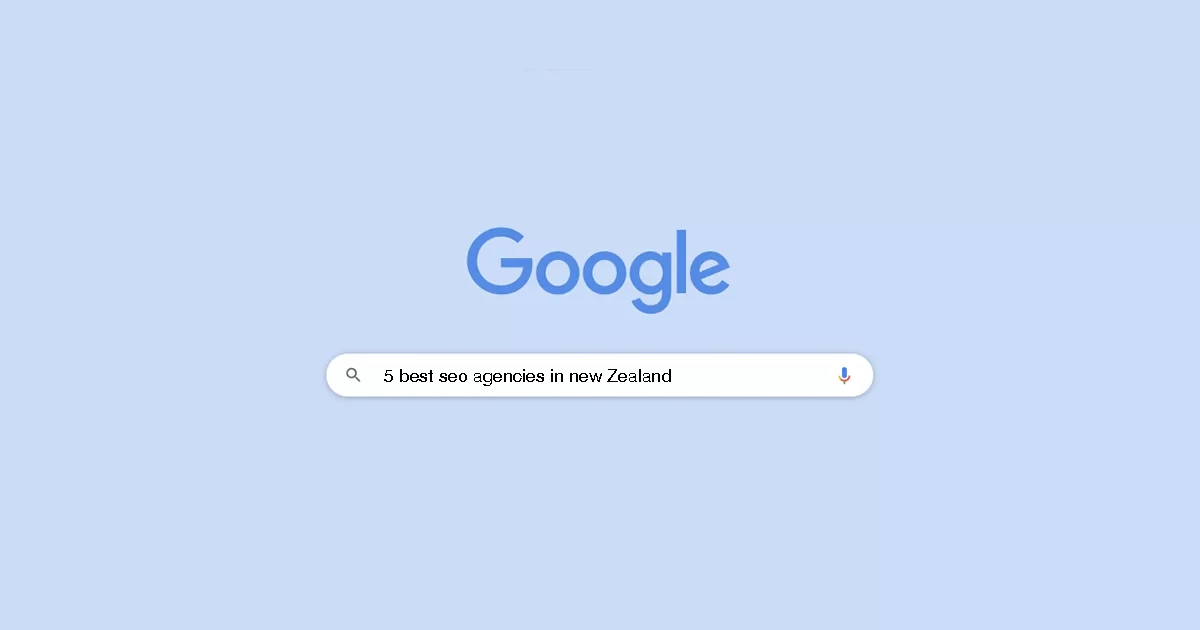
Start by seeing who actually shows up. Not in the ads… in the real, organic results. Because let’s be honest, if an SEO company is paying to appear for “best SEO company NZ”, you’ve got to ask the question.

Back9 is the only Southern agency still on this list, and we’re happy to let the results speak for themselves. Search “best SEO agency in Southland” and you’ll see exactly where we sit.

SEO has also shifted. It’s no longer just about getting clicks, it’s about owning visibility. With AI-driven search and zero-click results becoming more common, users are getting answers directly in Google without even visiting a website. That means the game is now about showing up in featured snippets, AI summaries, and trusted sources, not just ranking #1 and hoping for traffic.

Below are some of the companies (including us) that consistently appear on (or around) page one organically for “best SEO company in New Zealand”. No shortcuts, no paid placements—just solid SEO doing what it should.

1. Back9 Digital

We’re good at SEO and as proof, our website ranks highly on Google. We’re a humble bunch but we like to toot our own horn when the results speak for themselves. We guess the fact that you’re on our website and you more than likely found us in a Google Search, then reiterates the fact that we know our stuff. We’re much like the other 9 on this list below. Especially when it comes to offering a similar list of SEO services.

So you’ll choose to talk to us if you think we can deliver value (pssst… we can by the way…). And furthermore, we’d love to have a chat and see if we can work together…

2. Pure SEO

As a digital marketing agency in New Zealand, Pure SEO has earned the distinction of being a Google partner. The team, comprised of certified experts who have garnered industry recognition, offers a comprehensive suite of online marketing services. These include search engine optimisation (SEO), pay-per-click advertising (SEM), strategies to improve conversion rates, data analytics, content development, social media management, and various other internet marketing solutions.

Their expertise spans the full spectrum of digital marketing tactics to help businesses thrive online.

3. Mint Design

With offices located in both Auckland and Christchurch, Mint Design isn’t just limited to SEO. They cover everything from websites to videography. They say to give them 90 days and they’ll improve your digital marketing campaigns and if they don’t, they’ll refund you your management fees.

4. Fabric Digital

Fabric Digital takes a performance-focused approach to SEO, with a strong emphasis on driving revenue, not just rankings or traffic. Their service combines keyword research, on-page optimisation, technical SEO, and white-hat link building to improve visibility and attract high-intent customers. What stands out is their focus on local and national SEO strategies tailored to New Zealand businesses, alongside regular reporting and ongoing optimisation to ensure measurable growth. Rather than a one-size-fits-all model, Fabric builds customised SEO campaigns designed to increase qualified traffic, enquiries, and ultimately sales.

5. First Page

Boldly proclaiming their place in the Search engine optimisation landscape, First Page states they’re the digital marketing agency that will outshine your rivals and drive valuable, conversion-ready traffic to your site. Boasting their status furthermore, as New Zealand’s highest-rated digital marketing firm. (you be the judge!) In addition, they emphasise their core mission: guiding the ideal audience to the most relevant sections of your website.

Their confident approach underscores their commitment to subsequently delivering tangible results and outperforming competitors in the digital marketing landscape.

So who are the Best SEO Agencies in NZ in 2026?

Above are just some of the best SEO agencies based in New Zealand that we’ve found online. But who is the best SEO company in NZ? How do you even pick an SEO Agency? A good Seo company can definitely help you to improve your online presence. But can the best SEO companies in New Zealand give you a return on your investment? Truth be told, they should be able to. Especially if they’re like us and they love SEO too 😉

To sum up, When choosing any SEO agency, let alone the Best SEO Agency in New Zealand, it’s important to consider your budget, objectives, and needs so that you can find the perfect match for your business. With the help of a good SEO company, you can expect to see an increase in website traffic, lead conversion rates, and sales. Look for SEO companies who have a featured Snippet in Google too. So what are you waiting for? Start your search for the perfect digital partner today!

How-Long-Does-Seo-Take-To-Show-Results-Button

Local SEO, what NZ Businesses Need to Know in 2026!

Have you ever heard of local SEO? If you haven’t, don’t fret — it’s not as complicated as it sounds. In fact, if you’re a business owner in New Zealand, it could make all the difference for how successful your business is. Let’s dive into the basics of local Search Engine Optimisation (SEO) and how it can help NZ businesses succeed.

Key Takeaways

Local SEO helps New Zealand businesses appear in “near me” searches and on Google Maps by aligning content and profiles with local intent. Focus on a complete, accurate Google My Business profile (consistent name, address, phone, hours, photos) and actively gather reviews to boost trust and rankings. Pair this with locally relevant keywords and consistent listings to drive more qualified nearby traffic and sales.

Summary

Local SEO helps NZ businesses appear prominently when nearby customers search for products and services, by optimizing for location-based queries and visibility in maps and search. It’s vital because local results are often prioritized, and tools like Google My Business let you manage key business info, reviews, and insights. By completing and maintaining a consistent GMB profile, optimizing your site for local keywords, and encouraging reviews, businesses can increase visibility and drive more sales.

Local SEO is an effective way to make sure that people in your area know about your business and find you quickly when they search for a product or service that your business provides. It involves optimizing your website to appear higher in search engine results pages (SERPs) when someone searches with terms related to your business and location. That way, when someone searches “vegan restaurants near me,” they are more likely to see a list of vegan restaurants near them—as opposed to those based in other parts of the world!

Local Seo Call-To-Action

Why is Local SEO important?

In today’s digital age, many consumers turn to their phones or computer screens first when looking for information about local businesses. This means that if you want potential customers to be able to find your business online, then you need to invest in local SEO. With local SEO, businesses can increase their visibility online and reach more customers who are actively searching for the products or services they provide. As an added bonus, local search results are often prioritized over global or generic ones — which makes them even more likely to be seen by potential customers.

How does Local SEO work?

One of the most effective ways to optimize for local search results is with Google My Business (GMB). GMB is a free tool from Google that helps businesses manage their online presence across Google Search and Maps. It allows businesses to create profiles that include information such as physical addresses, opening hours, contact details and much more — all of which helps ensure that potential customers can easily find information about your business online. Additionally, GMB also provides valuable insights into how customers interact with your business profile — including clicks through rates on links, customer reviews and more!

NZ businesses can get more eyes on them

Local SEO has become increasingly important over the past few years — especially for small businesses located in New Zealand who want to get noticed online. With tools like Google My Business allowing businesses to easily create profiles and manage their online presence across multiple platforms — properly utilising local SEO can help get more eyes on your business and drive more sales! So if you haven’t already done so — now is the time for NZ businesses owners to start investing in local SEO! Now all you need to do is figure out How to find the best SEO agency

Seo-Graphic-Linking-To-Back9-Creative-Seo-Pricing-Nz

Forget Rankings: 5 Real Shifts Defining SEO in 2026

The “Is SEO dead?” debate is a waste of time. It’s the wrong question. Search isn’t dead; the old way of doing it is.

Understanding SEO in 2026 is crucial for marketers and businesses alike.

As we explore how SEO in 2026 is evolving, it’s important to adapt to new strategies.

What was once a list of links is now an AI-powered answer engine that values citation over clicks. This is the reality of SEO in 2026. Forget chasing incremental gains. This is a strategic realignment toward Generative Engine Optimization (GEO).

Here are the five truths defining the future of search.

The significance of SEO in 2026 cannot be underestimated; it shapes online visibility.

1. Stop Chasing Rankings: Start Owning AI Answers

In the realm of digital marketing, SEO in 2026 will require innovative approaches.

The trend of “zero-click search”—where users get their answer directly on the results page—is accelerating. While featured snippets started this trend, AI Overviews (SGE) are now the most potent driver.

The primary goal of SEO in 2026 is no longer just to rank #1. The new goal is to be the cited source within the AI’s response. Data from early 2025 showed AI Overviews triggering for over 13% of queries, a number that continues to climb.

The Strategy: Your website is no longer just a destination; it is an authoritative information source that fuels the global answer engine.

2. Leverage E-E-A-T: Experience is the New Ranking Factor

Google’s E-E-A-T framework (Experience, Expertise, Authoritativeness, and Trustworthiness) now prioritizes firsthand experience. Search engines are actively rewarding content written by people with demonstrable, real-world insights over generic, AI-generated “slop.”

To boost your SEO through E-E-A-T, you must be transparent:

  • Detailed Author Bios: Every article should link to a verifiable professional profile (like LinkedIn) to connect content to a human.
  • Firsthand Insights: Share unique data, “lessons learned,” or specific case studies that an AI cannot replicate.
  • Identity Schema Markup: Use Schema Markup or advanced settings to declare Author and Organization schema. This creates a machine-readable link between your content and your credentials.

3. GEO: Structure Content for Machines and People

Content strategies must align with the principles of SEO in 2026 to stay competitive.

In 2026, content must serve two audiences: AI crawlers looking for structured data and humans looking for clarity. This is the essence of Generative Engine Optimization (GEO).

To make your content “answer-ready,” focus on these structural elements:

  • The “Inverted Pyramid” Method: Answer the user’s primary query within the first two paragraphs. Don’t bury the lead.
  • Strategic FAQ Sections: Use H3 headings for FAQs sourced from Reddit or Google’s “People Also Ask.” This provides a clear path for AI to parse your data.
  • Logical Heading Hierarchy: Maintain a strict H2 and H3 structure to break complex topics into scannable sections.

4. Technical SEO: The Non-Negotiable Foundation

While strategy evolves, a flawless technical foundation is a prerequisite. If your site doesn’t perform, AI assistants simply won’t cite it.

The core technical pillars for SEO in 2026 include:

Implementing best practices for SEO in 2026 ensures long-term success.

  • Core Web Vitals: Site speed is a signal of reliability. Use a lightweight theme and optimized hosting.
  • Crawlability: Ensure a clean site hierarchy so search engines can index your most important pages without friction.
  • Structured Data: Proper Schema Markup provides the context AI models need to interpret your authority. In 2026, technical maintenance is an ongoing operational cost, not a one-time project.

5. Beyond Google: The Rise of Fractured Discovery

The user journey no longer starts and ends on a single search engine. Users now bounce between TikTok, Reddit, YouTube, and specialized AI assistants.

Modern SEO is a multi-platform discipline. Platforms like Reddit are now critical for:

  • Demand Capture: Answering niche questions where your audience already hangs out.
  • Brand Signals: Building credibility across multiple touchpoints so AI models recognize your brand as a “known entity.”

Understanding trends in SEO in 2026 is essential for staying relevant.

Adapting to the changes in SEO in 2026 will help drive traffic and engagement.

Marketers must embrace the reality of SEO in 2026 to thrive in a competitive landscape.

Conclusion: The Strategic Realignment

Success in 2026 isn’t about gaming an algorithm; it’s about building a trusted, authoritative presence across a fragmented landscape. We have moved beyond traditional Search Engine Optimization into the era of Generative Engine Optimization (GEO)—a strategy built on clarity, experience, and precision.

Stop asking, “How do we rank?” The only question that matters now is: “How do we become the most reliable and citable answer in our industry?”


The path to success involves understanding SEO in 2026 and its implications for your strategy.

Ultimately, mastering SEO in 2026 is key to establishing industry authority.

Posted in SEO

Search Generative Experience (SGE) is Here, but What the Heck Is It?

Google’s new Search Generative Experience (SGE) is officially live—and it’s already shaking up search results. If your rankings have shifted recently, or your traffic’s taken a sudden dive (or spike), SGE could be the reason why.

So, what the heck is it? Let’s break it down through the lens of this search generative era.

What is Search Generative Experience (SGE)?

SGE is Google’s AI-powered upgrade to search. Instead of just showing you a list of links, Google now uses artificial intelligence to generate quick, conversational answers directly in the results, crafting a new generative search experience for users. These AI Overviews appear right at the top of the page—often above the traditional ‘blue links.’

Think of it like this: You ask Google a question, and instead of sending you off to a bunch of websites, it gives you a tidy summary right then and there.

Sounds helpful, right? It is—but for businesses and content creators, it’s also a game-changer with this new search generative technology.

Why Does SGE Matter for Your Website?

Because people might never click through to your website again in this search generative era.

SGE pulls answers directly from existing web content—your content. But it doesn’t always credit the source clearly, and often, users don’t scroll past the AI Overview. This means fewer clicks, even if your information is being used.

That’s a big shift. Your website might still be providing value, but getting none of the traffic due to the search generative experience.

So yes—SGE matters. A lot.

How Search Generative Experience Affects SEO

With SGE in play, traditional SEO isn’t dead, but it’s definitely evolving. Here’s how this generative experience is changing SEO:

  • Position Zero is now AI: Featured snippets used to be the top prize. Now, AI Overviews are taking that spot.
  • Long-form queries rule: The AI tends to surface in response to detailed, complex questions. This favours in-depth, conversational content.
  • Semantic search is key: SGE relies on meaning, not just keywords. So content has to be clear, structured, and genuinely helpful.
  • Click-throughs are dropping: Even if you rank well, fewer people might be clicking—because they’re getting what they need from AI.

What You Can Do About It

You don’t have to panic—but you do have to adapt. Here are three ways to stay ahead during this search generative shift:

  1. Optimise for AI Overviews
    Create content that answers questions directly, using simple language and clear structure. Use headings (like this), bullet points, and natural-sounding FAQs.
  2. Go deeper
    AI Overviews often summarise the basics. To compete, your content needs to offer depth, insight, or unique perspectives that readers do want to click for.
  3. Double down on E-E-A-T
    Google still values Experience, Expertise, Authoritativeness, and Trustworthiness. Make sure your content reflects that—especially in competitive niches that are adapting to the search generative experience.

Don’t Get Left Behind

The Search Generative Experience (SGE) is no longer “the future”—it’s the new normal. If you’re not adjusting your content strategy for AI-first search, you’re going to fall behind.

That might sound harsh. But with the right approach, it’s also a huge opportunity. Less clutter, more relevance—and if you get it right, a stronger connection with your audience.

So: SGE is here. Now you know what the heck it is.

The next step? Ensure Google knows what you know—and why your content deserves to be seen in this search generative framework.

Best SEO Strategies for New Zealand Businesses

At Back9, we believe a strong online presence is vital for businesses in New Zealand. Implementing the best SEO strategies is crucial. SEO, or search engine optimisation, plays a key role in achieving this. It helps businesses increase visibility and attract potential customers.

But what exactly is SEO, and why does it matter for Kiwi businesses?

This guide explores proven SEO strategies tailored to the New Zealand market. We’ll cover everything from local SEO to technical optimisation.

Whether you’re a business owner or a marketing professional, these insights will help enhance your online presence.

Let’s dive into the world of SEO NZ and unlock new opportunities for your business.

Why SEO Matters for New Zealand Businesses

SEO is essential for visibility in today’s competitive digital market. It ensures your business appears when potential customers search for your products or services.

For New Zealand businesses, local SEO is especially important. It helps target nearby audiences more effectively, boosting both engagement and conversions.

One of SEO’s greatest strengths is cost-effectiveness. Unlike paid ads, SEO delivers long-lasting results.

Businesses that invest in SEO often see higher rankings and more website traffic. This visibility can lead to more sales and sustainable growth.

Benefits of SEO for NZ businesses:

  • Enhances online visibility
  • Targets local customers
  • Cost-effective marketing strategy
  • Promotes long-term business growth

Understanding the Basics: What Is SEO NZ?

Search Engine Optimisation (SEO) refers to the techniques used to improve a website’s visibility on platforms like Google.

In the NZ context, SEO involves tailoring these strategies for local audiences and search behaviour.

Key components of SEO include:

  • Keyword research
  • Creating quality content
  • Technical performance

Effective SEO means aligning with both search engine algorithms and user expectations. Done well, it improves traffic and conversions—delivering solid ROI.

Local SEO: Reaching Your New Zealand Audience

Local SEO is crucial for businesses that want to attract nearby customers.

It starts with location-specific keywords. But it goes beyond that. You also need to:

  • Be listed on local directories
  • Keep your Google Business Profile up to date
  • Publish content that resonates with Kiwis

For example, highlight community events or local success stories. This adds relevance and builds trust.

Key local SEO tips:

Image Of Local Seo Map Rank Tracker Showing Back9 Is The Best For Seo Optimisation In Invercargill

Keyword Research: The Foundation of SEO Success

Keyword research is the foundation of every successful SEO strategy.

It identifies the words and phrases your audience is searching for, helping you create relevant content that gets found.

Focus on both broad and long-tail keywords. Long-tail terms often have lower competition and higher conversion rates.

Use SEO tools to find trends and update your keywords regularly.

Tips for better keyword research:

  • Identify real search queries
  • Target long-tail keywords
  • Refresh your keyword list often

On-Page SEO: Optimising Your Website Content

On-page SEO refers to everything you do within your website to improve rankings.

Important elements include:

  • Page titles
  • Headings (H1, H2, etc.)
  • Meta descriptions

These should include target keywords in a natural way.

Quality content is just as important. It needs to be relevant, useful, and engaging. Include images with proper alt text, and structure your content clearly.

Also, use internal links to help users and search engines navigate your site.

On-page checklist:

Off-page SEO focuses on building your website’s credibility and trust.

The main way to do this is through backlinks—links from other trustworthy websites to yours.

You can earn backlinks by:

  • Collaborating with local or industry websites
  • Creating shareable, useful content
  • Being active on social media platforms

Off-page tips:

  • Earn backlinks from reputable sites
  • Build genuine online relationships
  • Share content to increase reach

Technical SEO: Ensuring Your Site Performs

Technical SEO makes sure your website is fast, secure, and easy to navigate.

A technically strong website helps search engines crawl and index your content effectively.

Key elements to focus on:

  • Site speed – Faster sites rank better and keep users engaged
  • Mobile-friendliness – Most people browse on mobile
  • HTTPS – Secure your site with an SSL certificate
  • URL structure – Keep it clean, simple, and descriptive

Technical SEO tips:

  • Optimise for fast loading
  • Make sure the site works well on all devices
  • Use HTTPS and tidy URLs

Content is King: Creating Value for Your Audience

Good content drives SEO. It attracts visitors, builds trust, and improves engagement.

To succeed:

  • Write relevant, useful content that answers real questions
  • Update your site regularly
  • Use a mix of content types—like blogs, videos, and infographics

This keeps your site fresh and appeals to different preferences.

Tips for great content:

  • Make it informative and engaging
  • Keep it updated
  • Use varied formats for better reach

Mobile and UX: Optimising for All Devices

Your website must be mobile-friendly. If it’s not, you risk losing traffic and rankings.

User experience (UX) matters just as much. A well-designed site is easy to navigate and loads quickly—on all devices.

Mobile + UX checklist:

  • Prioritise mobile-first design
  • Speed up your site
  • Create a consistent experience across desktop and mobile

SEO for New Websites: Building a Strong Foundation

Launching a new website? Start with SEO in mind from day one.

Key actions include:

  • Researching and targeting the right keywords
  • Writing compelling meta titles and descriptions
  • Making your site mobile-ready and fast-loading

New site SEO checklist:

  • Use keyword-rich titles
  • Ensure mobile responsiveness
  • Optimise page speed

Starting with SEO gives your site a better chance of long-term success.

Measuring Success: Analytics and the best SEO Tools

To track your SEO progress, you need the right tools.

These help you understand what’s working and what needs improving:

  • Google Analytics – Tracks traffic and behaviour
  • Google Search Console – Monitors site health and keyword performance
  • SEMrush / Ahrefs / Ubersuggest – Advanced tools for deeper insights

Why tracking matters:

  • Pinpoints what’s driving results
  • Highlights areas for improvement
  • Supports smarter decisions

Is SEO Still Relevant in 2025 and Beyond?

Absolutely. SEO remains more important than ever—especially with rapid changes in technology.

Emerging trends shaping the future include:

  • Growth in voice search
  • Increased focus on mobile-first indexing
  • Higher expectations for user experience
  • The rise of LLMs like ChatGPT and Google Gemini influencing how content is discovered
  • The need for GEO (Generative Engine Optimisation) to ensure your brand shows up in AI-generated answers

To stay competitive, businesses must go beyond traditional SEO and adapt to how search and discovery are evolving across both search engines and generative AI platforms.

Choosing the Best SEO Company or Agency in NZ

The right SEO partner can make a big difference.

Look for an agency that:

  • Has a proven track record
  • Offers clear communication and reporting
  • Tailors their strategy to your business goals

A good SEO agency understands the NZ market and helps you reach your audience effectively.

Image Of A Graph Of The Visibility Of Best Seo Companies In Nz
Graph of Online Visibility of the Best SEO companies in NZ

Common SEO Mistakes to Avoid

Avoid these common pitfalls:

  • Skipping mobile optimisation
  • Ignoring local SEO
  • Letting content go stale

These mistakes hurt rankings and user experience. Stay proactive to maintain your SEO momentum.

To stay ahead, NZ businesses should prepare for what’s coming.

Key trends:

  • Voice search optimisation
  • AI-powered content and search analysis
  • Personalised search experiences

Adapting early can give you a significant competitive advantage.

Conclusion: Taking Your NZ Business to the Next Level with the Best SEO

Effective SEO isn’t a one-off task—it’s a long-term investment.

By applying the right strategies, you can boost visibility, attract the right customers, and grow sustainably.

Stay consistent. Stay updated. And work with experts who understand your market.

Employing the best SEO Strategies (especially from the start) is your ticket to long-term digital success.

Posted in SEO