

Why We Don’t Build Websites with Squarespace

At Back9 Creative Studio, we’re passionate about building websites that genuinely grow your business. Squarespace has its perks, sure—but here’s why it’s not our platform of choice…

The Illusion of Simplicity

Squarespace markets itself on being beautifully simple, and on the surface, it is. Yet simplicity can be deceptive. Businesses constantly change, needing flexibility and adaptability. Its structured templates look great initially but can quickly become restrictive when your business demands more sophisticated functionality.

Limited SEO Potential

Yes, Squarespace offers basic SEO features. However, achieving real competitive advantages in search rankings requires precise control and advanced optimisation capabilities. It really provides only the basics, lacking the tools needed to truly dominate organic search. Businesses looking for growth should aim beyond the SEO essentials that Squarespace provides.

Slow Performance, Hidden Costs

Behind Squarespace’s visually appealing templates lies bloated code, which can significantly slow your site. Site speed matters—it’s crucial for user experience and Google rankings. Moreover, Squarespace pricing is listed in USD, adding fluctuating exchange rates into your budgeting equation. Plus, money spent with Squarespace doesn’t contribute to New Zealand’s local economy or support Kiwi hosting businesses.

Proprietary Constraints vs Open Source Freedom

Squarespace is proprietary, meaning you’re locked into their ecosystem with limited flexibility. You don’t own your website; you’re effectively renting space. In contrast, open-source platforms offer full control, allowing you to customise freely and scale without restrictions. This freedom aligns far better with our mission to empower businesses digitally.

Scalability Roadblocks

Your website must scale seamlessly with your growing business. Squarespace, although convenient early on, often falls short when businesses need advanced customisation or functionality. Transitioning from a templated platform like this later can be complex and costly. Why start your journey on a platform that can’t comfortably handle your eventual growth?

Lack of True Customisation

While Squarespace templates can be beautiful, they lack true uniqueness. Your brand deserves a distinctive online identity, one not shared by countless other Squarespace sites. Real customisation involves building your digital presence exactly as you envision—something Squarespace’s template-driven approach doesn’t readily allow.

Server Location and Data Control

With Squarespace, you have limited control over where your data is physically stored. Server location matters for site performance, compliance, and security. Local hosting provides faster load times, clear compliance with New Zealand data laws, and keeps your digital assets closer to home.

Collaboration Over DIY Isolation

We deeply value collaboration at Back9 Creative Studio. Squarespace’s do-it-yourself approach can leave businesses isolated, troubleshooting problems alone. We believe websites should emerge from genuine partnership, working closely together to create something exceptional—not leaving you stranded when things go awry.

In a Nutshell

We’re not anti-Squarespace; we’re pro-customisation, pro-flexibility, and pro-growth. Choosing Squarespace is like grabbing a ready-made sandwich—convenient, yes, but limited in choice and flavour. At Back9 Creative Studio, we prefer crafting gourmet digital experiences: fully optimised, beautifully unique, and perfectly tailored for lasting business success. Your business deserves nothing less.

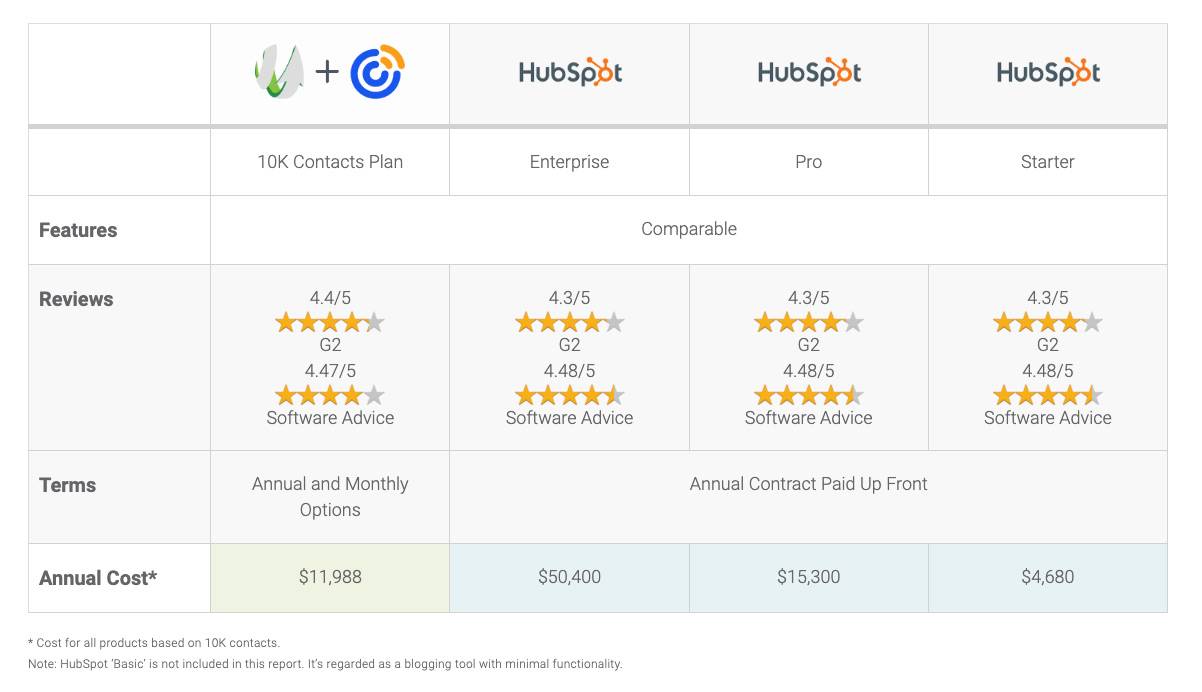
HubSpot vs SharpSpring: Comparing Pricing and Features

Hubspot vs SharpSpring – Get the Most Out of Your Marketing Platform

HubSpot Overview

Founded in 2006, HubSpot launched the inbound concept. It’s a powerful platform that provides a high volume of content. To Hubspot’s credit, they do have a freemium model with limited features. A starter option, professional as well as an enterprise level option. HubSpot’s pricing (particularly for all the hubs on the professional level and above, is on the high end of the spectrum. Hubspots Professional level suite is between $1900-2000 NZD per month. And they are not registered for GST in NZ which is worth taking into account.

For an annual up-front payment Hubspot does offer a decent discount… But is still pretty pricy.

HubSpot is a powerful and user-friendly marketing platform designed to help businesses generate more leads and close more sales. It offers a wide range of features, including email marketing, content management, and analytics tools. Plus, with its pricing plans, you can get the most out of your marketing platform.

To get the most out of HubSpot, I’d recommend the professional-level CRM and marketing Suite.

SharpSpring Overview

SharpSpring launched in 2014 to deliver powerful and affordable marketing automation. It’s a flexible platform that integrates easily with other tools. SharpSpring has annual and monthly payment options and is a fraction of the cost of competitors.

SharpSpring is a comprehensive marketing platform that allows businesses to automate their sales and marketing processes. It offers a wide range of features, such as lead generation, lead nurturing, and analytics tools. Plus, its pricing plans are competitive, making it an affordable option for businesses of all sizes.

Hubspot-Vs-Sharpspring-Price-Comparison-Table

HubSpot vs SharpSpring: Comparing Pricing & Features

As a former Hubspot Partner, I’d say with confidence that Hubspot is the market leader when it comes to Inbound marketing and their software is beautifully designed and intuitive. As a current partner of Sharpspring, I can say it offers most of what Hubspot does – or the features most small-medium businesses would actually have the capacity to use anyway.

When comparing HubSpot and SharpSpring, it’s important to look at their features and pricing plans. HubSpot offers a wide range of features, such as email marketing, content management, and analytics tools. Plus, its pricing plans are competitive, allowing businesses to get the most out of their marketing platform. On the other hand, SharpSpring also offers a wide range of features, such as lead generation, lead nurturing, and analytics tools. However, its pricing plans may be more expensive than HubSpot, depending on the features you choose. Ultimately, it’s up to you to decide which platform is best for your business.

Check out these other reviews here at Sharpspring: HubSpot Pricing and Reviews or G2’s review Compare HubSpot Marketing Hub and Constant Contact Lead Gen & CRM (formerly SharpSpring)

Refining Your Keyword Strategy for Maximum Impact

Keyword Strategy is key to seeing success online for any digital marketing plan. Optimizing your website for keywords can be a bit like playing a game of chess. You need to plan your moves in advance, and anticipate the moves of your “opponent” (in this case, Google). And use strategy to make sure that you’re moving ahead with each turn. Developing and refining your keyword strategy requires just as much finesse and skill. Let’s take a look at how you can do it.

Keywords They are the words and phrases that people use when searching for your product or service. Knowing what keywords to target and how to develop a keyword strategy. As well as understanding keyword competition can mean the difference between success and failure in online marketing. Let’s dig into how you can get your keyword strategy right.

Step One: Identifying Relevant Keywords

The first step in developing a keyword strategy is to identify relevant keywords. Think about what people would type into search engines when looking for your products or services. Furthermore think of the related topics that might be of interest to them. To find out which terms are used most often, you will need to do some research using tools like Google Adwords or Moz’s Keyword Explorer. You should also consider any industry-specific terms or jargon that may be relevant to your business. These terms could give you an edge over your competitors who don’t include them.

Step Two: Refining Your Strategy

Once you have identified some potential keywords, it’s important to refine your list. You can do this by researching the competition and considering how difficult it might be to rank for each term. For example, if there are already several websites ranking highly for a particular keyword, then it may not be worth trying to compete with them. Instead, you should look for other terms with less competition but still good search volume. As well as looking at the competition, you should also think about whether a particular keyword is likely to generate enough traffic and leads for your business; if not, then it’s probably best avoided.

Step Three: Implementing Your Keyword Strategy

Now that you have identified and refined your list of keywords, it’s time to start implementing them on your website. The first place they should appear is on your homepage; this helps search engines understand what the page is about so they can rank it accordingly in the search results pages (SERPs). Once you’ve done this, make sure all of your other pages contain relevant keywords too—this will help boost visibility across multiple searches made by potential customers. Additionally, consider creating content such as blog posts or videos around these topics; this will further improve visibility since content featuring popular keywords tends to rank higher than pages without them.

Having an effective keyword strategy can make all the difference when it comes to boosting visibility online and driving more traffic and leads from search engines like Google and Bing. It starts with identifying relevant keywords and refining them based on competition and search volume before implementing them on your website in order to increase visibility across multiple SERPs. With some help from an SEO expert and a little bit of effort upfront, you can reap huge rewards in the long run—so get started today!

SEO New Zealand… How to Make it Big in SEO-land (NZ Edition)

SEO stands for Search Engine Optimisation, and it’s a powerful tool that can help your business get noticed by the right people. But, if you’re new to the world of SEO, it can be hard to know where to start. Fear not! We’ve put together this guide to help New Zealand business owners succeed with SEO. Or at least to know what to look for in an SEO agency, because let’s face it. It is a complicated beast SEO. And there are a lot of snake oil salesmen out there… So let’s get started!


The Basics of SEO in New Zealand

First things first – let’s talk about the basics of SEO in New Zealand. You’ll need to understand how search engines work and what they look for when ranking websites in order to make sure you’re doing all the right things from the start. Here are some basic tips for optimising your website for search engines:

  • Ensure your website is fast-loading and mobile-friendly;
  • Utilise relevant keywords throughout your website;
  • Use appropriate page titles and meta descriptions;
  • Update your content regularly;
  • Have an active presence on social media platforms;
  • Build backlinks from reputable sources; and
  • Keep tabs on what competitors are doing.
  • Work with the best SEO Agencies in NZ


Analyse Your Website Performance

The next step is to analyse how well your website is performing in terms of traffic, rankings, engagement metrics, etc. This will give you an idea of what areas you need to focus on improving or maintaining. There are lots of tools out there that can help with this process, such as Google Analytics or Moz Pro. These tools will allow you to track progress over time so that you can see which strategies are working best for your business.

Google Ads & Paid Search Strategies

Last but not least, don’t forget about paid search strategies like Google Ads and other PPC campaigns. These strategies can help boost visibility quickly and effectively – but only if done correctly! It’s important to ensure that you have a clear understanding of your target audience and objectives before launching any campaigns, as well as having realistic expectations about what results they might bring. This way, you’ll be able to maximize ROI while avoiding disappointment down the line.


All in all, succeeding with SEO in New Zealand isn’t easy – but it’s not impossible either! By following these tips or speaking to a Google Ads expert like Gus, we can help take advantage of available tools, New Zealand businesses should be able to reach their goals quickly and effectively. Good luck out there! With the right strategies in place, success with SEO is just around the corner!

Will AI Change Web Design?

How AI Is Shaping the Future of Web Design

As technology advances, so does the way we design websites. But with the rise of artificial intelligence (AI) tools like OpenAI’s ChatGPT, many in the tech world are wondering: Will AI transform how websites are built? Let’s dive into this growing trend and uncover what the future might hold.

AI Is Already Making Its Mark

AI is no longer a distant concept in web design—it’s already here. Many businesses now use AI-driven chatbots to handle customer queries in real time. These bots respond instantly, removing the need to wait for a human support rep.

Beyond chatbots, AI helps boost search engine optimisation (SEO) and tailor websites to users based on their behaviour and preferences. These early applications are just the beginning.

Designing Smarter, Not Harder

Looking ahead, AI could play a much bigger role. Instead of simply assisting with tasks, AI might soon design entire websites with minimal input from developers. By taking over routine elements like layout, navigation, and page structure, AI frees up human designers to focus on the creative aspects—think visuals, branding, and compelling content.

This shift could lead to more engaging and user-centric designs that stand out. Plus, it opens the door for non-coders to build websites using intuitive AI-powered tools, making web creation more accessible to everyone.

Trends in web design change fast. AI could help businesses keep pace by identifying emerging patterns and updating their websites automatically. Imagine your site staying fresh and modern without you lifting a finger. That kind of agility could give companies a real competitive edge, helping them capture attention, boost engagement, and drive conversions.

A Revolution on the Horizon?

The potential for AI in web development is massive. From automating technical tasks to helping personalise user experiences, AI could streamline the entire process. Developers and businesses alike stand to benefit—faster builds, better performance, and improved user satisfaction.

Still, the question remains: How far will AI go? Could it reshape search engines, content creation, or even how we interact online? Maybe. What’s certain is that AI is here to stay—and its role in web design will only continue to grow.

Final Thoughts on AI in web design

AI won’t replace human creativity anytime soon, but it will become a powerful design partner. As new tools emerge and existing ones improve, expect to see more AI-powered websites that are not only smarter but also more beautiful, personalised, and effective.

So, will AI transform website design? It already is.

Website Hosting Explained

If you’ve ever wondered what website hosting is and why it’s important, here’s an example for you.

  1. Picture Earth as the Internet.
  2. Then imagine your website is a house in a town or city, in a country on earth.
  3. And finally, your domain name (eg. www.back9.co.nz) is the physical Street Address.

So your domain name points people to your physical address… That’s how people know where to visit you right? Just like a website. We could get really complicated and say the more interesting your house is or the more exciting the things are that going on there then the more people will be searching for it. But now we’re talking about Search Engine Optimisation (SEO) and that’s a whole other topic.


Website Hosting – Who owns what?

Just as a physical house needs a foundation, framing, plumbing, and electricity to function, so too does a website need a ‘server’ for hosting in order to exist on the internet.

When you’re living in a house you need to pay rent for that house right? Or if you buy it, you need to maintain it. You need to pay for rates and insurance etc. In most cases you can think of website hosting (using the house comparison) like you own the house but lease the land. In some cases with Proprietary systems like Shopify, Wix, or Squarespace, you are leasing the house too. Whilst you may own the things within the house (furniture etc = content) you don’t actually own the website (the house).


Hosting is the foundation of your website.

It’s what keeps your site online and accessible to visitors 24/7. And just like the physical house analogy, if any one of those essential components is missing or not up to par, your website will suffer as a result.

That’s why it’s so important to understand what you are getting in terms of website maintenance and hosting – and what are you actually paying for.


The Three Pillars of Quality Website Hosting: Speed, Security, and Support

When it comes to quality web hosting, there are three main pillars that must be taken into consideration: speed, security, and support. Let’s take a brief look at each one.

Speed

In today’s fast-paced world, people have little patience for slow websites. In fact, according to Google, 53% of mobile users will abandon a site that takes longer than 3 seconds to load. That means if your site isn’t loading quickly, you’re losing out on potential customers or leads. When choosing a web hosting provider, be sure to find one that offers fast page-loading speeds.

Security

Another important factor to consider is security. Your website is vulnerable to attack from hackers who could potentially wreak havoc on your business if they gain access to sensitive customer data like credit card numbers or social security numbers. A quality web hosting provider will offer features like malware scanning and protection, as well as firewalls and other security measures to help keep your site safe from attack.

Support & Maintenance

Finally, it’s best to ensure you get more than just hosting. Website maintenance is a key ingredient in winning online, as it ensures your website is running smoothly. On the internet, things are constantly changing. Website browsers like Google Chrome, update frequently, as do third-party systems you may integrate with – such as Mailchimp or Facebook. By investing in a proactive maintenance plan alongside your website hosting, you can rest assured your website will stay up-to-date and relevant.


Now that you know a little more about what goes into quality web hosting, you will understand the importance of paying for quality. Find out how much it costs to host a website here.