Website performance. Is it important?

Do you measure your website performance? How hard does it work for your business? Do you know? Do you care?

Well… You really should!

The following article covers some of the basics any website owner should be taking note of – or at least employing the help of an agency or someone to. 

  • Website traffic
  • Technical SEO health
  • Site Authority Score
  • Visibility Index
  • Leads
  • Goal completions

Great website design that convert leads to sales! Like staff, websites require serious investment – both time and money, and that means you need to know what your return is on that investment.

If you don’t care about investing in a website and seeing tangible returns from it, then this article is probably not for you. Here’s a link to some online puzzles.

If you do care, but just don’t know where to start, don’t worry, you’re not alone.

We speak to a lot of people about websites. And in general, there are 3 types of people we speak to. Perhaps you fit into one of these categories?

  1. You don’t think you need a website
    Perhaps you want a website as an online brochure – you probably don’t understand the power or potential it can add to your business – and that’s fine – you don’t know what you don’t know!
  2. You want a website to get your name out there or because “everyone else” has one
    If you have spent the money to build a website and then put nothing into it – time or money – then you might as well stack that cash in a pile, douse it with petrol, and light a match.
  3. You have already spent thousands of dollars on something that doesn’t or hasn’t return results (often these people feel frustrated)
    If you believe you don’t need a website, you’re busy enough, and have all the work you can possibly want, then that is freakin awesome. And we congratulate you on running a successful business. (but if that’s the case… Why are you still reading?)

The fact of the matter is, if you’re not seeing results, you (or whoever has done the website for you) are not doing it right.

Consider it this way:

Imagine your website is a member of your team – that specialises in sales! Would they have specific, measurable, and time-bound sales numbers they need to hit, or would you give them a pat on the back, and say, “Just do what you can and try your best, champ!” 

Of course not. You would give them sales goals to hit, right?

And if Champ failed to hit those numbers quarter after quarter? Would you address their poor performance, or just continue signing off on their pay week in week out, without a second thought? 

Yeah, I’m guessing you’d address it.

That’s why it’s important to set your monthly website performance metrics and stay on top of monitoring them.

What website performance metrics should I track every month?

Measuring the success of your site isn’t about getting feedback from your customers about how nice your headshots look on the About Us page. While that might validate your new haircut and make you feel good, it’s not going to convert leads to sales. 

You should keep track of specific website performance metrics via monthly reporting that directly correlates to your bottom line goals. 

You don’t want to look at the data every single day because you’ll drive yourself insane. Website performance metrics across the board will vary from day to day based on random variability, so zooming in that closely won’t allow you to see meaningful patterns emerge. 

On the other hand, reviewing metrics once a quarter or even once a year can zoom you out too far. You want to be agile enough to see trends in the data and react to them quickly. In some instances, it might be a matter of seeing that a particular campaign is performing extremely well and you should throw more resources at it. It could also mean staying on top of technical SEO so that issues don’t pile up month after month, negatively affecting your search engine rankings.

Here’s what you need to look at. 

1. Website traffic

Broadly, website traffic is about the users who come to your site. You need to measure the amount and quality of that traffic, as well as what users are doing on your site. 

Understanding your traffic is crucial because more eyeballs on the site mean more potential sales. Each site visit is an opportunity to make a great impression and help people along their journey to getting their problems solved with your business as their guide. 

Sessions

Google defines a session as “a group of user interactions with your website that takes place within a given time frame.” One session can contain multiple page views, events, and even e-commerce transactions.

As you consider session data, ask yourself: Are site sessions going up or down? Are there marketing efforts (or lack thereof) that you can tie trends to? Are there seasonal factors that may be spurring trends (e.g., an uptick at Christmas for an e-commerce site)?

Channel, source, and medium

Channels are the bigger buckets your site traffic comes from (direct, organic, social, email, referral, paid, display, other advertising). Source and medium drill down into the details. For example, within your paid traffic channel you can have facebook.com as a source and pay-per-click (PPC) as the medium. 

Knowing where your traffic comes from helps evaluate factors that affect site effectiveness, such as SEO performance. Not getting the organic traffic you want? Make sure your site and blog content is optimized.

New vs. returning visitors:

New visitors are great for feeding the funnel, but returning visitors? They bounce less, view more pages per session, have longer sessions, and convert at a higher rate

If you’re not increasing the number of returning visitors, you have a content problem. Your content needs to be published at a high quality to get people to keep coming back to the site. 

Landing pages

These pages are the entry points to your website from particular sources. Looking at what pages people come to from organic sources tells you how good (or bad) your SEO is. Landing pages from email sources give a clue about what your subscribers are interested in. Are people going where you are directing them? 

Time on page

Looking at time spent on specific pages can tell you whether users are reading the copy you’ve written, interacting with dynamic elements, watching videos, and having a good experience on the site. Low time on page tells you you’re losing them and need to optimize.

Pages per visit

More pages per visit means more interest, which means a higher chance for conversion. 

Bounce rate

Different types of pages should have different bounce rates. For example, your Contact Us page might have a higher bounce rate because people are typically submitting the contact form and then leaving your site. 

But, in general, a bounce rate of 56% to 70% is considered high (depending on where the page is in your funnel) and a bounce rate of 41% to 55% is average.

2. Technical SEO health

When I talk about SEO, it’s not uncommon for marketers to think I’m referring to having blog posts optimized with keywords for search engines.

But technical SEO is a much bigger and uglier animal. It’s important to wrap your arms around it because the healthier your technical SEO, the higher value search engines will give your site, and the better your site will rank. 

It includes:

Title tags, meta descriptions, and alt text for images: All of these pieces of a webpage help search engines understand what the page is about. 

Meta-Data-Information-Graphic

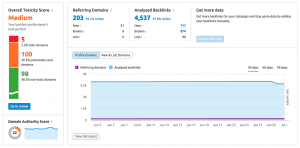
Backlinks: Internal links created when another site links to yours. More on this later.
Back-Link-Audit-Graphic

Structured data: A standardized format to mark up information on a page so search engines can better understand what they’re about.

Crawling: Search engines looking for content on the internet and looking over the code/content they find for each URL. 

Indexing: Search engines storing the information they find during a crawl. If your pages aren’t indexed, they won’t rank in search engine results pages.

🔎 Related: Why Can’t People Find my New Website?

Rendering: When bots run your site’s code and assess your content to understand your site structure. The assessment informs how your site is ranked compared to others.

Mobile: How well your is site optimized for use on mobile devices is a critical factor in user experience.

Site structure: This includes navigation, internal linking, and URL structure. A site’s information architecture must be clear to users and to search engines. Building a Strong Website Structure for Success is key

Status codes: When you visit a site, your browser sends a request to the server and the server responds with a code. 1XX,  2XX and 3XX (redirection) codes are fine. 4XX (pages not found), and 5XX (server) errors can cause problems and need to be corrected. 

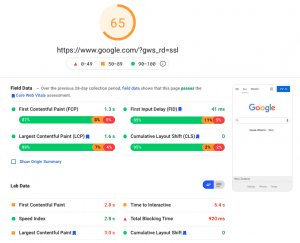
Page speed: How fast the content on your site loads—faster being better, of course. Free tools, such as Google PageSpeed Insights, will give your site a score and provide optimization opportunities. or you can see 5 ways to reduce your website loading speed here.
Google-Page-Speed-Insites-Graphic

 If it feels like that’s a lot to wrap your head around, and that’s well… Because it is.

Some fixes, such as making sure each page has a unique title tag and meta description, are simple enough for a marketing intern to handle. Others, such as DNS resolution issues, might require development help. 

The better your site’s health, the better your site will rank in search engine results. That’s why it’s critical to make the time, even if it’s just five hours per month, to review your site’s technical SEO and resolve as many issues as you can. 
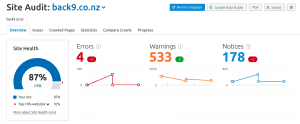
Website-Performance-Health-Audit-Graphic

3. Site Authority Score

Site Authority or Domain Authority is a score that predicts how well a site will rank in search engine rankings.

Semrush describes Authority Score as “our compound domain score that grades the overall quality of a website. The higher the score, the more assumed weight a domain’s or webpage’s backlinks could have.” Scores live on a 0 to 100 scale.

Semrush uses organic search data, website traffic data, and backlink data to understand the rankings of popular and trusted domains. It also uses backlink data to see how gaining links can make site authority increase or decrease. 

You can use Authority Score to judge how well your link-building efforts are paying off. Having a ton of internal links isn’t enough – the links have to be of good quality to positively impact your site’s score. You can also look at what your competitors are doing to see if you need to step up your game. 

Your Site Authority score can also be affected by toxic backlinks, which are internal links from untrustworthy sites. Checking for toxic backlinks on a regular basis will ensure your site’s Authority Score isn’t getting dinged. 

4. Visibility index 

Visibility index tells you how often your site is being found online: “A zero-percent visibility means that the domain isn’t ranking in Google’s top 100 results for any of these keywords, and a 100-percent visibility means that the domain keeps the first position in the SERP for all of these keywords.”
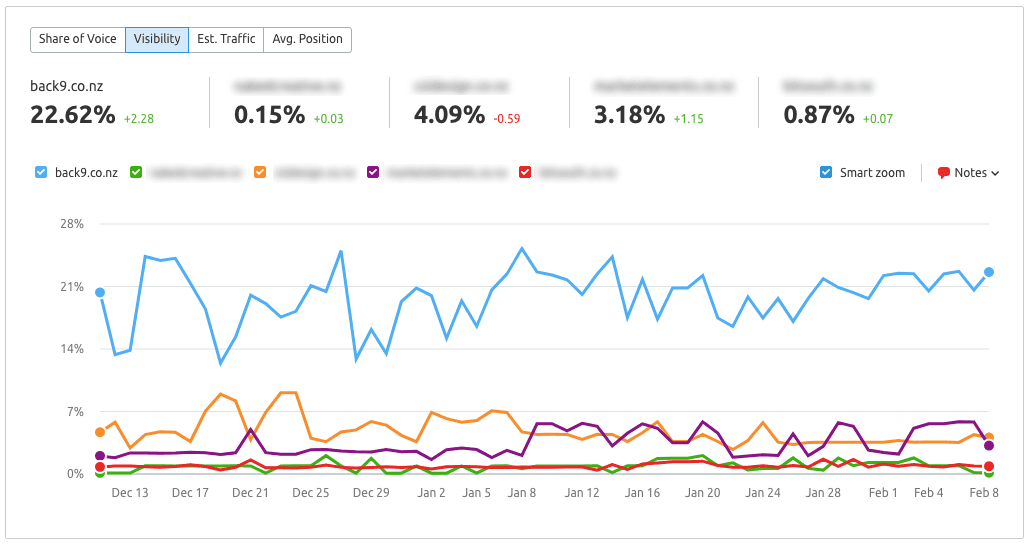
Back9-Search-Engine-Visibility-Feb2022

Increasing visibility in search engine results gives you a better chance to get new eyes on your site. If you’ve been working your tail off on SEO or a PPC campaign, visibility percentage is a great way to measure performance.

5. Leads

CRM systems contain a treasure trove of data about your company’s subscribers, lead opportunities, leads, customers, and evangelists. Is your CRM connected to your website? I certainly hope so. If not, you’re losing out on critical information about how well (or not) your website is converting contacts to evangelists. 

Every month you should be looking at where your contacts are coming from and how they’re engaging with your site. Specifically, you should look at:

  • Number of leads: How many leads is your site generating? This metric alone is not enough to judge site performance. For example, if you get a ton of leads but they’re all junk and don’t convert, that’s a problem.
  • Lead quality: You can judge this based on things such as the ratio of leads to opportunities, the percentage of leads who become converted customers, and time to conversion.
  • Leads by source: Where are your leads coming from? Are you getting a ton of organic traffic from the blog posts you’re writing but the traffic isn’t converting? You’ll want to provide opportunities for readers to dig deeper into your content, such as image CTAs in your posts that highlight related high-value downloads. 
  • Lead conversion rate: If conversion rate for conversion content is low, you’ll want to find ways to optimize it. If the conversion rate is high, you’ll want to drive more traffic to it. You can also work backward from your customer records to see how much and what kind of site content they engaged with on their buyer’s journey. You might see patterns emerge. For example, a majority of your customers might view at least 20 pages on the site before making a purchase. 
  • Customer acquisition cost (CAC): Every customer comes at a price, whether you’re investing money in ads or time producing a webinar. If you’re spending $150,000 on advertising for $20,000 in sales, you’ll want to adjust your tactics.
  • Lead value: This is usually based on monthly recurring revenue (MRR) or customer lifetime value (LTV). These metrics will help you understand how valuable your average lead is in relation to what you’re spending on acquisition.

Before tools such as HubSpot existed, it was extremely difficult for marketers to show how their web efforts led to sales. Now it’s easier than ever to show ROI and tie your website optimization work directly to revenue.

6. Goal completions

You might be wondering why I’m highlighting goal completions instead of form submissions. Though it’s critical to track form submissions to understand conversions, it’s only one type of valuable action users can take on your site. 

In Google Analytics, you can set up goals that monitor a broad range of actions, such as a user spending five or more minutes on your site, viewing five or more pages on your site, clicking a link to a partner page, or clicking an “Add to Cart” CTA.  

Some, but not all, of these actions can be tracked in your marketing automation software, so using Google Analytics is a great way to round out your data. 

Site authority, visibility, traffic, technical SEO, video stats, and behavior analytics tell you what people can and are doing on your site. Goal completions measure whether site visitors are doing what you need them to do or not. Very simply, is your site accomplishing your business objectives or not?

Great web performance takes work

Combining data from Google Analytics, SEO tools, your marketing, and sales software, video platforms, and behavior analytics tools will give you a holistic view of your website’s performance. It’s not a small job, but it’s an important one.  

One of the best ways to get started is to perform audits and create a deck of benchmark data that includes the areas included in this post. You could start with one slide per area and see where the data takes you. A traffic slide, for example, could include several of the metrics noted within a single table. Within the benchmarks, you can identify areas for improvement you want to focus on. Or you might find you don’t even have the right tool stack! 

But once you get started with the right combination of tools, you’ll end up with a long list of improvements that you can then prioritize and tackle in phases. 

Your website is supposed to be your hardest-working salesperson. As with any employee, you need to evaluate its performance to see if it’s contributing positively to your company’s bottom line. 

What are the benefits of using drones for filming real estate and commercial buildings

The introduction of drones are breathing new life into photography and videography marketing. Drones are able to open up angles and perspectives that are otherwise unachievable. They’re able to capture sweeping shots with ease and are excellent for filming real estate and commercial buildings.

Drone filming for real estate listings

A very popular use of drones is for real estate or selling commercial properties. And for good reasons. According to some calculations done by RISMedia, real estate agents who use a drone or hire a photographer with a drone could see an increase in listings as high as 73% and deal closing increases as high as 68%. Sold by Air states that, “83% of home sellers prefer to work with an agent using drones.” With these kinds of numbers, real estate agents can potentially see returns that add up to tens of thousands of dollars per year.

Drones are particularly effective for large lifestyle blocks. They can show how large and expansive the property is and how much of the land at once. Drones can also show off property features like hills, fields, and natural landscape features.

Drone technology makes aerial shots accessible

Aerial photos & videos used to only be taken using planes or helicopters which requires hiring a helicopter, a pilot, and an aerial camera operator. The barriers to that type of imagery are typically out of reach for most companies. Not only that, drones don’t take much prep and their small size makes them more versatile than manned aircraft ever was. Drone technology now provides a safer, quieter, faster, and of course much cheaper solution.

How much does a drone cost?

While the cost of purchasing a good drone is not entirely prohibitive–starting around $1000 and going up from there–flying a drone does require a good amount of skill in not only piloting the drone but also in the technical setting needed to operate the camera correctly. And that’s not even mentioning the know-how of what permits you need and how to apply for them. Permits are complicated, especially near airports. Most drones won’t take off at all without authorisation, which can be challenging to obtain.

As is the case for most endeavours, while you could do it yourself, it’s always best to hire a certified, and well educated professional drone pilot. At Back9 we have a licensed drone pilot who happens to be a professional videographer.

Drone shots vs ground shots

Using a drone isn’t always better. But there are some shots that are impossible to get without using one. Take a look at some of our comparison and unique shots below.

Commercial building

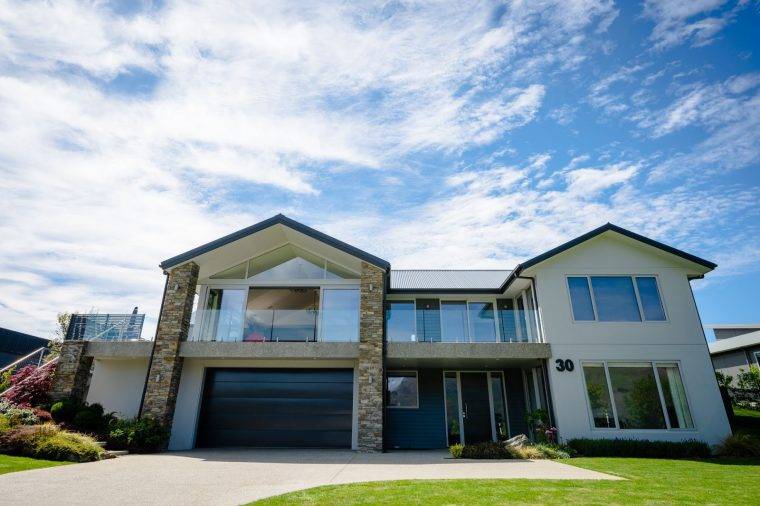
The first shot below is a view of the building from ground level. This view is the traditional photo and does not tell much of the story.

Drone Images Ground Level

Here is the same building taken from the air. You can see much more context of shape, layout and design of the building. It also gives a sense of the surrounding of the building.

Drone Images House Up High


Two-storey house

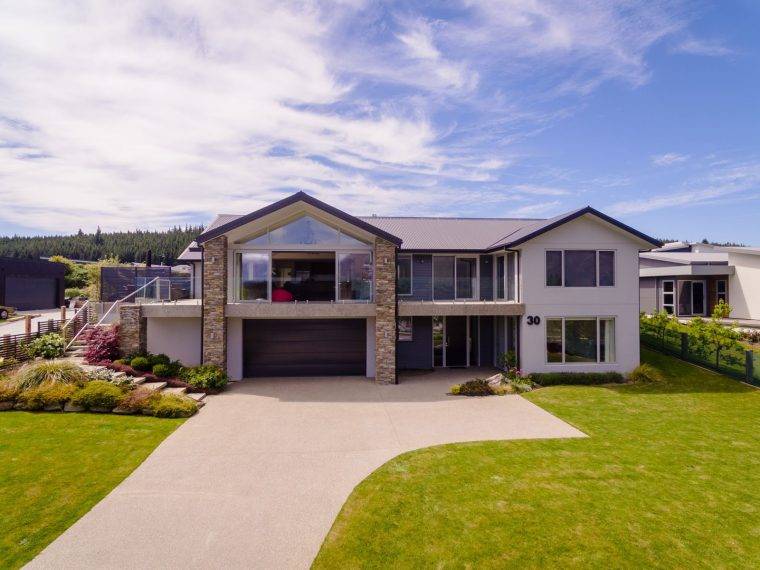
Shooting a building from the ground level using a wide-angle lens can often introduce unwanted distortion to the property. By elevating the camera the building will have a much more true to life appearance. Here is a shot with a wide lens from the ground.

Drone Footage - Ground Shot


This is the same house but with a slightly elevated angle from a drone.

Drone Footage - Elevated House Shot


Using drones to give a sense of location

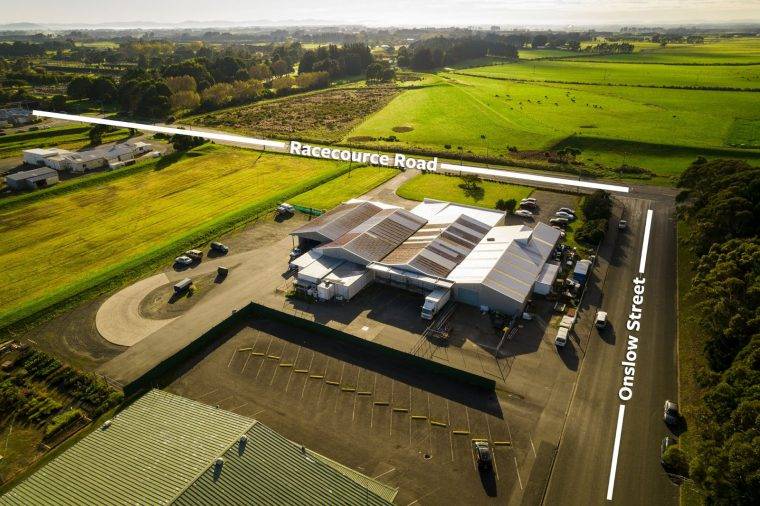
Using the drone to capture an image of the building from a distance away can give a sense of location that helps with navigation using surrounding roads or landmarks. They can also create images that clearly delineate fixtures on the ground, such as boundary lines.

Drone Footage -- Commercial Building

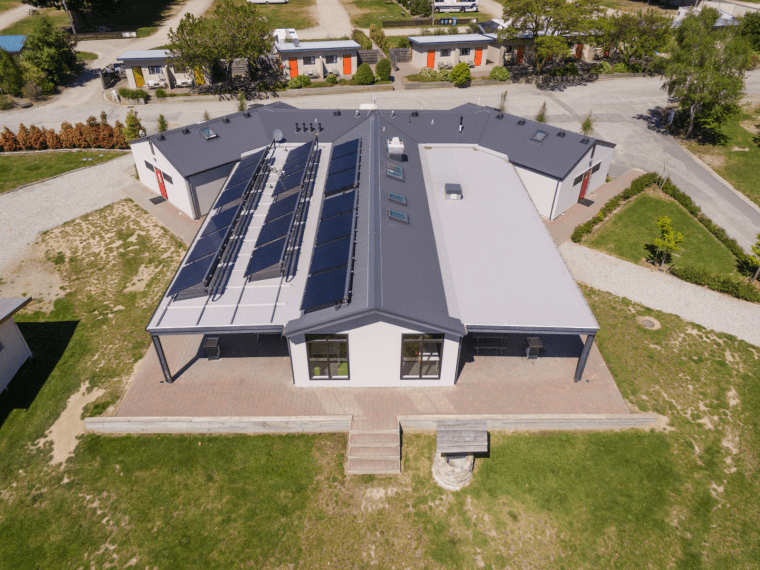
Top-down drone shots will show a sense of scale to your commercial building/yard, as well as references of key locations to one another. This will also clearly document the condition of rooftops etc. And there’s no ladder required.

Drone Footage -- Commercial Building Top-Down


So you can now see the benefits of hiring a drone photographer to take your property images. If you are considering purchasing a drone yourself, that is great. But it’s not a matter of picking it up from the shops and then sending it up in the air and pressing a few buttons. There are many legal requirements that you have to be aware of before your drone even leaves the ground.

Legal requirements for operating a drone

Below is a basic outline of what you need to consider when flying a drone in New Zealand, but for a much more detailed explanation, visit this website.

In New Zealand, there is no distinction between personal and commercial drone users. This means that real estate agents do not need to be licensed operators to use small drones. In saying this, there are specific rules that must be followed to allow for the safe use of drones.

CAA aircraft rules

The Civil Aviation Authority (CAA) governs the use of drones as they are considered aircraft. The use of small drones is regulated under Part 101 Rules. These are reproduced below.

You should:
1. Not operate an aircraft that is more than 25kg and always ensure it is safe to operate

2. At all times, take all practicable steps to minimise hazards to persons, property and other aircraft

3. Fly only in daylight

4. Give way to crewed aircraft, for example any planes, helicopters, hang gliders and paragliders. You should land your drone immediately if another aircraft approaches

5. Always make sure you have visual contact of your drone (with your own eyes, don’t rely on using binoculars or other visual aids). This is called your visual line of sight

6. Not fly your aircraft higher than 120 metres (equivalent to 400 feet) above ground level (unless certain conditions apply)

7. Have knowledge of airspace restrictions that apply in the area you operate. This means you want to check any airspace restrictions before you fly

8. Not fly closer than 4 kilometres to any aerodrome (unless certain conditions apply) so this includes airports and helipads at hospitals

9. When flying in controlled airspace, obtain an air traffic control clearance from Airways Corporation of New Zealand. AirShare is a website that allows you to log requests with air traffic control to fly in controlled airspace and provides information on where you can fly and on airspace. It also has information on the rules for flying a drone, tips for safe flying and short quizzes on the rules

10. Not fly in special-use airspace (e.g. restricted operating areas) without permission from that area’s administering authority

11. Have consent from anyone you want to fly above

12. Have consent from the property owner or person in charge of the area you want to fly above.

Upgrade your video with drones

Keen to know more about video? Read our article Intro to Advertising with Video. Or if you’re ready to get some videos off the ground now, come have a chat with our videographer. You can book a meeting right now by choosing a time on the meeting calendar below.

The Sun Has Set on the Yellow Pages NZ

Goodbye Yellow Pages NZ…

Who remembers flipping through Yellow Pages to find a local business and its contact information? We do, but only just.

As Bob Dylan once sang (way back when the Yellow Pages were still popular and effective) The times they are a-changin’.

Yellow pages is simply no longer a smart or viable option for businesses in New Zealand. The cost of advertising with yellow pages NZ far outweighs any potential value that it might offer. So what now?

In the age of digital media, such as Google Ads and Search Engine Optimisation (SEO),  it’s become clear that New Zealand businesses need to look elsewhere for effective marketing and advertising. As the sun sets on the era of Yellow Pages NZ, let’s take a look at a few reasons why local businesses should support their Kiwi peers when it comes to advertising and marketing.

Supporting Local Businesses

The number one reason why local businesses should support locally-owned New Zealand companies for services like Google Ads, is that they are helping to keep money in the local economy. This is especially important considering the impact that Covid-19 has had on our economy. Every dollar that’s spent on a local business goes back into our community, creating jobs and stimulating economic growth. Plus, by supporting local businesses you’re encouraging competition which can only be beneficial for everyone involved.

Targeted Marketing

Another key benefit of working with locally owned companies is that they are better able to provide targeted marketing solutions tailored specifically to your needs. Unlike large multinational firms, smaller companies are often much more willing to work closely with their clients. This is in order to ensure maximum results from their marketing efforts. Furthermore, these smaller firms tend to have lower overhead costs. which in turn means they can offer their services at a lower rate. And a lower rate than larger firms would be probably be able to do.

Personalised Service

When you work with a local company, you get access to personalised services that larger firms just can’t provide. Working with small locally-owned NZ companies gives you access to real people. Real people who have an understanding of your business and its needs. This is something larger corporations just can’t provide. Especially if they outsource overseas. This level of personalisation helps ensure maximum ROI from your marketing budget. And that’s because you know that your message is getting through directly to your target audience. And, in exactly the right way.

Better Connections with Your Audience

Finally, working with locally-owned New Zealand businesses allows you to better connect with your audience. They understand the culture and language better than an outsider would be able to do so easily! This can help make sure that your message is received by your target market effectively while also reinforcing positive feelings toward your brand amongst locals in New Zealand – not bad!

As we say goodbye to the era of relying solely on Yellow Pages NZ for advertising and marketing there are many benefits associated with supporting local businesses here in Southland or New Zealand instead. From helping stimulate local economies through keeping money within our own regions, as well as having access to targeted marketing strategies tailored specifically towards our own needs while being able to take advantage of flexible payment options if needed!

So next time you think about putting out an ad or running a campaign consider using a locally-owned, New Zealand company instead!


Who is the best Digital Marketing Company in Invercargill?

Updated: 26th April 2024

It’s fair to say, when it comes to any industry, not all businesses within it, are necessarily created equal. This includes Digital Marketing. So, how do we define who is the best digital marketing company in Invercargill? Or Even the Where to find the best Digital Marketing Company in NZ?

A lot of industries have regulatory bodies, however Graphic design and Digital Marketing don’t. And let’s face it, if a digital marketing company is any good, they should at least have the ability to make themselves look it. Ultimately if they are any good, they should be found on, or near the top of a Google search for the term: best Digital Marketing Company, Invercargill right? Likewise, if they are versed in the art of SEO (Search Engine Optimisation) – a key component of digital marketing, then they should also show top or high in searches for SEO Invercargill – Who is the best?

The best way to decide is by reframing the question – or adding to the end of it. So, ask not “Who is the best Digital Marketing Company?” but “Who is the best Digital Marketing Company for me and my business?”

Does one size fit all in Digital Marketing

Truthfully, and although a lot of companies say they are, it’s unlikely that there’s a one-size-fits-all company in any industry. So which will be the best for you depends on your needs and circumstances. What’re your criteria for partnering with an agency?

One of the most important parts of teaming up with a company is working with people who believe what you believe. You can usually feel that in your gut. And from my experience, I would say trust your instinct!

How Do You Choose The Right Marketing Agency?

Below are some of the most popular digital marketing companies at the top of a google search. These are companies that also say they do business in Invercargill, New Zealand.

Market Elements

Market Elements offer Google Ads, Social Media Marketing, SEO and Invercargill Web Design services. They have been providing marketing support and integrated marketing campaigns for small and small-medium businesses since 2010.

Market Elements say “It’s all about the relationship and the results for us. Most of our clients ask us to work with them well beyond their initial project, as they value the fact that we’re local and offer professional, independent advice and services”.

With team members collaborating from multiple locations, Market Elements do not appear to have a home base. However this can probably work to their advantage too. Lower overheads can mean more cost-effective pricing.

If you are a small or medium business then Market Elements are well worth touching base with. The best thing for you and your business to do your research!

Netbranding

Netbranding came up pretty high on the first page of Google for the search: Who is the best Marketing Company in Invercargill, Southland, New Zealand? But let’s just back this truck up a bit. Netbranding is not an Invercargill, Southland or even South Island-based business. A quick click on their about section of their website reveals they are a full-service Auckland digital marketing agency.

Whilst I firmly believe location is not a barrier. And marketing and design can be done remotely from anywhere in the world, I feel that this is a little misleading. So Caveat emptor – Let the buyer beware.

If you’re not too bothered about using someone on the ground locally, Netbranding could be a fit for you. Therefore they could be worth a call. However, if you want to be able to walk into the company’s studio and work through things face-to-face, then a local Invercargill-based studio might be the best fit for you.

Quantum Print

Don’t let the name fool you. Quantum Print doesn’t just specialise in print solutions, they also offer digital and web services.

Sometimes Quantum Print’s clients don’t really know where to start. Do they need a website? Does their website work effectively to bring the results?

What is SEO? Do you need to be on social media? Do you know how to work on each aspect of the digital realm?

They are here to help.

In Quantum Prints’ digital marketing consulting programme, they explain that they will guide business owners who have low to zero knowledge about the digital world on how they can take advantage of all the tools and services available to boost their sales and brand reach.

They have a digital marketing specialist who is there to help you understand everything in a simple way. This is so you can make all decisions on your own and get prepared to evaluate your digital activities. And avoid common ‘traps’ or being misled by service providers who do not always have the best intentions.

How it works?

Quantum Print’s marketing consultant is available for hourly sessions to be arranged when best suits your needs.

During your sessions, their consultant will understand more about your business needs. Subsequently assess your current digital situation. And then instruct you on what are the best options for your business. That includes what should be your priorities, and how much you should invest on websites, digital ads, social media, etc.

In each session their consultant will try to be as clear and straightforward as possible. This is to help you understand all the pros, cons, and technical aspects related to digital marketing.

They can either go to your office location or you can come to our Invercargill office for the consulting sessions.

Virtual sessions are also available if requested. Their Marketing Consultant’s hourly rate is $110

Digital Eagles

Digital Eagles state they are “A DIGITAL MARKETING AGENCY THAT’S REDEFINING INVERCARGILL BUSINESSES”

They offer a full range of Digital marketing services from, SEO, SEM, PPC, and so on. Much like us here at Back9 Creative and the others in this article. One thing that is interesting to note, is that there are multiple references within their landing page for Digital Marketing Invercargill, that state they are in Invercargill. Like this “A content marketing and social media agency in Invercargill, you can trust.”

Well my friend, if you are still with me, and at the risk of sounding downright biased and not impartial, the issue I take with this is much like Net Branding further up the page… They are not from Invercargill, they are not based here. They are also using Keywords from another competitor who used to work for them. Bottomline is… When the very line on your website which says you can be trusted is actually a fabrication – what does that say about the company?
It’s your call you may be ok with it and if so get in touch. But if honesty and integrity are important, turn away and have a crack at the crossword.

Market South  Now called Naked Creative

Naked Creative, formerly Market South is a marketing, communications, and graphic design company. They are a digital agency with full-service offerings. This can include Branding, Web Design, Advertising Campaigns, Strategy, Copywriting, PR, Print, and more.

Market South is passionate about creating kick-ass brands and campaigns that drive sales and help their clients make more money!

As well as a full suite of marketing and advertising services, they produce and own a range of products and publications focused on promoting Invercargill and the greater Southland region. Owner and Creative Director Carla Forbes is a well-known Southland business personality and has held a number of roles on boards including the Southland Chamber of Commerce, where she was president. Forbes has also been the face of a number of local campaigns including, Stand up for SIT and The NZAS Tiwai Point Fight for Fairness campaign.

And of course, Back9 Creative!

Named as a finalist in The Designers Institute of New Zealand’s Best Design Awards, Back9 is a trusted name in the digital marketing landscape of Invercargill. Back9 Creative was started back in 2011 by husband and wife duo Phil & Alli Robinson. With the rise of digital technologies, they believed that without the huge budgets of global brands, the ‘traditional’ outbound way of ‘interruptive’ selling and marketing was no longer as effective.

As design-driven agency with a focus on Web Design, Custom Apps and Search Engine Marketing, Back9’s goal is to help is to help ambitious businesses grow and succeed by tapping into new technologies and new ways of thinking.

So, who is the Best Digital Marketing Company for me and my business?

So which design and digital marketing company based in Invercargill, is the best for you and your business? That depends on what you’re looking for.

At Back9 we strive to be the best digital marketing agency in Invercargill. Digital Eagles, Graphx and Market South aka Naked Creative, all aim to offer a full-service. They say they can handle any level of marketing, from managing social media to building a brand new website. Graphx appears to be aiming to be a better fit for smaller businesses. Naked Creative has a proven track record in serving a more corporate market. Netbranding and Market Elements appear to be more focused on the digital aspect. That makes them good options if you are looking to go fully digital and don’t need traditional marketing campaigns.

If you’re looking to partner with an agency for your digital marketing endeavours, it’s worth taking the time to research. Talk to the businesses above and other Invercargill-based design and marketing companies. Look over their services and see if their style and tone match what you want for your own business. Taking time to find that right fit and work with credible, reliable businesses can save time and trouble later on. So it’s worth the effort!

How To Choose A Marketing Agency

How Growth-Driven Website Design Works [VIDEO]

What is growth-Driven design?

Updated 20th December 2024

In today’s fast-paced digital world, traditional website design often falls short – it’s slow, risky, and leaves little room for flexibility. So is traditional web design broken?  We believe so. And that’s where Growth-Driven Design (GDD) comes in, offering a smarter, data-driven approach to building and maintaining websites that grow with your business.

So, what exactly is Growth-Driven Design? It’s a methodology that focuses on launching quickly, learning from real user behavior, and continuously improving your site to drive better results. Unlike the old “set it and forget it” approach, GDD is all about adapting to what works best for your audience.

In this article, we’ll break down how Growth-Driven Design works, guide you through its key stages, and show you why this dynamic method is reshaping the way businesses approach web design.

Ready to discover how a GDD-driven website can help you achieve your goals? Let’s dive in.

How does Growth-Driven Design work?

The Growth-Driven Design methodology has three major stages: the strategy, the launch pad, and continuous improvement.

Strategy Phase: Building the Foundation for Success

The Strategy Phase focuses on deeply understanding your audience and their needs. By stepping into their shoes, we uncover how your website can solve their problems and guide them toward their goals.

To do this, we ask key questions:

  • Who are they?
  • What challenges do they face?
  • What are their goals?
  • How does your website fit into their journey?

This phase includes several essential steps designed to ensure your website is built with a clear purpose and user-focused strategy.

Untitled Design 15

Steps of the strategy phase

1. Define Website Goals

We begin by reverse-engineering your business goals to determine how the website can help achieve them. The goals we define follow the SMART criteria: Specific, Measurable, Attainable, Relevant, and Timely. This ensures we can accurately track the website’s impact on your business.

2. Understand Your Audience

Through in-depth UX (User Experience) research, we uncover insights about your users. This research may include:

  • Qualitative insights from interviews or surveys
  • Quantitative data from analytics
  • Observational studies of user behavior

The result? A clear understanding of what drives your audience and how your website can meet their needs.

3. Apply the Jobs to Be Done Framework

This framework identifies the deeper needs and motivations that drive your audience’s decisions. It helps us understand why they might choose your product or service over competitors.

Refine your audience

4. Reassess Fundamental Assumptions

We examine and refine what you already know about your market, users, and website. This includes creating or revising:

  • User problem statements
  • Unique value propositions
  • Situational triggers
  • Current user habits
  • Barriers to switching

These insights form the foundation for a user-centered strategy.

5. Develop Buyer Personas

Buyer personas are detailed, fictional representations of your ideal customers. They include key attributes like:

  • Challenges
  • Goals
  • Pain points
  • Decision-making behaviors

Personas ensure your website speaks directly to your audience’s needs.

6. Map the Buyer’s Journey

We outline each persona’s journey before, during, and after interacting with your business. This map provides a clear direction for how your website can seamlessly fit into their lives, solve their problems, and guide them to take action.

Establish Website Goals and Strategy

7. Create a Website-Specific Plan

This plan includes essential elements like:

  • Site architecture
  • On-site SEO
  • Key sections and pages
  • Technical integrations and requirements

8. Build a Website Wish List

We brainstorm a list of creative, impactful ideas to solve user challenges and meet business goals. Your wish list could include 20 to 200 items, such as:

  • Features and modules
  • Pages and sections
  • Integrations
  • Interactive elements

We’ll recommend options that have been successful for businesses with similar goals.

9. Prepare for Launch

With the strategy complete, it’s time to build your Launchpad Website – a simple, high-performing site designed to go live quickly. The real magic happens in the next phase: continuous improvement.

The Launchpad Website: A Strong Start

With a carefully crafted wish list of high-impact ideas, we move into the second phase of the Growth-Driven Design methodology: building the Launchpad Website.

The goal of this phase is simple – create a site that’s not only better than what you have today but also serves as a foundation for future growth.

It’s important to note that your Launchpad Website isn’t the final version. Think of it as a starting point – a functional, high-performing site designed to go live quickly. This approach enables you to collect valuable insights by observing how real users interact with your site.

By launching quickly without sacrificing quality, you:

  • Gather real-world data to make smarter, data-driven improvements.
  • Achieve faster results compared to the traditional web design process, which often takes six months or more to complete.

Your Launchpad Website accelerates time-to-value, setting the stage for continuous optimisation and growth in the next phase.

Untitled Design 16

How to Quickly Build a Launchpad Website

Creating a high-performing Launchpad Website quickly requires strategic focus and efficient processes. Here are the key areas to prioritize to accelerate the build while maintaining quality:

1. Customise Your Approach

Every website is unique, and the approach to building a Launchpad Website should reflect that. The goal is to strike a balance between speed and quality. This often requires a mix of strategies tailored to your specific needs.

Partnering with an experienced agency (like us) can make all the difference. We guide you in selecting the best approach for your new site, ensuring a well-performing and efficient launch.

2. Leverage Design Sprints for High-Impact Pages

Design sprints are short, focused sessions that use brainstorming, prototyping, and testing to tackle specific design challenges. By concentrating on high-impact sections of your website:

  • You draw on the team’s collective expertise to generate the best ideas.
  • You create high-quality prototypes faster than traditional methods.

This approach ensures key pages are optimized and ready to perform from day one.

3. Streamline Content Development

Content creation – including text, images, and video – is often the most time-consuming part of any website build. To avoid delays:

  • Implement an efficient content development process.
  • Use collaboration tools to improve communication and productivity.

The result? Faster production timelines and higher-quality content to fuel your website’s success.

4. Invest in Internal Efficiencies

Internal efficiencies can dramatically speed up the Launchpad process. Consider these strategies:

  • Transition from a waterfall process to an agile or scrum framework for faster iteration.
  • Build a library of pre-designed templates to save time.
  • Minimise developer dependencies, enabling marketers or in-house teams to make updates using user-friendly tools.

These optimisations empower your team to work smarter and make updates seamlessly.

Once the strategy has been created and your launchpad website is live, the next step is the Continuous Improvement stage of the Growth-Driven Design methodology.

Continuous Improvement

The Continuous Improvement stage focuses on identifying and implementing high-impact actions to grow your business using real user data. After your website is launched, it’s easy to lose focus on what will drive the most significant results. That’s why we follow a simple, agile process: Plan, Build, Learn, and Transfer.

Untitled Design 17

Planning: Setting the Focus

In the planning step of the cycle, we’ll define the most impactful items to build or optimize at that moment in time to drive toward your goals. This starts by determining an area of focus that your team can rally their improvement efforts around. Focus is key.

The challenge is, there are many areas you could work on: from messaging to layouts to building new pages to optimizing existing ones. The wide range of options can make it overwhelming and difficult to determine where to best focus your time.

It’s helpful to have a website performance roadmap, so we can figure out where best to focus your time, i. The performance roadmap is a framework for us ensure you’re spending time and energy on improving the most impactful areas.

The roadmap helps you set clear expectations on exactly what you should and should not be working on and why. And because there are specific metrics to measure for each focus area, you can easily measure and report on your progress building a peak-performing website.

Building

The first step in the cycle is to define the most impactful items to build or optimize to move closer to your goals. The key here is focus.

Why Focus Matters

There are countless areas you could work on—messaging, layouts, creating new pages, or optimizing existing ones. Without a clear direction, it can quickly become overwhelming to decide where to invest your time.

The Website Performance Roadmap

To stay on track, we use a performance roadmap—a framework designed to prioritize your efforts and ensure time is spent improving the areas that matter most.

  • Clarity: The roadmap sets clear expectations about what to focus on and why.
  • Metrics: Each focus area is tied to measurable metrics, making it easy to track progress and report results.

With the roadmap in place, your team can rally around a specific area of focus, driving meaningful improvements without distractions.

Building: Bringing the Plan to Life

The next step is implementation. Using the performance roadmap, we track progress and guide the build process across three major themes: Establish, Optimise, and Expand.

1. Establish: Laying the Foundation

The “Establish” phase focuses on foundational activities immediately after launch.

  • Quick Wins: Address low-hanging fruit—high-impact actions that are fast and easy to execute.
  • Audience Building: Collect data and run experiments to understand user behavior.
  • Value Confirmation: Ensure the website delivers measurable value to users.

2. Optimise: Enhancing Performance

The “Optimize” phase improves both user experience and business outcomes.

  • Usability Improvements: Ensure visitors can unlock value quickly and effortlessly.
  • Conversion Rate Optimization (CRO): Streamline funnels to reduce friction and increase conversions.
  • Personalization: Tailor experiences to individual users or segments, providing relevance and value.

3. Expand: Maximising Impact

The “Expand” phase focuses on growing the website’s role within your business.

  • New Digital Products: Add features like tools, directories, or interactive resources.
  • Customer Journey Enhancements: Develop elements that support the full journey, such as customer support portals or advocacy programs.
  • Cross-Team Enablement: Build tools to help other teams, such as sales enablement features to assist with prospecting and closing deals.

The Expand phase helps the website contribute to the growth of the entire organisation.

The Lifecycle of Continuous Improvement

The roadmap aligns with the lifecycle of your website:

  • After Launch: Focus on “Establish” and “Optimise” to stabilise and improve foundational elements.
  • Over Time: Progress into the “Expand” phase to grow the website’s impact across the business.

By consistently planning, building, and optimising based on user data, your website evolves into a dynamic tool that supports long-term growth.

Is every website different?

Every website is different, which is why it’s essential to let performance metrics and user experience guide your continuous improvement efforts. By reassessing your priorities each quarter, you can focus on the areas that will deliver the greatest impact. This quarterly reassessment ensures your team directs time and resources to what matters most. Once a focus area is chosen, it’s crucial to stay consistent. Shifting focus mid-cycle can lead to wasted effort with little measurable progress.

With a clear focus, the next step is to conduct user experience research. This process uncovers the challenges or friction points users face on your website and identifies barriers that may be preventing them from reaching their goals. Armed with these insights, your team can brainstorm new action items designed to solve user challenges, deliver value, and improve key performance metrics—all while staying aligned with your chosen focus area.

After generating ideas, it’s time to prioritise. Not all ideas will have equal impact, so focus on identifying the highest-value actions first. Based on your team’s workload capacity, select the top items to implement within the quarter. Any remaining ideas can be revisited in the next planning cycle. This method ensures resources are used efficiently, delivering meaningful improvements without being stretched too thin.

By tailoring your approach to your website’s unique needs and following this structured process, you’ll create a dynamic and evolving digital experience that consistently drives results and meets user expectations.

Turning Ideas into Action

With those high-impact action items ready for the current sprint, we’ll collaboratively create detailed action item cards, each containing four essential elements:

  1. A clear description of the specific customer scenario, framed as a “job statement.”
  2. A hypothesis statement outlining your proposed change and the impact you expect it to have.
  3. Supporting research or data to validate your hypothesis.
  4. An experimental design detailing how the hypothesis will be tested.

Armed with a focus and prioritised action items, it’s time to move to the next step in the continuous improvement cycle: Build. This phase involves hosting a focused working sprint with a cross-functional team to tackle all high-impact action items.

Much like a sports team in the heat of the game, your team will “swarm” these tasks, collaborating aggressively to get them done. This means syncing schedules, aligning on meetings, and dedicating collective work time to ensure every action item is completed efficiently and effectively.

But it doesn’t stop there. Alongside building the action items, the team will set up the experiments as outlined in the experimental design. This ensures we can measure the impact of each action item accurately, validating or invalidating the original hypothesis with real data.

Once everything is ready, we’ll launch the updates and let your audience interact with the experiments. After sufficient time—specific to each experiment—we’ll move forward to the next phase in the cycle: Learn.

Learn: Turning Insights Into Growth

The Learn step is where we pause to review the experiments you’ve run and extract valuable insights about your audience. Did your original hypothesis hold true, or was it proven wrong? If it turned out wrong, that’s perfectly okay – especially when you’re starting out and testing bold new ideas.

What matters most is what you learn from the outcomes. Dive into the data and ask:

  • What did your audience’s actions and behaviors reveal?
  • How can these insights shape future action items?

This step is critical because every cycle adds to your understanding of your audience. The more we learn, the better we become at creating value for your users and achieving your business goals. Each iteration builds on the last, refining our approach and increasing the likelihood of success.

Learning is a cornerstone of the Growth-Driven Design philosophy. It’s an ongoing process that ensures your website continues to improve, delivering even greater results over time. With each cycle, we uncover new opportunities to optimise and grow, turning insights into actionable improvements.

Transfer: Amplifying Insights Across Your Business

The final step of the continuous improvement cycle is Transfer – where the insights gained from experiments are shared across your organisation to drive growth beyond just your website. This step ensures the knowledge and ideas generated in the cycle benefit your entire business.

Through internal communications and collaborative meetings, we’ll share findings from the experiments, showcasing what worked, what didn’t, and the reasons behind each outcome. These insights fuel strategic recommendations for future improvements while opening up discussions with other teams to uncover additional opportunities and fill gaps in user research. This collaborative approach turns website learnings into company-wide advancements.

The transfer phase also reinforces the cyclical nature of Growth-Driven Design. Every two weeks, the steps – plan, build, learn, and transfer – are repeated, creating momentum with each iteration. New action items are implemented to achieve the current quarterly focus, and once metric goals are met, attention shifts to a new theme from your website performance roadmap. This ensures your website and business continue to grow and adapt, delivering greater value to users and sustained success over time.

Growth-Driven Design: A Smarter Path to Website Success

The Growth-Driven Design methodology begins with careful planning and research during the Strategy Phase, where we develop a deep understanding of your audience and create a solid roadmap for success. Next comes building a comprehensive wish list of ideas that guide the creation of your Launchpad Website—a high-performing foundation that’s better than what you have today but designed to grow and evolve over time.

From there, the focus shifts to the Continuous Improvement Phase, where we implement a cycle of plan, build, learn, and transfer to drive month-over-month improvements. This ongoing process ensures your website continues to meet user needs, improve performance metrics, and adapt to emerging trends.

Unlike traditional “set-it-and-forget-it” web design, Growth-Driven Design offers a dynamic, iterative approach that keeps your website ahead of the curve in an ever-evolving digital landscape.

The future of web design is Growth-Driven

A Growth-Driven Website Design doesn’t just adapt; it evolves. By continuously improving, it drives results month after month, helping every aspect of your business grow.

Think of Growth-Driven Design as the foundation of a high-performance sports car. While the design itself is sleek and powerful, you still need fuel—your marketing and sales efforts—to keep it moving. Together, these elements create the ultimate engine for business growth.

The challenges of traditional, “set-it-and-forget-it” web design are solved with Growth-Driven Design. This is the future of web design—the playbook for building a peak-performing website that grows with your business.

If you’re inspired to leave behind outdated web design and start building a website that drives real growth, let’s talk! Hit the meeting button below to explore how Growth-Driven Website Design can work for your business.

All information about the growth-driven website design methodology is derived from Hubspot and Growth-Driven Design.

How does video help SEO?

You’ve likely heard the term SEO (search engine optimisation), but did you know adding video to your website can drastically improve your SEO efforts and drive more people to your website?

Ranking a website in the long term is not just about building a large number of links. It’s also about creating high-quality content that will encourage link clicks over time. However, one type of SEO that still is under-utilised is VSEO (video search engine optimisation).

Google and VSEO

Google’s algorithms are increasingly prioritising websites with video content. It’s not something you want to ignore. The vast majority of online experiences start with a search engine, so you need to everything you can to get your website on that first page. And you especially want to appear in the first three results — the top three spots get over 75% of all clicks.

Video SEO content can be a fantastic tool for increasing conversions on just about any website. More businesses than ever are using videos on their landing pages and on various other pages of their websites to keep visitors engaged and, eventually, convince them to make a purchase. It is easier for your customer to consume whatever information you are presenting through a video, rather than reading an article. 

Should I only do video then?

Video is great for your website. However, video alone won’t be your saving grace. Think of it as a link in the chain. Video gives you a boost in rankings, which allows more people to see your site, which means more people will click on your link. But they won’t actually stay on your site very long if your on-page content isn’t high-quality. As a matter of fact, this could be detrimental. Hosting a low-quality video with little or no context will make your rank plummet. At the start, more people may see your site, but if your page doesn’t satisfy their intent, they’ll quickly exit your page — telling the search engines your site doesn’t give the people what they want.

If used correctly though, video can be an extremely powerful form of content and make a significant contribution to your overall SEO strategy.

Some quick tips on video

Video encompasses a huge range of material, and there’s a lot to learn. But here are a few quick tips to help you get started.

  • You don’t have to make every video professional. Spontaneous videos are great for catching something in the moment.
  • It is important to know your audience in order to know what kind of video to make. If you already have a large following with loyal customers then you will use a different tone of voice compared to if you were looking to build a new audience.
  • Google owns YouTube. This means that they are far more likely to rank videos hosted on YouTube. If you want your videos to rank in Google search, hosting them on YouTube is a great idea.

You can learn more about video by reading about our videography service–or get in touch and let us help you out!